The death penalty has roared back into the national political conversation after Tennessee's effort to execute Christa Pike, 50, went catastrophically wrong on Wednesday evening. Pike, who confessed to the brutal 1995 murder of her classmate Colleen Slemmer, is now in critical condition at a hospital after receiving two doses of pentobarbital without being pronounced dead. Witnesses reported hearing her snore after the second dose, and she was ultimately transported by ambulance for emergency medical care.
The sequence of events was chaotic: the execution only proceeded after the Supreme Court overturned a federal appeals court stay, allowing the state to move forward at the last minute. What followed was a scene that has left both supporters and opponents of capital punishment deeply unsettled. As critics pointed out, the same state that sought to end Pike's life then rushed to save it.

Political Fallout
Governor Bill Lee (R) expressed "highly disappointed" and swiftly paused any further attempts to execute Pike. He also postponed another execution scheduled before year's end and ordered a "comprehensive, third-party review" of the incident. Lee, who is term-limited, will leave office with this controversy looming over his administration.
The race to succeed him has already become a referendum on the death penalty. Senator Marsha Blackburn, the GOP nominee, called the situation "tragic" and argued that Pike "should have been executed long ago." She proposed a stark solution: "The answer is simple: bring back the electric chair and deliver justice for these victims swiftly. As your governor, I will do just that."
Her Democratic opponent, Memphis City Council member Jerri Green, fired back, declaring that "the death penalty has always been inhumane, expensive, and biased." She pledged a moratorium on all executions if elected and framed the issue in moral terms: "If we say we are pro-life, that means we must be anti-death penalty."
Green faces an uphill battle in a state that President Trump carried by 30 points in 2024; most independent polls show Blackburn leading by over 20 points. Trump himself avoided the controversy, telling reporters, "You're going to have to speak to Tennessee about it," while the White House referred questions to the governor's office.
Legal and Ethical Questions
Pike's attorneys held a press conference on Thursday, alleging she was "tortured in the execution chamber" and calling for her sentence to be commuted. "Tennessee should not be torturing its citizens in the name of justice," said Stephen Ferrell, one of her lawyers. Another attorney, Randy Spivey, contended that the events constituted "cruel and unusual punishment."
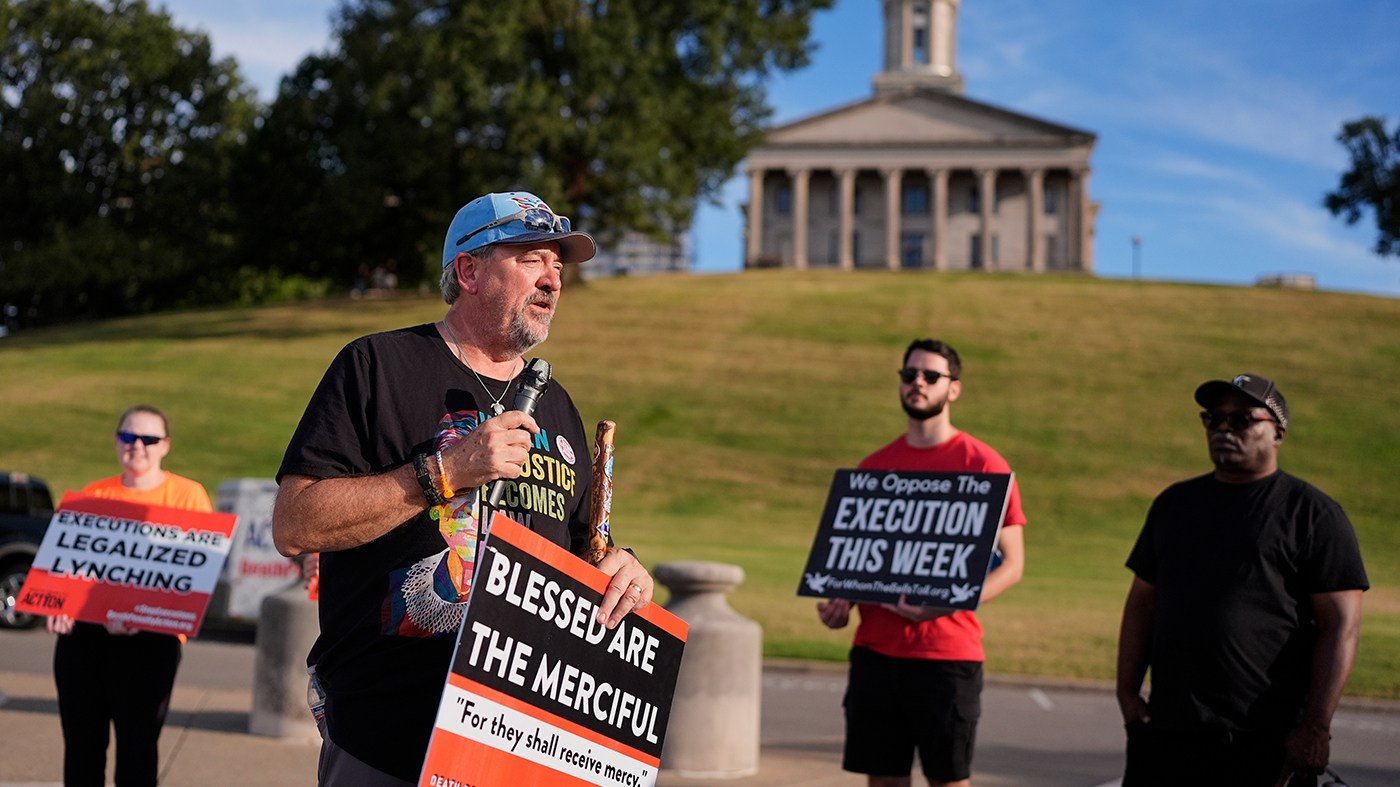
Anti-death penalty advocates see the incident as a turning point. "A death penalty process run by human beings has flaws at every stage, and what we have done is continuously ignore the flaws," Laura Porter, executive director of the U.S. Campaign to End the Death Penalty, told The World Signal. She acknowledged that polling shows slight majority support for capital punishment but argued that "when they see it up close, they come to the belief that it is not worth keeping."
Amy Bergquist of Advocates for Human Rights highlighted Pike's "protracted and horrific" childhood abuse, which defenders say was overlooked at sentencing. She also criticized lethal injection itself: "The whole purpose of what we call 'lethal injection' is really to help the public feel more at peace with a practice that is barbaric."
The botched execution has intensified scrutiny of Tennessee's protocol, prompting calls for a thorough review. As the state pauses executions, the political battle over capital punishment is sure to escalate, with national implications.