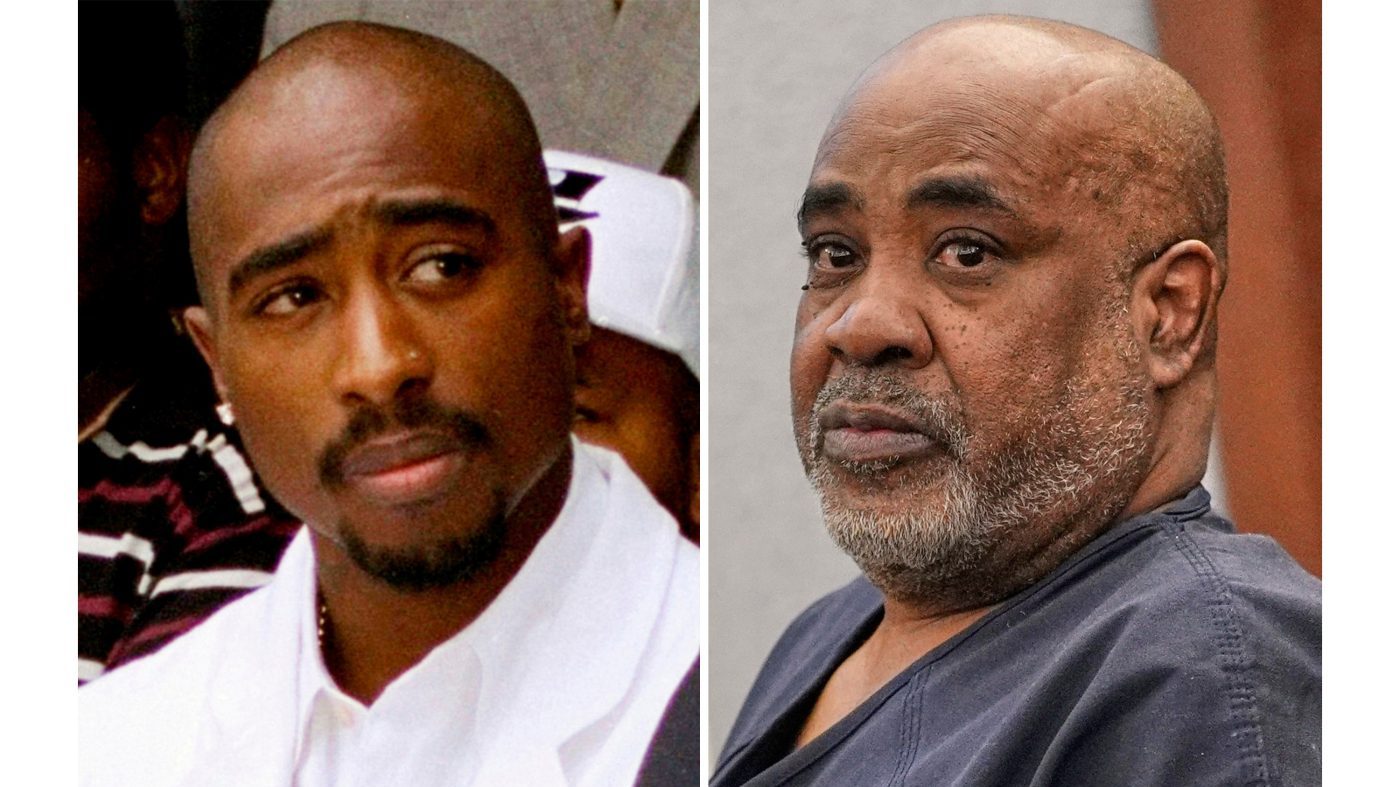
Opening statements are slated to begin Monday in the long-awaited murder trial of Duane “Keffe D” Davis, the former Compton gang leader accused of masterminding the 1996 drive-by shooting that killed rap icon Tupac Shakur.
Prosecutors allege that Davis orchestrated the attack and supplied the weapon used in the fatal shooting, which occurred after Shakur was involved in a physical altercation with Davis’s nephew hours earlier at the MGM Grand Hotel in Las Vegas. Davis himself is not accused of firing the fatal shot.
Shakur was killed on September 7, 1996, when a vehicle pulled up alongside his at a red light and opened fire. The case went cold for decades until Davis’s own admissions and a tell-all memoir brought renewed scrutiny.
Under Nevada law, a person can be convicted of murder for aiding and abetting another in the commission of the crime. Davis faces a single count of murder with a deadly weapon, with an enhancement for committing the offense to promote, further, or assist a criminal gang.
The prosecution is expected to lean heavily on a 2019 memoir Davis co-authored, titled Compton Street Legend: Notorious Keffe D’s Street-Level Accounts of Tupac and Biggie Murders, Death Row Origins, Suge Knight, Puffy Combs, and Crooked Cops. In the book, Davis detailed his involvement in the events surrounding Shakur’s death, providing what investigators say is a roadmap to the crime.
Legal analysts note that the case hinges on the credibility of Davis’s own statements, which he has made in interviews and in the memoir. Defense attorneys are likely to argue that his admissions were embellished for profit and not reliable enough to support a conviction.
The trial comes amid a broader reckoning over cold cases from the 1990s, with advances in forensic technology and renewed public interest in unsolved killings of prominent figures. The case also touches on the violent East Coast–West Coast rap rivalry of that era, which claimed the lives of both Shakur and The Notorious B.I.G.
Davis’s arrest in 2023 marked a dramatic turn in a case that had long frustrated investigators and fans alike. He has been held without bail since his arrest, and his trial is being closely watched as a test of how far prosecutors can go in using a defendant’s own words against him.
As the proceedings unfold, the court will also consider the gang enhancement, which could significantly increase the sentence if Davis is convicted. The jury will be tasked with determining whether Davis’s role as the alleged planner constitutes murder under Nevada’s accomplice liability statutes.
The trial is expected to last several weeks, with testimony from former gang members, law enforcement officers, and forensic experts. Shakur’s family has not publicly commented on the trial, but the case has drawn intense media attention, with many outlets comparing it to other high-profile cold case prosecutions, such as the Mangione state trial and the Meta youth safety trial.
For now, all eyes are on the Clark County courthouse as the legal process finally begins to address a murder that has haunted the music world for nearly three decades.