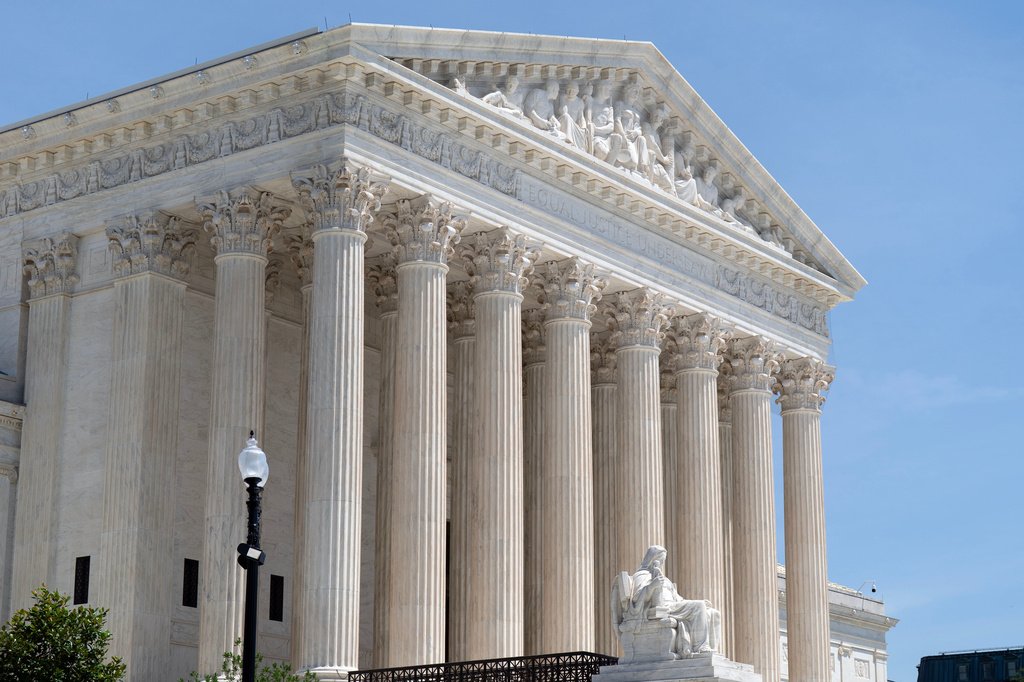
The Supreme Court has once again rewritten the rules of campaign finance, this time eliminating a key barrier that kept political parties from pouring unlimited cash into their candidates' campaigns. In NRSC v. FEC, the justices struck down the cap on direct coordination spending between parties and their nominees, just five months before the midterm elections. The decision opens the floodgates wider for big money to shape who gets heard and who gets elected.
Money as the Gatekeeper
For decades, the price of admission to a serious run for federal office has been the ability to raise millions. A candidate's ideas, experience, or judgment matter far less than their fundraising prowess. Tuesday's ruling reinforces that reality. The court removed one of the last remaining restraints on party money flowing into individual races, effectively making the fundraising bar even higher for those without access to wealthy donors.
This is not a new trajectory. It is the latest chapter in a 15-year arc that began with Citizens United in 2010, continued through FEC v. Ted Cruz for Senate, and now lands here. Each decision peels away another rule meant to limit the influence of private wealth. Each time, the voices of ordinary citizens are further drowned out by the clout of checkbooks, all under the banner of free speech.
A Consensus Ignored
Americans across the political spectrum agree that money has too much power in politics. Democrats blame billionaires. Republicans blame special interests. Independents say politicians answer to donors, not voters. The complaint is the same in three different languages. Yet the court keeps moving in the opposite direction, expanding the role of private money while shrinking the space for public influence.
Cheryl Kelley, a former senior official at the Federal Election Commission and author of An Informed Citizenry, argues that the system is built to measure only one thing: the ability to raise cash. She writes that even experienced policy experts like herself, who understand budgets, defense, and energy, must first prove they can dial for dollars for hours a day before anyone asks if they know anything worth knowing. Fundraising is the lock on the front door.
Roosevelt's Solution, Still Waiting
More than a century ago, President Theodore Roosevelt proposed a straightforward cure: publicly funded elections. Every qualified candidate would receive the same amount of public money, with no private donations allowed. The campaign would then be a contest of judgment, competence, and vision — exactly what voters already pretend elections are about.
But that vision has been repeatedly blocked by court rulings that treat money as speech. As Kelley notes, ordinary laws cannot survive the Supreme Court's interpretation of the First Amendment. The only way to override that interpretation is a constitutional amendment. That is the target.
The Path Forward
Amending the Constitution is intentionally difficult. The last amendment was ratified in 1992. Yet the bar is high precisely because an amendment should reflect a national consensus. On this issue, the consensus already exists. Americans agree that too much money runs politics. What has been missing is a clear solution.
Kelley proposes an amendment stating that federal elections shall be publicly funded, that every qualified candidate receives the same amount on equal terms, that private money cannot be raised or spent to influence those elections, and that all political spending must be disclosed. Such an amendment would sit above any single ruling, protected from the cycle of judicial rollbacks.
We have the diagnosis. We have the cure. What remains is the political will to enact it.