The United States is in the grip of a historic collapse in social trust, according to new data from the Marquette Law School Poll and the Pew Research Center. The findings paint a bleak picture of a nation where suspicion has become the default setting, especially among younger generations, and where contempt for fellow citizens has reached levels unmatched in other advanced democracies.
The Marquette poll, which has tracked trust attitudes over time, found a clear generational slide. Americans born before 1960 remain the most trusting cohort, still operating on the assumption that neighbors are unlikely to rob them if given the chance. But each successive generation is more skeptical, and those born in the 2000s report the highest levels of distrust ever recorded by the project. For many young adults, the functional belief is that everyone else is a potential threat.
That distrust hardens into moral condemnation, according to a 25-country Pew survey released earlier this year. Fifty-three percent of U.S. adults said the average American has bad morals and ethics. No other surveyed nation came close to that level of self-condemnation. This is not mere political disagreement; it is a wholesale rejection of the basic decency of one's fellow citizens.
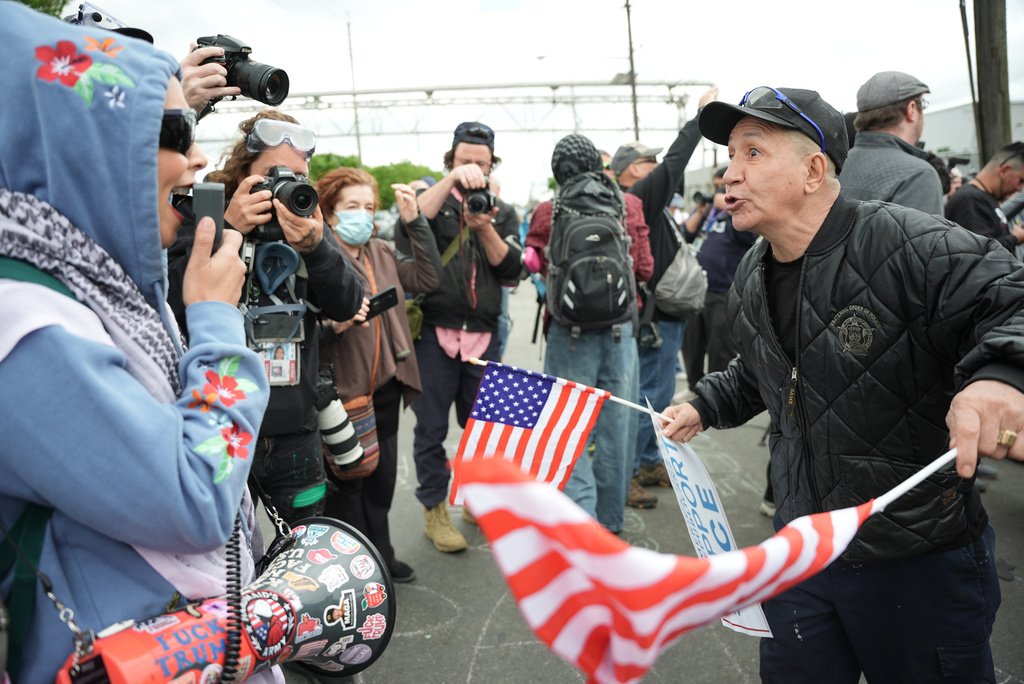
Sociologists and political analysts warn that such widespread moral distrust corrodes the social contract. When people view the other side as not just wrong but evil, compromise becomes impossible. Negotiation gives way to the impulse to destroy the perceived enemy before being destroyed. The result is a political culture defined by deep, structural disgust—a trend that has intensified since the 2015 political realignment, but which now affects all aspects of American life.
Relationship expert John Gottman, who has spent decades studying marital failure, identified contempt as the single strongest predictor of divorce. Contempt, he argued, is a toxic blend of hostility and mockery, placing oneself on a higher moral plane than the other. Once a couple begins communicating through eye-rolls and derision, the relationship is clinically dead. A nation, Gottman's framework suggests, is a vast network of relationships—a giant marriage between millions of people who never chose to live together but must share the same house. By that measure, the American marriage is in terminal condition.
The incentives to keep it that way are powerful. Media algorithms, political fundraising machines, and cultural gatekeepers all profit from perpetual outrage. A peaceful, trusting public is economically useless to an industry built on demonization. Rage scales infinitely better than unity, and a divided electorate creates predictable voting blocs and captive consumer markets. Every campaign now runs on the premise that the opposition intends to dismantle civilization, whether by forcing communism or fascism on the country.
Younger Americans have never experienced a society where cooperation was the norm. They have watched political elites treat each other as existential threats, and the data suggest they have internalized that lesson. The Marquette findings are not an anomaly but a preview of the next three decades. The cycle is self-reinforcing: distrust breeds contempt, contempt destroys relationships, and destroyed relationships ensure the next generation doubles down on disdain.
The result is a nation increasingly united only by its mutual loathing. For much of its history, the United States was divided in practice but shared a common civic identity. That shared identity is now fraying, replaced by an unbridgeable psychological gulf. As public distrust extends to technology and institutions, the challenge of rebuilding social cohesion grows ever more daunting. And with majorities calling for tighter regulation of social media, the political system is struggling to respond to the very forces that fuel division.
The question is whether the country can break this cycle or whether it is locked into a permanent, highly profitable state of mutual loathing. The evidence so far suggests the latter, but the cost is measured not in dollars but in the erosion of the basic trust that makes democracy and daily life possible.