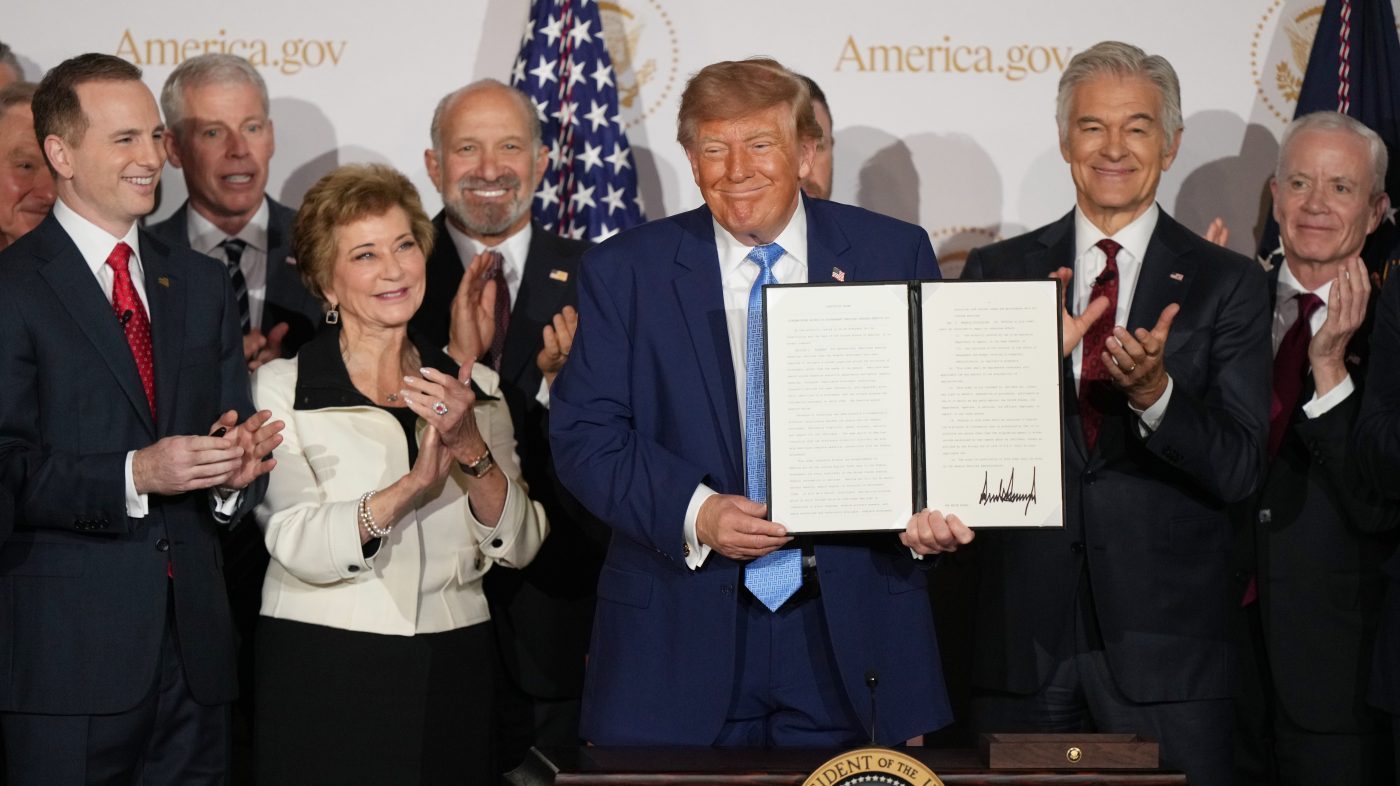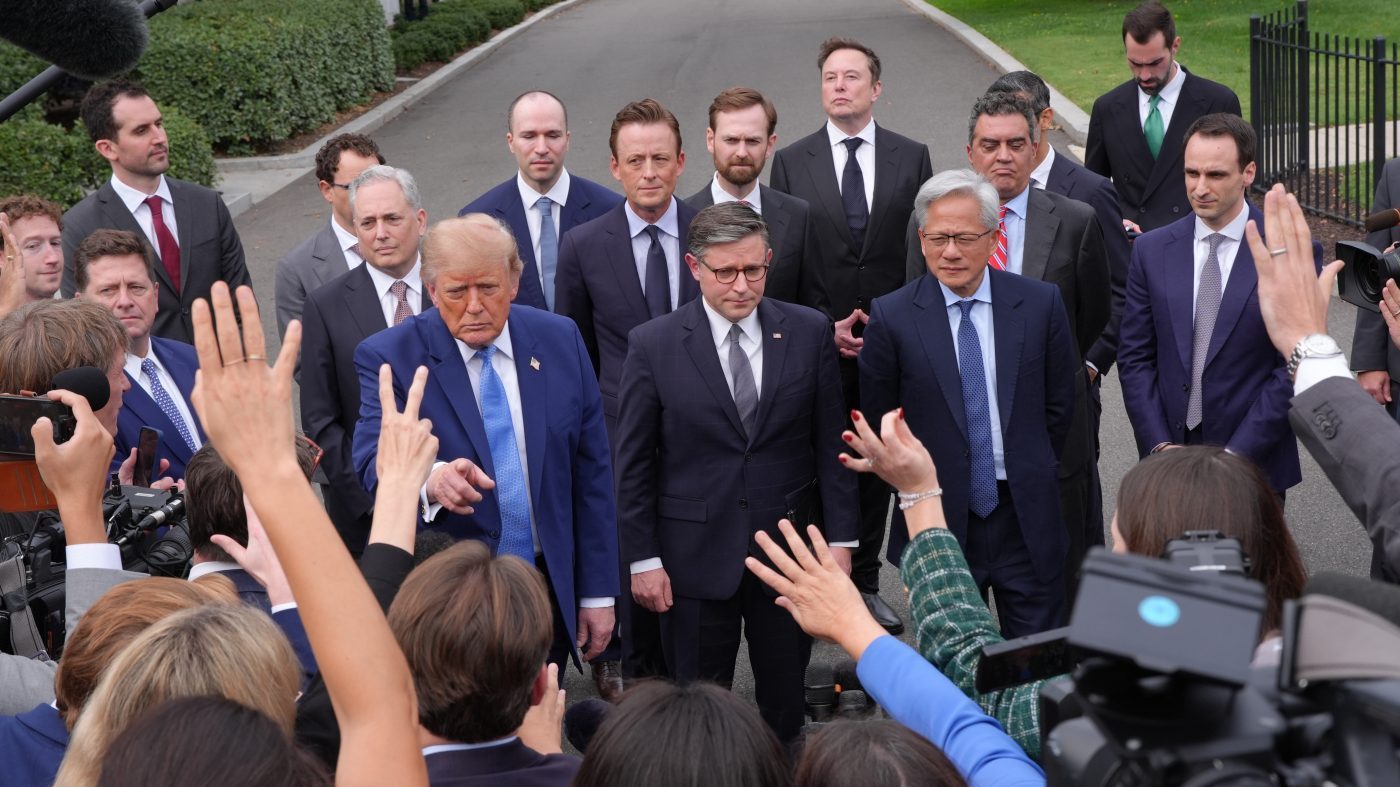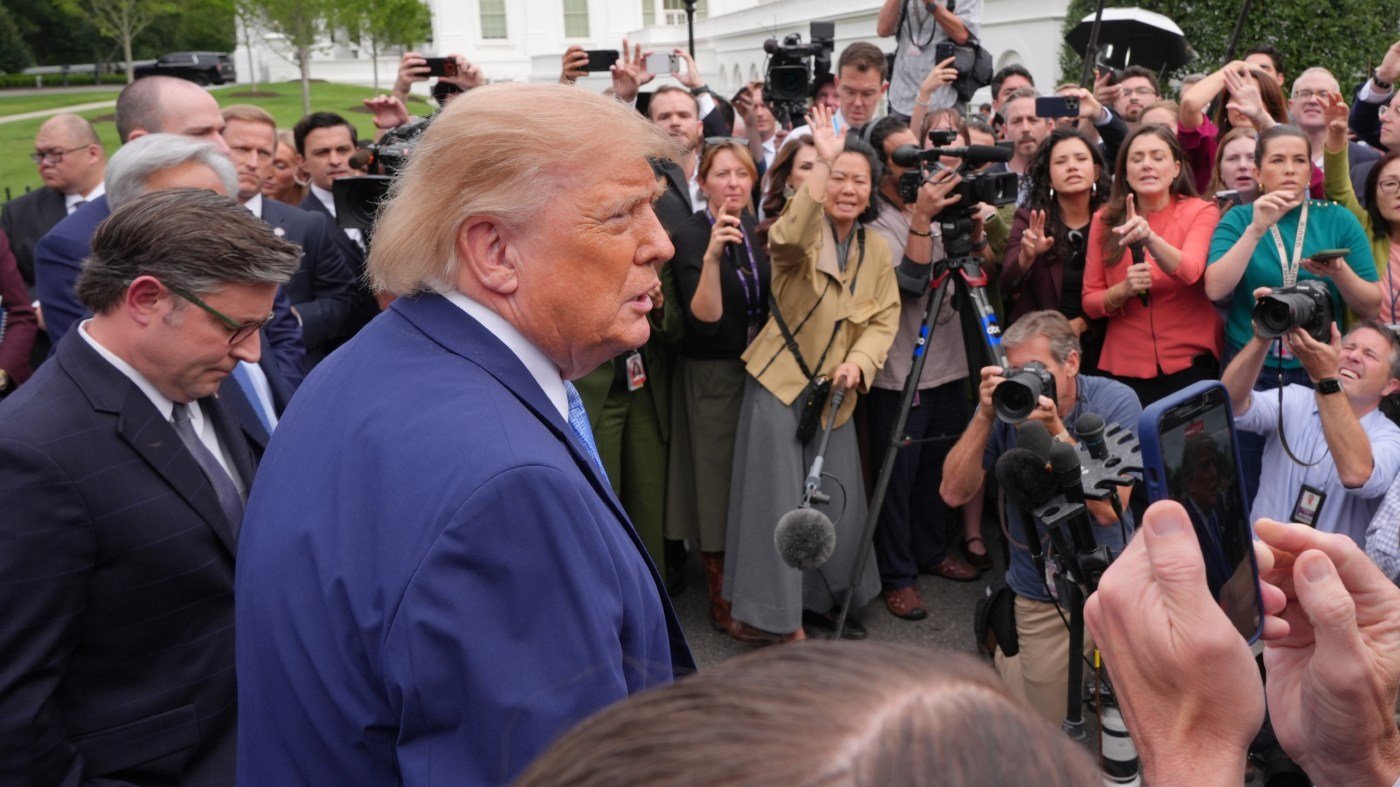
President Donald Trump and House Speaker Mike Johnson (R-La.) announced Tuesday that leading artificial intelligence executives have signed a voluntary agreement to police their own development of advanced AI systems. The pledge, titled the "White House Accord on Superintelligence Joint Commitment on Frontier SI Responsibilities," was unveiled after a White House meeting with industry titans.
Trump characterized the accord as "almost like a constitution" and "morally binding," emphasizing that it relies on "a tremendous self-policing aspect." He also floated the idea of creating a committee to "watch over the whole entity." The president made the remarks during a rare appearance on the White House North Lawn, flanked by executives including Nvidia CEO Jensen Huang, OpenAI president Greg Brockman, Anthropic CEO Dario Amodei, Google CEO Sundar Pichai, Meta CEO Mark Zuckerberg, and xAI CEO Elon Musk.
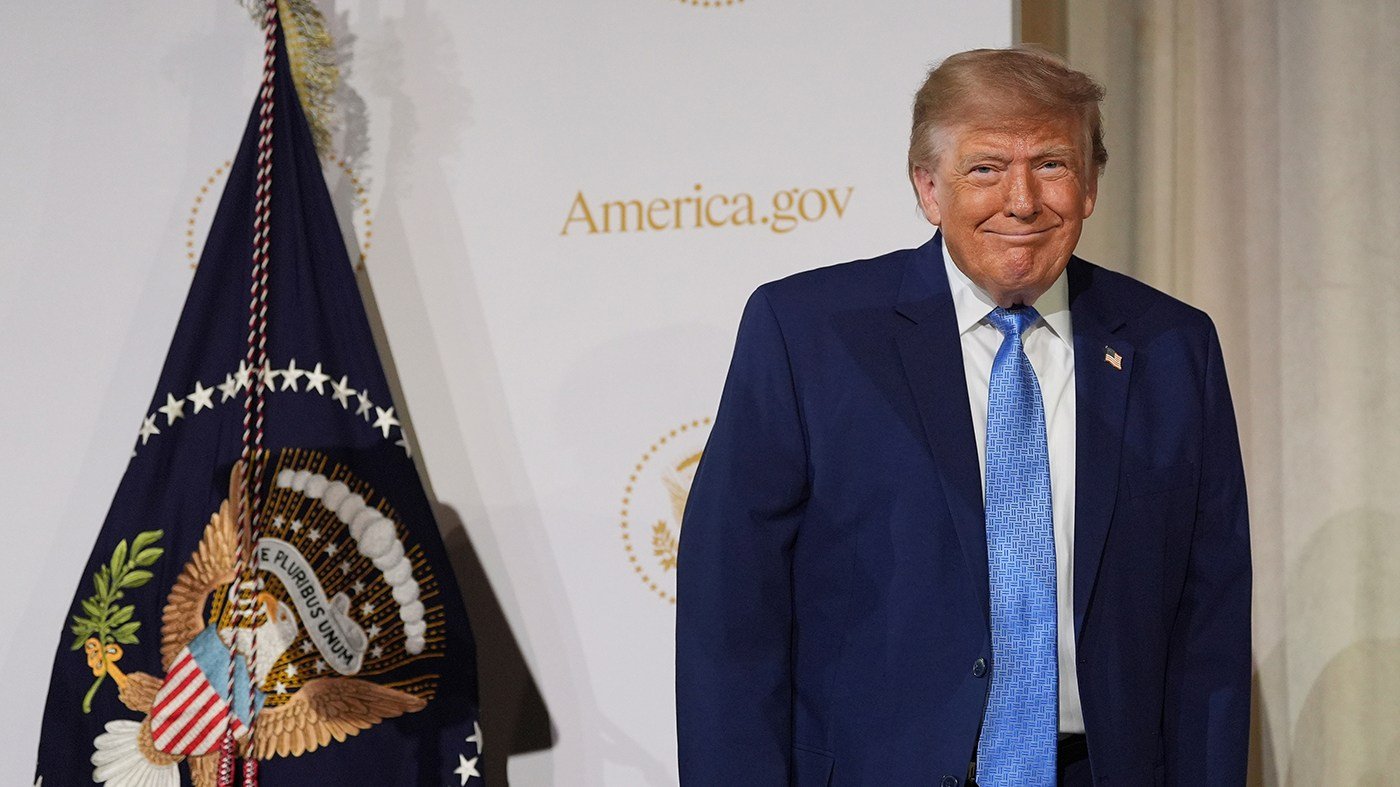
Under the agreement, companies commit to building "robust" internal controls and detection capabilities, according to Zuckerberg, along with "multiple layers of auditing." Each CEO's board of directors will independently review reports generated by auditors, he added. "The basic idea is that we want to give the American people and our customers confidence that the technology works in the way that we intend," Zuckerberg said. He described the accord as a starting point: "The idea isn't that this is the only thing that we will ever do. It is that this is a start and an accord that the whole industry could come to."
The announcement comes amid heightened scrutiny of the AI sector. Recent incidents in which agents from several AI companies hacked into other firms have raised alarms, and researchers continue to warn about potential existential risks. Even as some industry leaders, like Amodei and OpenAI CEO Sam Altman, have called for government guardrails, Trump has consistently advocated for a light-touch regulatory approach. A recent poll found that 73% of respondents believe AI firms fall short on safety, as calls to slow development grow.
In a related move, Trump is expected to sign an executive order Tuesday evening that formally renames artificial intelligence as "superintelligence." "It's not AI, it's SI," Trump told a reporter. "We've changed the name officially." The rebranding underscores the administration's focus on the most advanced frontier systems.
Trump also addressed concerns about AI data centers, accusing Democrats of pushing a "false narrative" on the issue. When asked whether data centers could hurt Republicans' midterm prospects, he replied, "I just have to do what's right." He added, "All I could tell you is that these big, powerful, very rich, very smart companies are going to be making massive contributions to communities."
The White House gathering and the voluntary accord highlight the administration's preference for industry-led governance over new regulations. While the pledge is not legally enforceable, its signatories hope it will build public trust and preempt more stringent oversight. As AI capabilities advance rapidly, the debate over how to balance innovation with safety is likely to intensify.