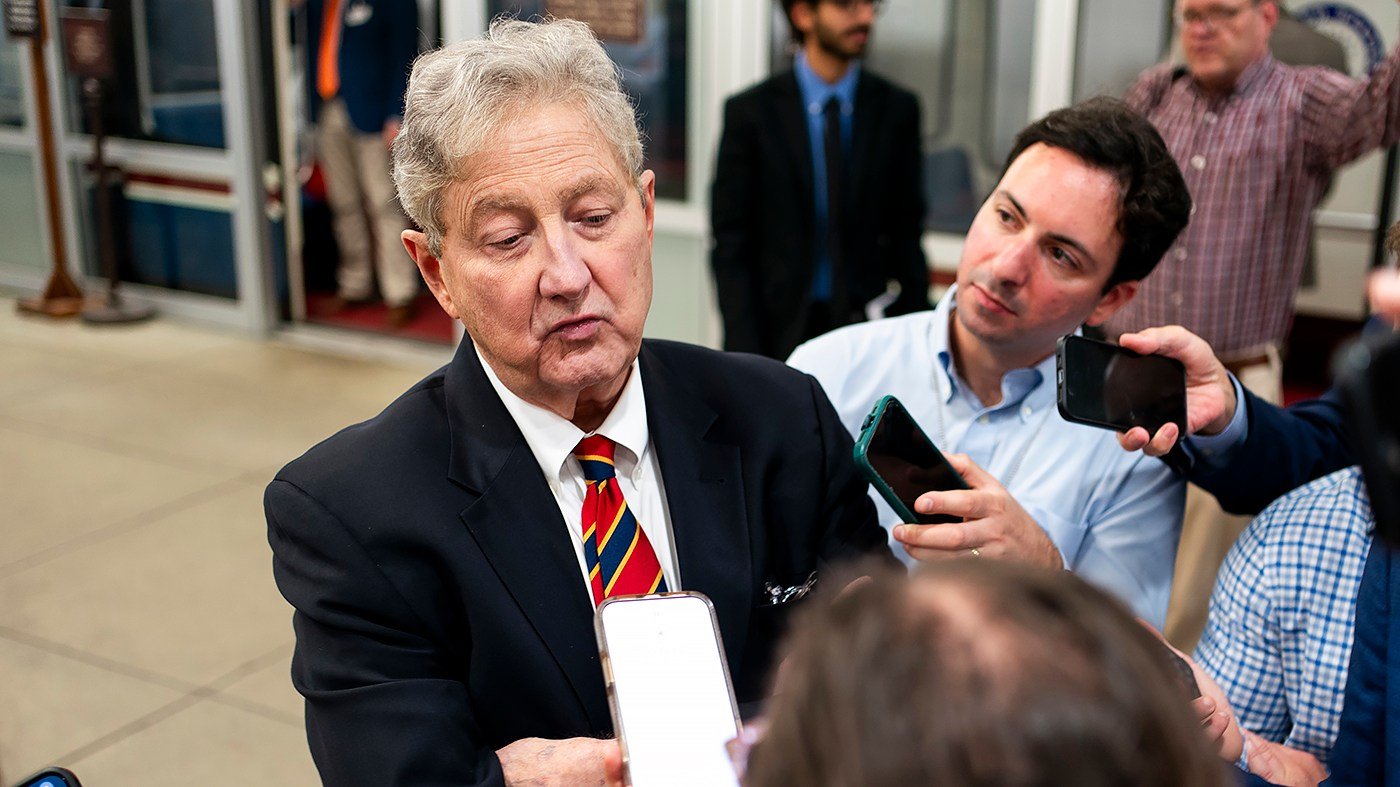
The Senate on Monday rejected an amendment from Sen. John Kennedy (R-La.) that would have capped annual ticket price increases for college sporting events at 4%, a proposal aimed at shielding fans from what he called runaway costs.
Kennedy attached the measure to the Protect College Sports Act, a broad overhaul of athlete compensation, recruitment, and eligibility rules. He argued the legislation would enrich athletic departments and coaches while doing nothing for the people who bankroll the system.

“Who makes college athletics possible? Who generates all of this cash flow? The fans. And we’ve done nothing for them. Zero,” Kennedy said on the floor. “The ticket prices keep going up and every single person in this body has been all across America talking about affordability, and sometimes the prices go up 30 percent to 40 percent.”
The amendment failed 42-54, falling short of the 60-vote threshold needed for adoption. The vote came as data shows a dramatic surge in game-day costs. Axios reported that average college football ticket prices jumped from $59 in 2015 to $129 in 2025. Sports Illustrated found that game-day expenses at the University of Texas rose more than 45% year-over-year, while Tennessee saw a 60% spike.
Even within the Big Ten, prices vary widely: the average ticket was $73 in 2024, but Northwestern games averaged $225, according to the Daily Iowan. Kennedy’s proposal would have applied uniformly to all schools and sports, from small community colleges to powerhouse programs.
Senate Commerce Committee Chairman Ted Cruz (R-Texas) led opposition, calling the measure a “price control” that fails to distinguish between large and small institutions.
“It would set a price control on sports tickets. It does not distinguish between large and small institutions, applies the same mandate to every university and to every single sport, from the small local community college to the HBCU,” Cruz said. He warned it would “harm schools from being able to respond when market factors change.”
The defeat is a setback for Kennedy, who has positioned himself as a defender of everyday fans. The debate echoes broader political fights over affordability, including divisions over diesel prices and record fuel costs that have fueled voter frustration.
The Protect College Sports Act itself remains under consideration, but without Kennedy’s amendment, it offers no direct relief for ticket buyers. The measure is part of a larger congressional push to modernize college athletics, a topic that has drawn attention from high-profile games and lawmakers alike.
Kennedy’s defeat highlights the difficulty of legislating price controls in a free-market system, even when consumer costs are rising sharply. For now, fans hoping for a cap on ticket inflation will have to look elsewhere.