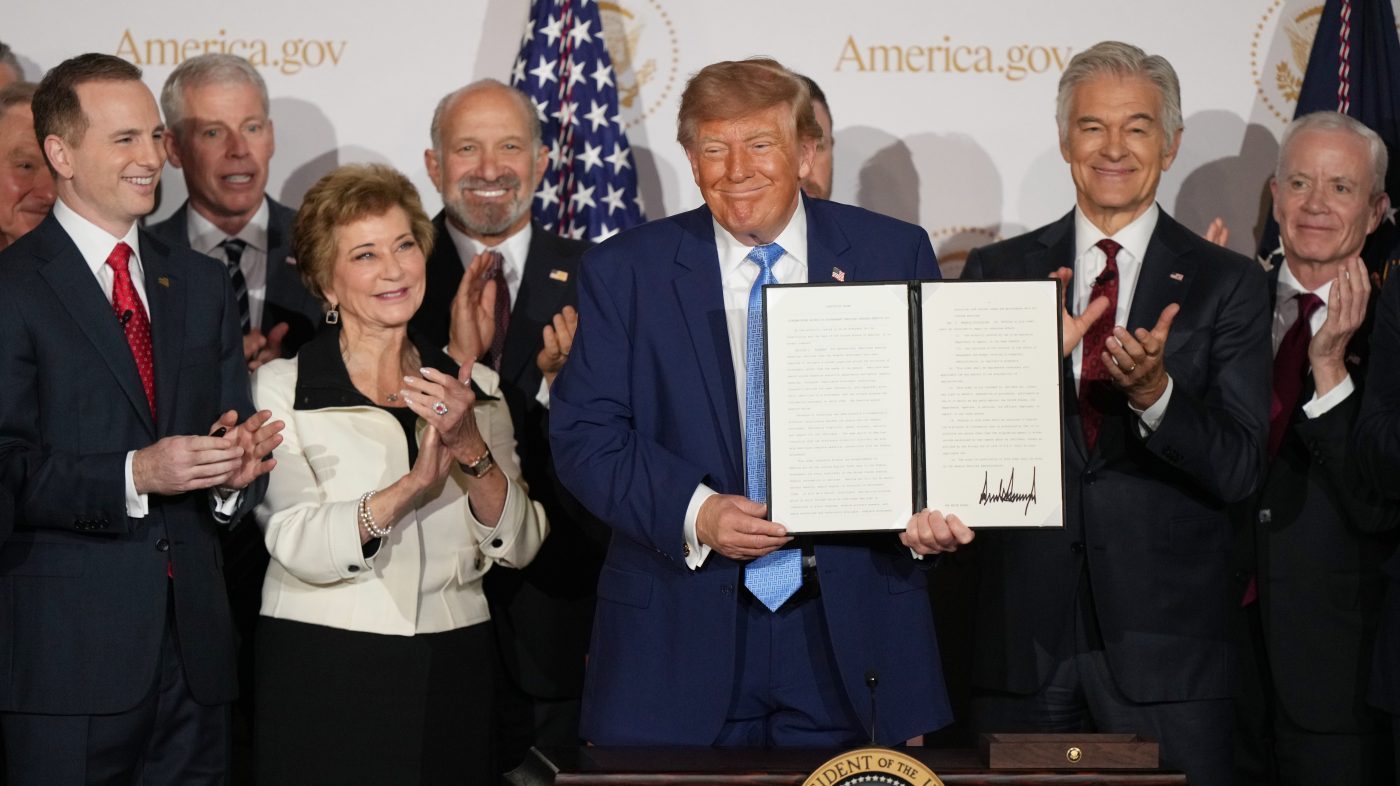
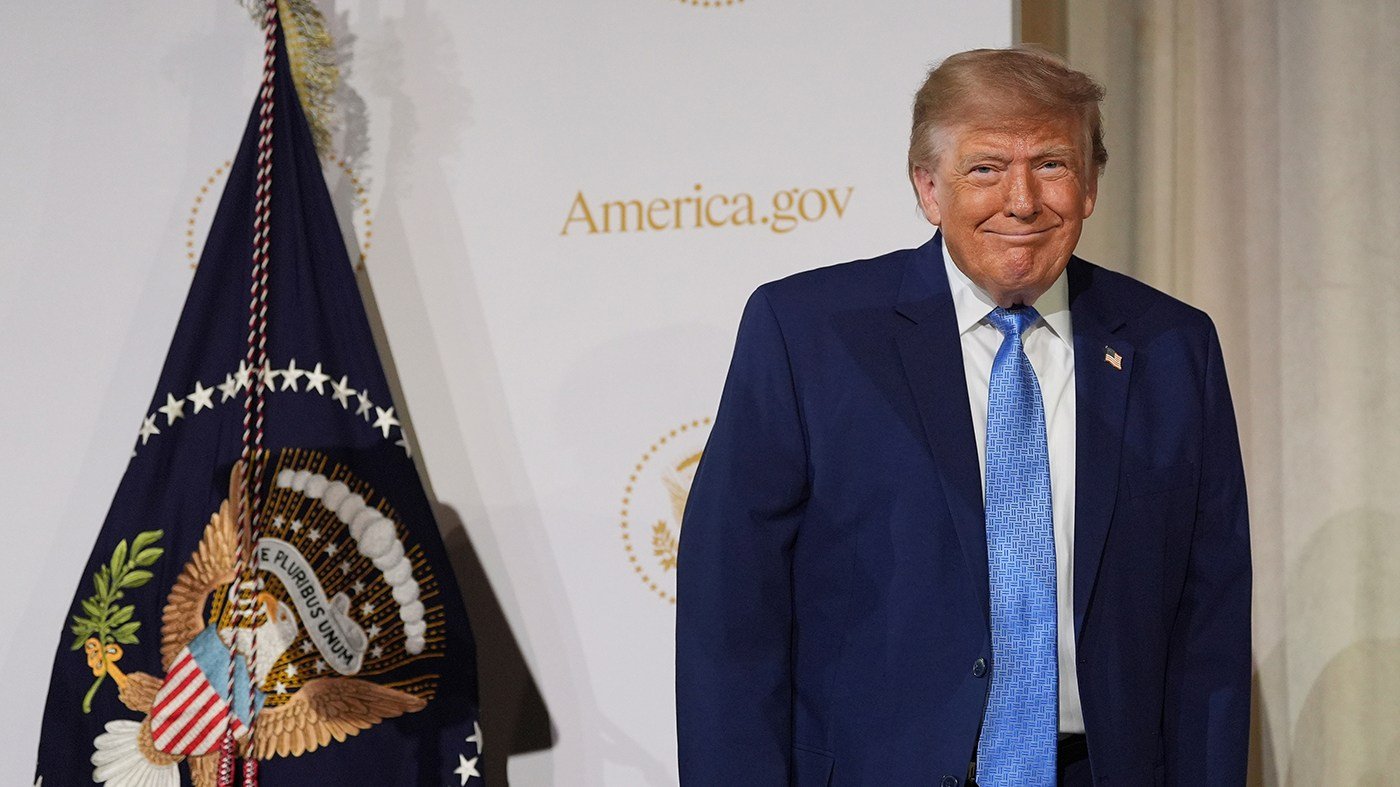
President Trump on Tuesday introduced America.gov, a new government website that employs artificial intelligence to let users search across federal, state, and local websites with a single query. The launch event took place at the Andrew W. Mellon Auditorium in Washington, D.C., drawing industry executives and administration officials for presentations and panel discussions.
Trump said the project has been underway since the early days of his second term and remains a work in progress. “Whether you’re a scout leader who wants to reserve a campsite at a national park, a senior citizen trying to choose a Medicare plan, or an American veteran trying to get the benefits that you’ve earned and so justly deserve, America.gov will be there to help and to help you accurately and quickly,” he said.
Built with Grok and Gemini
The General Services Administration (GSA) developed the platform alongside the National Design Studio. Joe Gebbia, the U.S. chief design officer, told CNBC before the launch that the site is powered by Google’s Gemini and Elon Musk’s Grok. The homepage greets visitors with “Hello, America. Whatever you need from government, start here.” The site is free, ad-free, and requires no account. Its FAQ states it “does not provide campaign or party information.”
Sam Corcos, acting director of GSA’s Technology Transformation Services, is overseeing the project. He previously served in Trump’s now-defunct Department of Government Efficiency (DOGE). Trump claimed the site “cannot, in theory, be hacked into,” adding that “everything is totally private” and “personal information is not collected or stored.”
Focused on Government Queries
America.gov draws from 29,000 websites and says all answers are “exclusively sourced from federal, state, and local websites.” It declines to answer questions about politics, culture, or health. “The accuracy of our answers is never influenced by third parties,” the site asserts. Users can type or speak questions, and the search bar offers examples such as “How do I replace my Social Security card?” and “When do I qualify for Medicare?” The tool also accepts uploaded documents for analysis. The site notes that more detailed queries yield better responses: “The more specific you get, the better we answer, right down to your dates, state, and circumstances.”
Passport and Name Change Applications in 2027
Although the site is new, it promises that by 2027 users will be able to apply for and renew passports online. Secretary of State Marco Rubio detailed the process on Tuesday: applicants could submit information, upload a photo, and track approval and shipment. He said users would see their photo in a passport mock-up and could retake it. “No printing forms, no drug store hostage photo, no appointment, no line, no middleman that you’re paying to do something that should be available to you,” Rubio said. The site also says users will eventually update their legal name across all agencies.
Medicare Enrollment and Job Applications Coming
The platform will eventually allow Medicare enrollment and simplify the process, according to Mehmet Oz, administrator of the Centers for Medicare and Medicaid Services. Oz demonstrated how the site would show which local providers accept Medicare, display available appointment times, and permit booking. It will also let users compare prescription coverage. In 2027, the administration says, the site will accept resumes and applications for government positions. For now, federal job seekers can continue using USAJobs.gov.
The rollout comes as the Trump administration faces broader political battles over AI policy. As Republicans and Democrats scramble to contain AI backlash ahead of the midterms, the White House has also moved to unveil a voluntary AI safety accord and rename the field “superintelligence.” Meanwhile, Trump’s AI-powered America.gov portal represents a high-profile attempt to streamline federal services, though its long-term success will depend on execution and public trust.