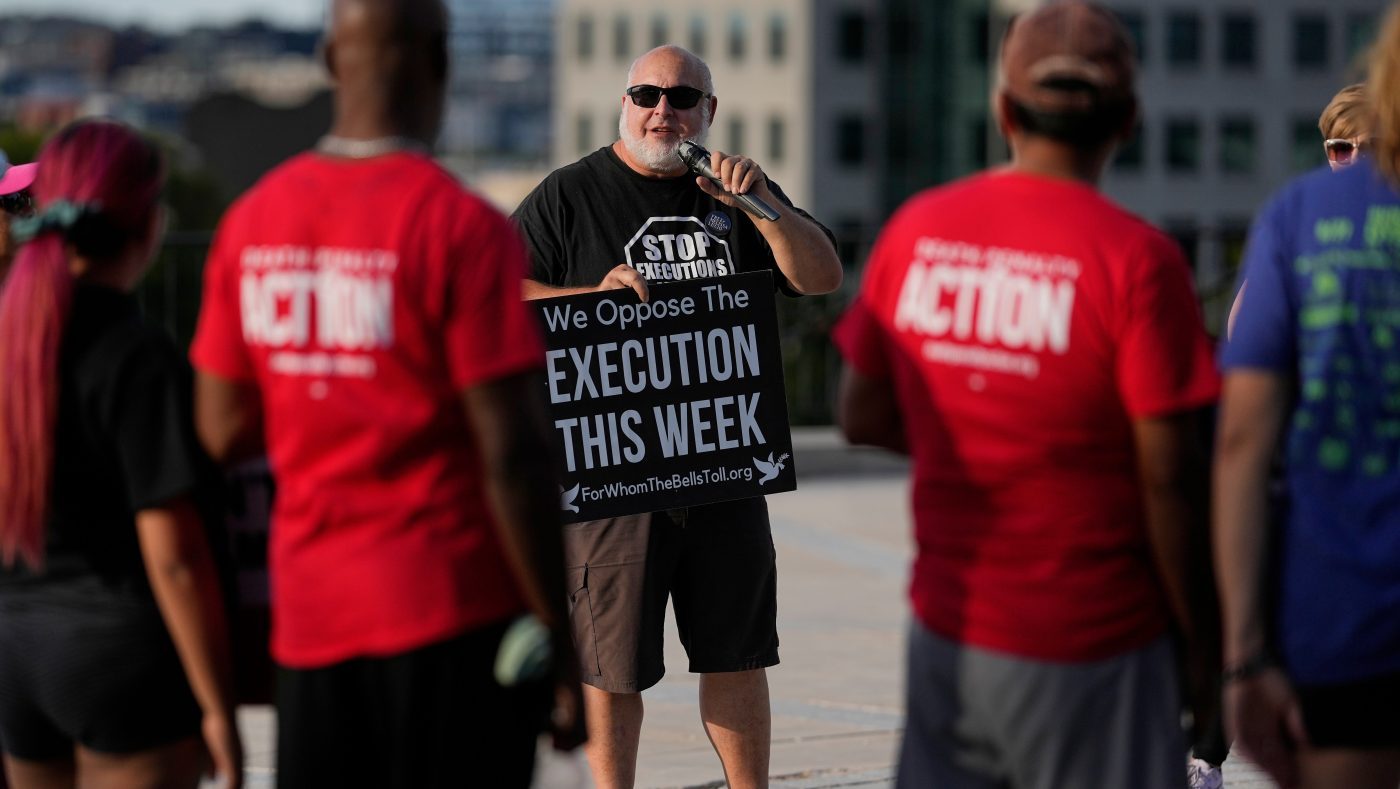
WASHINGTON — The Supreme Court on Tuesday declined to intervene in the case of Christa Pike, a Tennessee death row inmate scheduled to be executed Wednesday morning, rejecting her final appeal without comment. The decision clears the way for Tennessee to carry out its first execution of a woman in 200 years.
Pike, 50, is set to receive a lethal injection at 10 a.m. local time at Riverbend Maximum Security Institution in Nashville. She is the only woman on the state’s death row. The high court’s denial came less than 24 hours before the scheduled execution, following Republican Gov. Bill Lee’s refusal earlier this week to grant clemency.

Pike was convicted in 1996 of first-degree murder for the 1995 killing of 19-year-old Colleen Slemmer, a fellow Job Corps worker from Knoxville. According to prosecutors, Pike and her then-boyfriend lured Slemmer to an abandoned steam plant near the University of Tennessee agricultural campus, where she was beaten, tortured, and killed. Court records indicate Pike confessed to slashing Slemmer’s throat multiple times, throwing asphalt at her head, and keeping a piece of her skull as a souvenir. A pentagram was carved into Slemmer’s chest, though Pike has denied carving it herself.
Pike was 19 at the time of the crime and became the youngest person on Tennessee’s death row at 21. In her appeals, federal public defenders argued that she suffered extreme sexual abuse, including rape, throughout her childhood—mitigating evidence they say was never fully presented to the jury during sentencing. She has since been diagnosed with post-traumatic stress disorder and bipolar disorder.
Her petition to the Supreme Court contended that Tennessee’s lethal injection protocol, combined with her mental health conditions, would subject her to “extreme psychological torture when extracted from her cell and strapped to the execution gurney,” violating her constitutional rights. In her state clemency petition, Pike described herself as a “mentally ill 18-year-old kid” and said she had “changed significantly” while incarcerated. “It took me numerous years to even realize the gravity of what I’d done,” she wrote. “Even more to accept how many lives I affected. I took the life of someone’s child, sister, friend. It sickens me now to think I had the ability to commit such a crime.”
Pike was also convicted of another count of first-degree murder in 2001 for an assault on fellow inmate Patricia Jones, according to the Tennessee Department of Correction. The Supreme Court’s action follows a series of high-profile emergency applications in recent years, a trend that has drawn scrutiny from justices and advocates alike over the court’s so-called shadow docket, with some liberals seeing progress on transparency for such rulings.
Slemmer’s mother, May Martinez, told local affiliate WKRN earlier this week that she wanted the execution to proceed. “Maybe now finally we have the justice,” she said. “It may not bring my daughter back, but it might save another person from getting killed because she will do it again.”
The case has also drawn attention amid broader debates over capital punishment and the Supreme Court’s role in death penalty appeals, including a recent case in which the Trump administration asked the justices to uphold a transgender inmate policy.