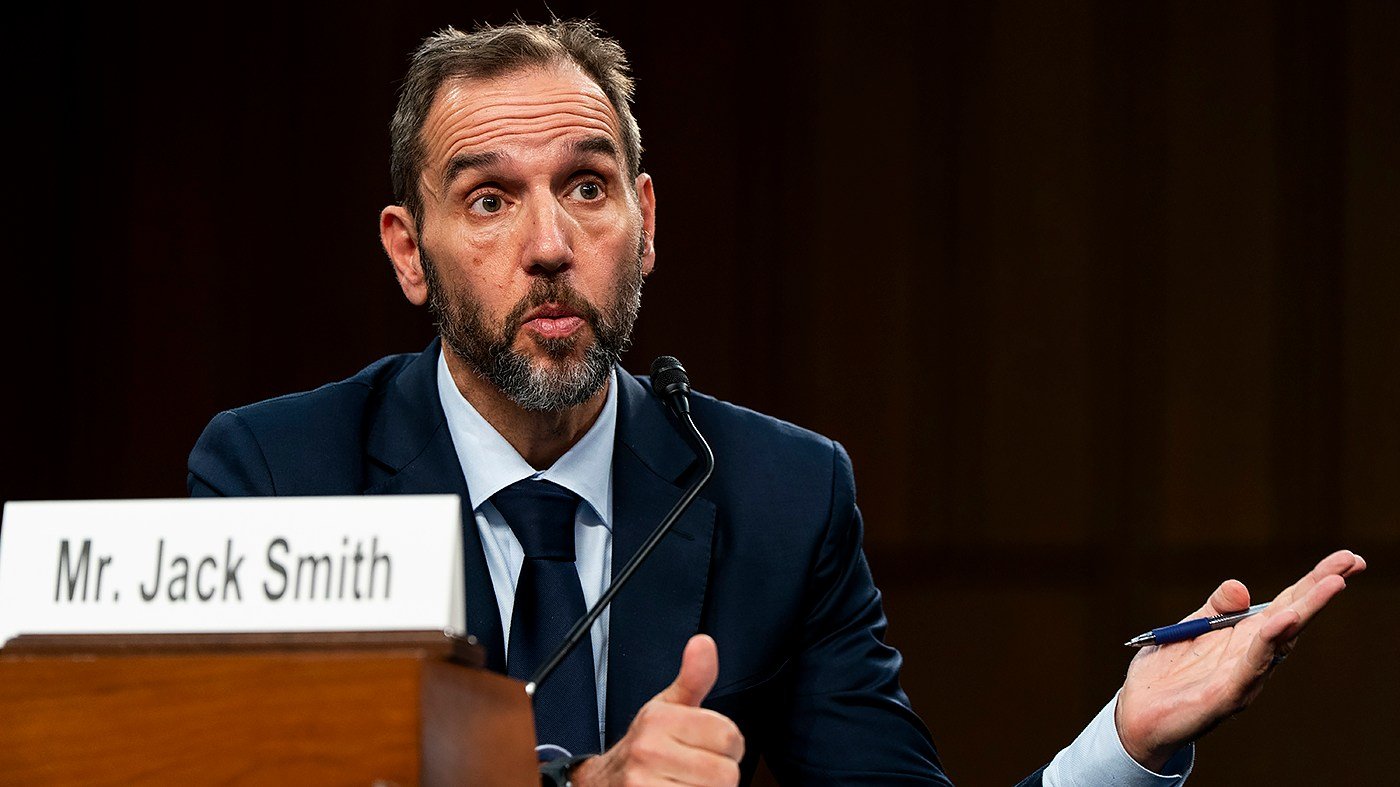
Former special counsel Jack Smith appeared before the Senate Judiciary Committee on Tuesday, where he was met with a barrage of insults from Republican senators and defended his prosecutorial decisions in the twin investigations into President Trump. The hearing quickly devolved into a partisan shouting match, with Smith serving as a punching bag for the GOP.
Sen. Eric Schmitt (R-Mo.) did not hold back, telling Smith, “You may think you’re a hero in this story, but let me tell you something. You’re the villain. You’ve done so much damage.” He added, “You will go down as a total dirtbag.” Sen. Mike Lee (R-Utah) compared Smith’s probe to Watergate, saying it “makes what Richard Nixon did in Watergate look like a Sunday picnic.”
Smith defended his work, stating that Trump faced criminal charges related to the Mar-a-Lago classified documents case and the case tied to the president’s role in the Jan. 6, 2021, attack on the U.S. Capitol as a result of his own illegal conduct. He added that he would have brought charges against any president who committed such crimes. “The charges against President Trump were the result of the evidence,” Smith said in his opening statement. “Grand juries in two separate districts reached this conclusion based on his actions, as alleged in the indictments they returned.”
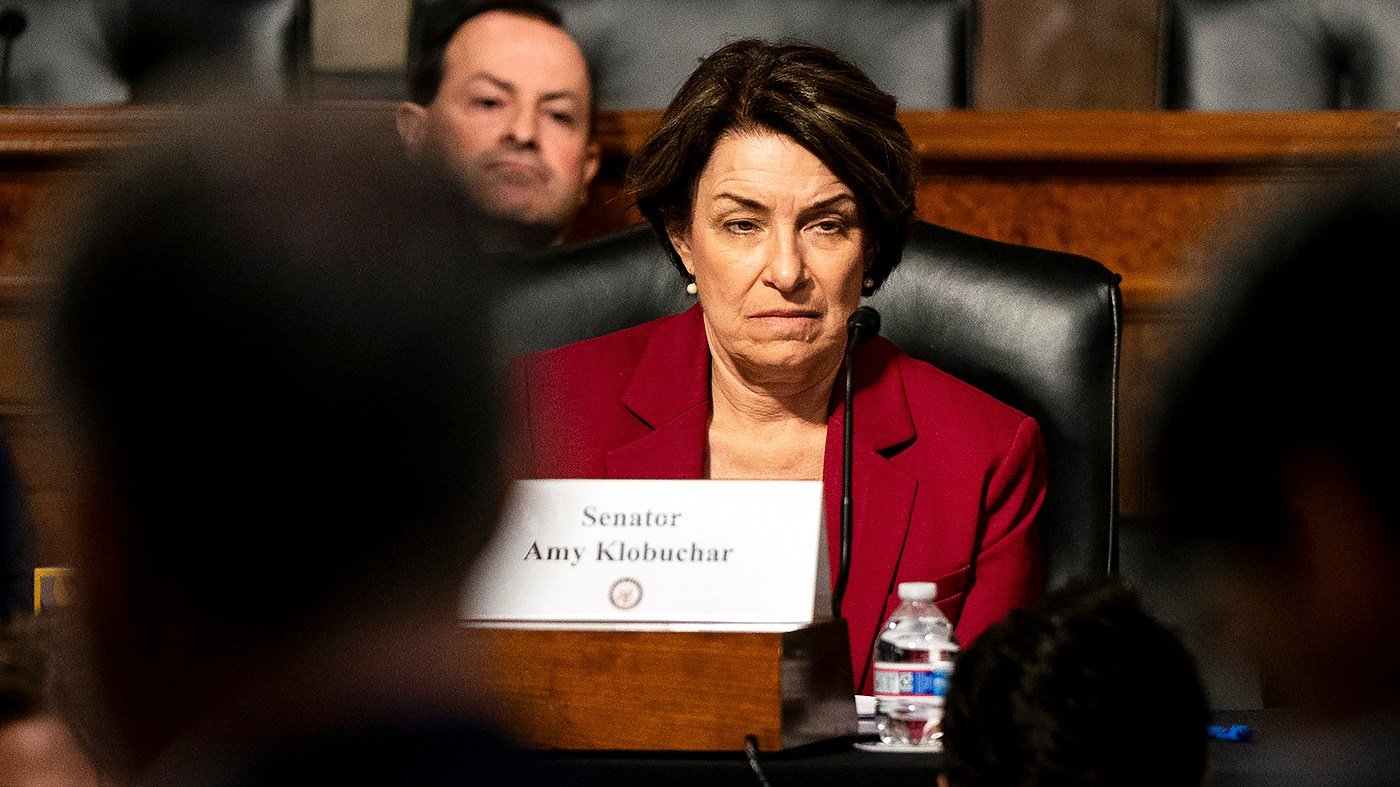
Sen. Cory Booker (D-N.J.) accused Republicans of “gaslighting” the American public about how damaging the Jan. 6 attack was to democracy. But the hearing was largely dominated by Republican grievances over Smith’s investigative tactics.
Smith defends accessing so-called toll records
At the center of the GOP’s ire was Smith’s decision to obtain the call logs of a dozen Republican senators as part of his investigation into Jan. 6. Smith described toll records, which are essentially call logs, as “non-content records” that were important for mapping out communication among different parties. “Those records corroborated evidence that we had that the president, President Donald Trump, and his co-conspirators were seeking to exploit the violence on January 6th in furtherance of their criminal scheme,” Smith said. He added that the records showed Trump’s efforts to coordinate with lawmakers to delay certification as well as those who contacted the White House in alarm. “We gained evidence [of people] reaching out to the White House, asking, ‘Please help us. Please stop what’s happening. Please have your supporters stop attacking the Capitol,’” Smith said.
Republicans accused Smith of violating the Speech and Debate Clause, as well as their privacy, saying he should not have sought a gag order barring cell phone companies from disclosing the move. Sen. Ted Cruz (R-Texas) told Smith, “You subpoenaed records associated with my phones, both personal and office, and you sought and obtained a court order to prevent me from knowing about it. For years, you were able to ask your questions in secret without me in the room. Today, the Senate gets to ask questions.” Cruz also accused Smith of being a “foot soldier for the [Democratic National Committee]” and claimed he “reelected President Donald Trump because the American people were disgusted at your willingness to abuse power in partisan ends.” Smith said he consulted Justice Department experts on the constitutional limitations and got approval to pursue the records.
Sparring over other subpoenas
The GOP’s outrage extended beyond the call records to numerous compulsory demands for Republican-affiliated groups. Cruz said, “In all, you issued 197 subpoenas to 34 individuals at least, and 163 businesses, and you sought records on at least 430 Republican individuals and entities… If you look at the list, there is one thing that is consistent. Every name on it is a Republican.” Smith defended the subpoenas, saying his team had to follow the money to map out the financial backing for groups that sponsored and organized events surrounding election challenges as well as Trump’s Jan. 6, 2021 speech on the Ellipse. “I can tell you why we issued subpoenas, and it was to conduct a criminal investigation of one of the most serious crimes that’s ever happened in our nation’s history. I had a duty to collect facts,” Smith said.
Committee Chair Chuck Grassley (R-Iowa), who first revealed the subpoenas, was not convinced. “No matter what you say, there is no legitimate basis for what you did, especially since your staff killed an investigation into the [Hillary] Clinton campaign. Donations to Republican groups wasn’t necessary for your investigation, which is proved out by the fact that it was not mentioned in your public report,” Grassley said.
Smith also used his opening statement to defend his staff and push back on claims of political motivation. He emphasized that the investigation developed proof beyond a reasonable doubt that President Trump committed crimes. The hearing underscored the deep partisan divide over the investigations, with Republicans continuing to attack Smith’s credibility and Democrats defending the rule of law. As the 2024 election looms, the battle over Smith’s probes is unlikely to fade. For more on the hearing’s fiery exchanges, see our coverage of Schmitt’s basketball blunder and Smith’s Senate grilling.