Donald Trump may dismiss the cost-of-living crisis as a “hoax,” but a recent survey from Public Policy Polling and NewDEAL shows affordability now tops voter concerns—ahead of war with Iran, crime, and immigration. For Democrats, this is both a political opening and a governing test.
As the party tries to reclaim momentum heading into November, the message is clear: slogans won’t cut it. Voters want to see a concrete plan to ease the financial pressure they feel every day—from grocery bills to rent to childcare costs.
“Americans do not experience the cost-of-living emergency as an abstract debate,” writes Debbie Cox Bultan, CEO of NewDEAL, in an op-ed. “They experience it in rising grocery prices, gas, rent, child care bills, utility costs, and healthcare costs.”
While Trump campaigned on lowering costs “on Day One,” his trade tariffs and the costly Iran conflict have only added to the burden, giving Democrats an opening. But to capitalize, party leaders are pointing to real-world examples where state and local officials are already delivering measurable relief.
Healthcare and Childcare: Frontline Solutions
In Shelby County, Tennessee, Mayor Lee Harris launched neighborhood health hubs that bring preventive care—free screenings, wellness programs, and primary care referrals—directly into underserved communities. The initiative, built with a local medical college, helps residents get care earlier and at lower cost.
Connecticut state Representative Kate Farrar helped push through a landmark childcare policy: starting in 2027, families earning under $100,000 will have access to no-cost childcare, while costs for higher earners are capped at 7% of income. Meanwhile, Maine House Speaker Ryan Fecteau led efforts to allow childcare facilities in residential zones, cutting red tape to boost supply and lower prices.
These local victories come as the broader political landscape heats up. New polls show Democrats competitive in six key Senate battlegrounds, suggesting affordability-focused messaging could tip the balance.
Utility Bills and Housing: Tackling Everyday Costs
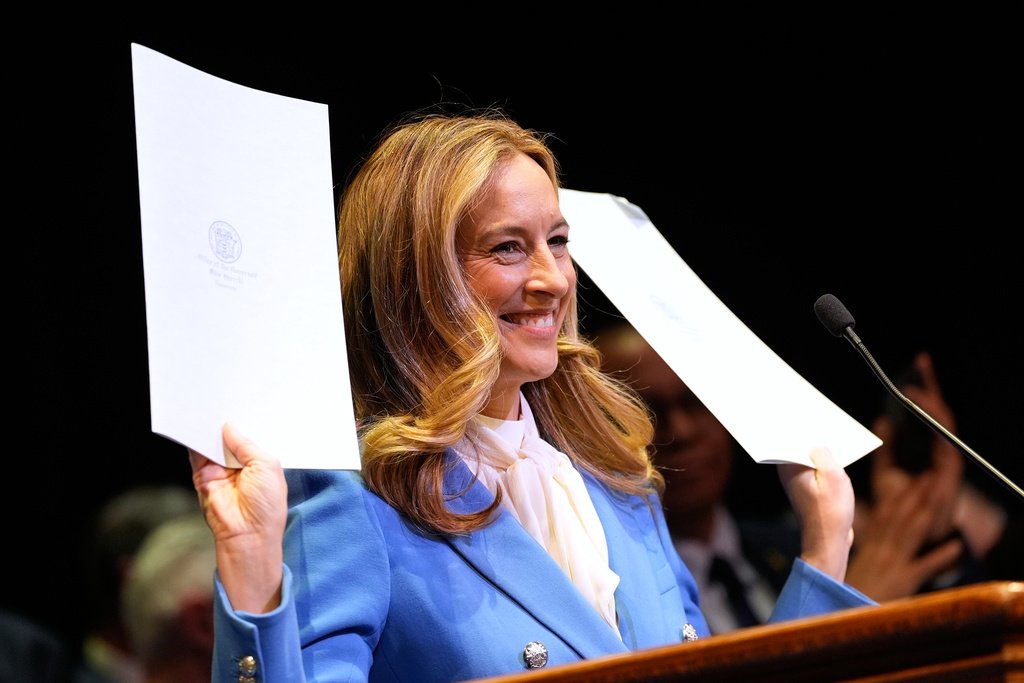
Monthly utility bills are another pressure point. New Jersey Governor Mikie Sherrill campaigned on freezing utility rates in her first year; on day one, she declared a state of emergency and signed executive orders to freeze or offset electric rate hikes and expand in-state power generation. In California, state Senator Josh Becker pushed legislation requiring utility providers to adopt cost-effective strategies and accelerate clean energy and battery storage projects. Phoenix Mayor Kate Gallego’s Energy Access Plan expands home weatherization and efficiency upgrades while simplifying assistance programs.
Housing remains the toughest challenge. In New Bedford, Massachusetts, Mayor Jon Mitchell’s Vacant Property Initiative helps families navigate legal and technical barriers to bring underused housing back online, expanding supply and reducing blight.
These policies vary by region but share a pragmatic approach: identify where families are squeezed, remove barriers that restrict supply and drive up costs, and use public policy to make essentials more accessible. Some require regulatory reform; others need smarter public investment. All treat affordability as a governing obligation.
Democrats face criticism from some corners for not moving fast enough. GOP Representative Nehls recently mocked affordability concerns, highlighting the partisan divide on the issue.
As the midterms approach, the lesson for Democrats is that voters are angry about the cost of living—and smart enough to know that building millions of homes or ending a war-induced energy crisis takes time. But they need to see leaders who understand the problem and are driven to make a material difference. By removing barriers, reducing costs, and proving that practical policy can improve everyday life, Democrats can show that affordability is not just a test message—it’s an urgent responsibility to deliver for hardworking Americans.