A sweeping new Reuters/Ipsos poll reveals that 77 percent of registered U.S. voters assign at least some blame to President Donald Trump for the recent spike in gasoline prices, as the ongoing confrontation with Iran continues to roil global energy markets.
The survey, released Friday, found only 22 percent of respondents disagreed that Trump bears responsibility. The sentiment cuts across party lines: 95 percent of Democrats, 82 percent of independents, and even 55 percent of Republicans agree the president is partially at fault.
Midterm Warning Signs for the GOP
This broad dissatisfaction could spell trouble for Republicans heading into the midterm elections, where affordability and economic stability are emerging as central themes. The party has been scrambling to sharpen its messaging on cost-of-living issues amid fears of a voter backlash. The poll indicates that only about one-third of respondents now prefer the GOP's economic approach, compared with 37 percent who favor the Democrats' stance—a razor-thin one-point advantage that has eroded sharply from the 14-point lead Republicans enjoyed shortly after Trump's second term began, according to Reuters.
This shift comes as Democrats see a growing divide over midterm strategy: anti-Trump anger vs. policy vision, with some arguing that focusing on economic pain could be more effective than simply attacking the president.
Mixed Signals on Relief
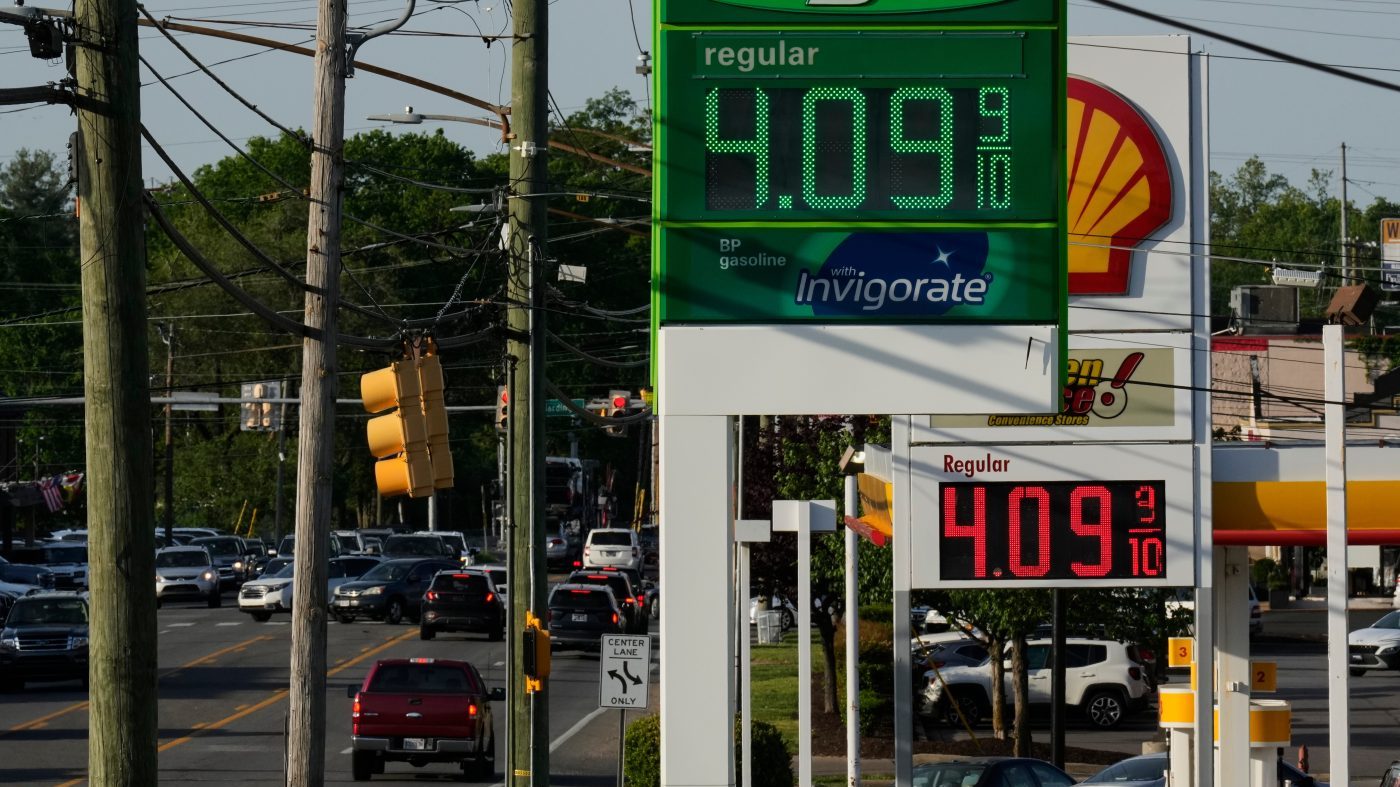
Drivers have seen modest relief at the pump this week, with AAA reporting a national average of $4.03 per gallon. However, oil prices remain elevated, with Brent crude hovering around $106 per barrel on Friday as the Strait of Hormuz remains effectively closed due to the U.S. naval blockade. The sustained closure has kept markets on edge, with Patrick de Haan, head of petroleum analysis at GasBuddy, warning in a blog post that markets are “likely to remain highly active” amid the ongoing back-and-forth between U.S. and Iranian officials.
“Oil prices will likely continue to experience sharp swings as traders weigh the risk of escalation against the potential for a diplomatic resolution,” de Haan wrote a day before Trump indefinitely extended a ceasefire in the conflict. The extension came at the request of Pakistani mediators, just hours before a two-week truce was set to expire. The president also affirmed that the U.S. would maintain its naval blockade in the Strait of Hormuz, a move that has drawn scrutiny—including from podcast host Joe Rogan, who questioned Trump’s Iran strategy after the ceasefire extension.
Administration Discord on Price Forecasts
The Trump administration has sent mixed messages about the long-term trajectory of energy costs. Energy Secretary Chris Wright told CNN on Sunday that gas prices may not fall below $3 per gallon until next year—a prediction Trump flatly rejected as “totally wrong” during a phone interview with The Hill on Monday. The disconnect highlights internal uncertainty as the White House navigates a volatile global landscape.
The poll underscores the depth of public concern: 77 percent of Americans now view fuel prices as a very big concern, and respondents were more than twice as likely to expect an increase over the next year than a decrease. The survey was conducted from April 15-20 among 4,557 U.S. adults and has a margin of error of 2 percentage points. With midterm campaigns heating up, the economic anxiety reflected in these numbers could reshape the political battlefield.