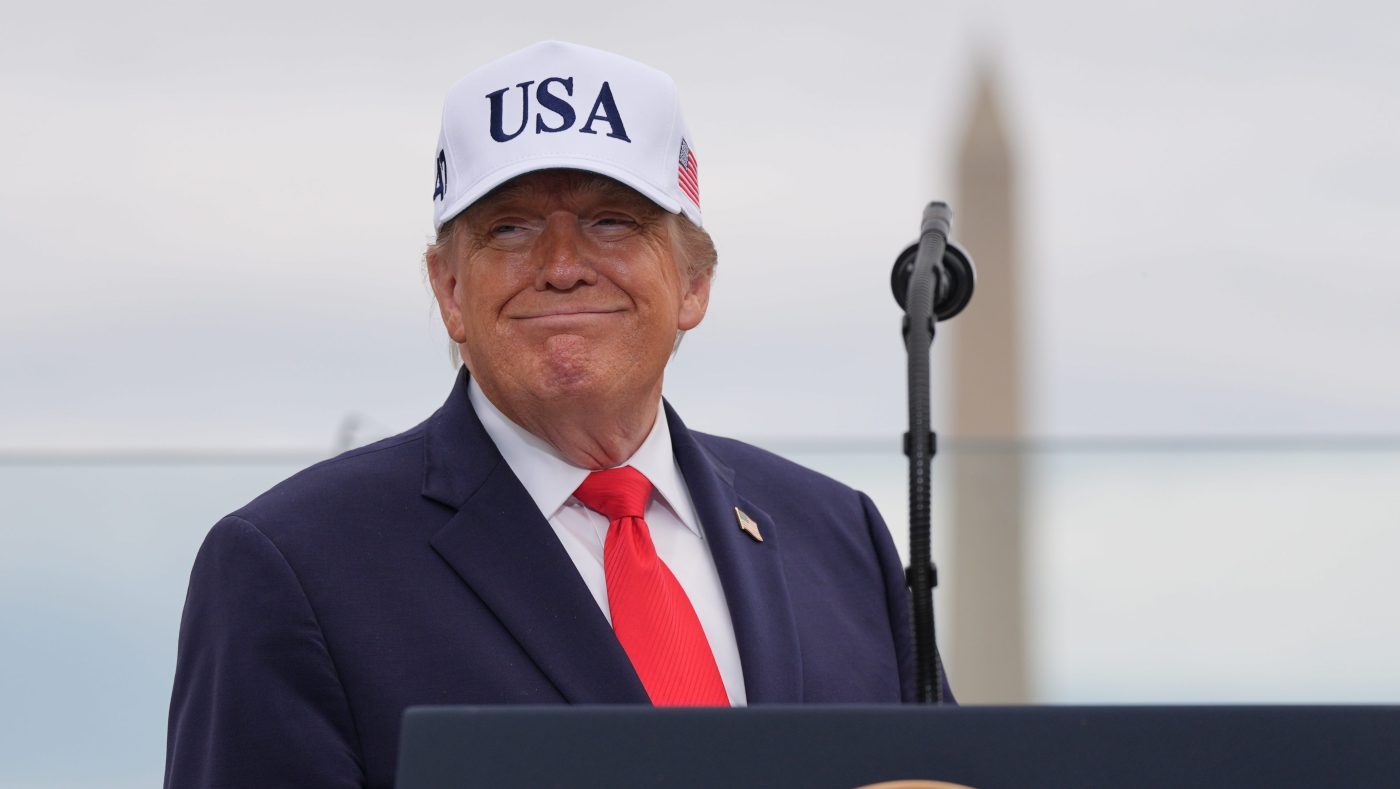
President Trump seized on a sharp drop in oil prices Monday as he made his final appeal to voters before Tuesday's midterm elections, framing the decline as evidence of his administration's success in confronting Iran.
International benchmark Brent crude traded around $104 a barrel in the afternoon, down from a high of $112 earlier in the day. U.S. benchmark West Texas Intermediate fell to about $96, off from nearly $103. The move came as Tehran signaled it could reopen the Strait of Hormuz if the U.S. met certain conditions, though it remained unclear whether Washington would agree. Meanwhile, reports have circulated about possible new U.S. strikes on Iran after the elections.

The Strait of Hormuz, a vital artery for global oil shipments, has seen periodic closures during the conflict, and even when shipping lanes are open, insurance and freight costs have soared. Damage to oil infrastructure in the region, compounded by the Russia-Ukraine war, has also kept upward pressure on prices.
"Oil today is down $10," Trump said. "It's going to go down a lot further because we're winning with Iran, easily winning." He went on to call the decline "the biggest drop in oil in history."
That claim does not hold up against recent history. During the early days of the Covid-19 pandemic, oil prices briefly plunged to about negative $38 a barrel, a far larger single-day move.
If Monday's drop is sustained, motorists could see some relief at the pump in the coming weeks, though changes in crude prices typically take time to filter through to gasoline and diesel. As of Monday, the average U.S. gasoline price stood at about $4.17 a gallon, up $1.13 from a year earlier, according to AAA.
Voter frustration over high fuel costs is expected to be a significant factor in the midterms, with control of Congress at stake. Trump's remarks came as he and other Republicans made their final pitches, including a rally at the Lincoln Memorial over the weekend. The president's focus on oil prices is part of a broader effort to highlight economic wins, even as the midterms are set to reshape Congress.
Oil market analysts caution that geopolitical tensions remain high and prices could easily reverse course. The situation with Iran is fluid, and any new strikes or further sanctions could send prices back up. For now, the drop offers a talking point for the White House, but its impact on voters may depend on whether gas prices actually fall in the days after the election.