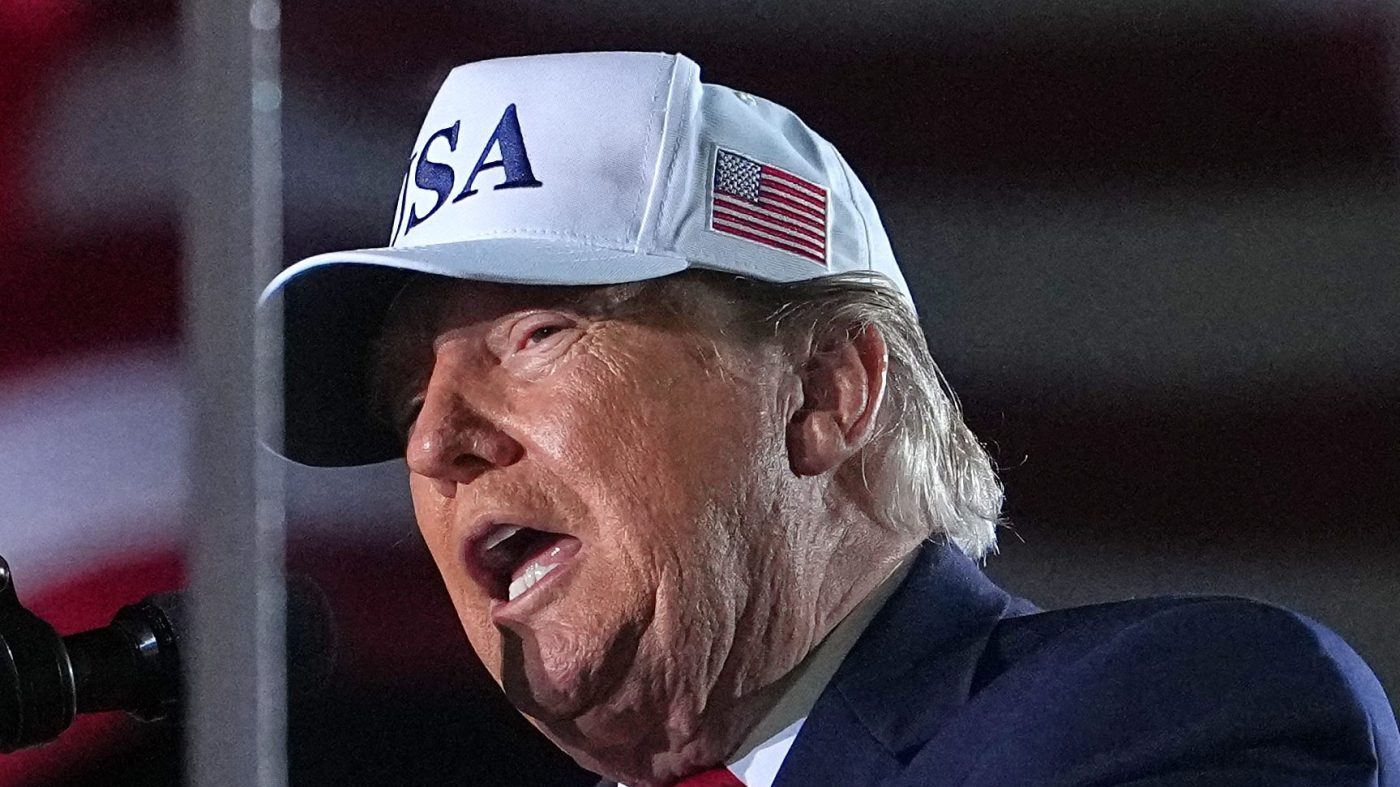
President Trump on Monday delivered his final public appeal to voters before the midterm elections, appearing at the Lincoln Memorial Reflecting Pool in Washington to rally Republican support with control of Congress at stake. The event, which began at 2 p.m. EST, marked an unconventional conclusion to a month of campaign rallies aimed at energizing the GOP base.
Rather than the typical arena-style rally, Trump spoke from the newly renovated reflecting pool, a setting he used to highlight his administration's agenda and the controversial beautification projects in the nation's capital. The choice of venue underscored his focus on tangible accomplishments, even as he sought to counter voter frustration over the economy, rising energy prices, and the ongoing conflict in Iran.
The speech came at a critical juncture, with polls showing a tightening race for Congress and Trump's approval ratings at a new low in the final pre-election survey. Republicans have struggled to craft a unified message, with many candidates leaning heavily on loyalty to the president rather than a coherent policy platform, a strategy that has shown signs of faltering as voters head to the polls.
Trump's address was part of a broader GOP effort to galvanize turnout, but it also highlighted the party's internal tensions. While some Republicans have distanced themselves from the president, others have embraced his rhetoric, hoping to ride his base to victory. The event at the Lincoln Memorial was attended by a crowd of supporters, though its size was notably smaller than the massive rallies Trump held in prior cycles.
Political analysts noted that the setting itself carried symbolic weight, evoking themes of American leadership and national unity. However, the president's remarks were expected to focus less on bipartisanship and more on defending his record and criticizing Democratic opponents. His speech touched on immigration, trade, and the economy, while also referencing the ongoing military engagement in Iran, a topic that has divided voters.
The midterms are widely seen as a referendum on Trump's presidency, and the outcome could reshape Washington. A Democratic wave could give the opposition control of the House, enabling investigations and legislative checks on the administration. Conversely, a strong Republican showing would be seen as validation of Trump's approach.
In the final days of the campaign, Trump's allies, including Vice President Mike Pence and other surrogates, have fanned out across the country. JD Vance, the GOP Senate candidate in Ohio, held events in New York and Ohio, while other Republicans made last-minute appearances in battleground states.
Yet the president's polarizing style has been a double-edged sword. His administration has seen high turnover among female staffers, a trend that has fueled criticism of his management style and broader appeal to women voters, a key demographic in the midterms.
As Election Day approaches, both parties are bracing for a high-stakes night. The GOP's messaging has struggled to resonate beyond its base, and Trump's final pitch may not be enough to overcome headwinds. Still, his supporters remain optimistic, pointing to his ability to defy expectations in the past.
With polls closing Tuesday night, the nation will soon learn whether Trump's gamble on a Lincoln Memorial finale paid off or whether voters were looking for a change.