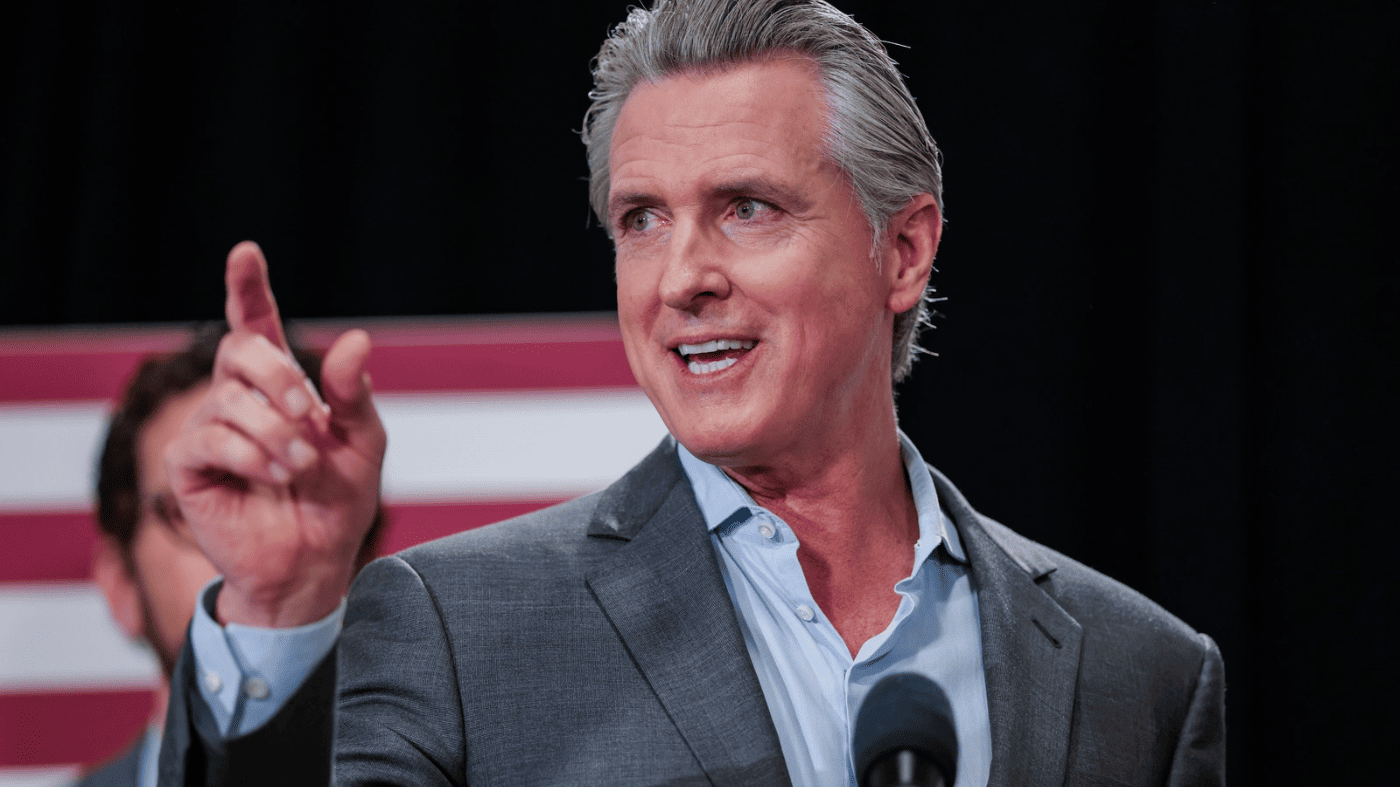
California Governor Gavin Newsom (D) signaled on Sunday that Democrats could be on the verge of a major electoral wave, using the term “blue tsunami” to describe the possibility of sweeping victories in Tuesday’s midterm elections. Speaking on a special preview program hosted by 2WAY in partnership with The Hill and NewsNation, Newsom told moderator Mark Halperin that the party’s chances to reclaim one or both chambers of Congress are real, citing competitive Senate races and growing voter enthusiasm.
“It could be that blue tsunami, but you make that legitimate and obvious point,” Newsom said. “The margins in those Senate races suggest that, obviously, maybe it won’t be on that side of the aisle, as well.” He emphasized that the word “tsunami” is not one he uses casually, noting that he has been sharing the same sentiment in private conversations and public appearances.
“We’re all going to be experts in hindsight. It will all be obvious – what’s happened – in 48 hours. But I just – that tsunami. That’s a word I haven’t used lightly and it’s a word that I’m sharing privately and publicly,” Newsom told Halperin and co-hosts Kevin Walling, a Democratic strategist, and Larry O’Connor, a conservative commentator.
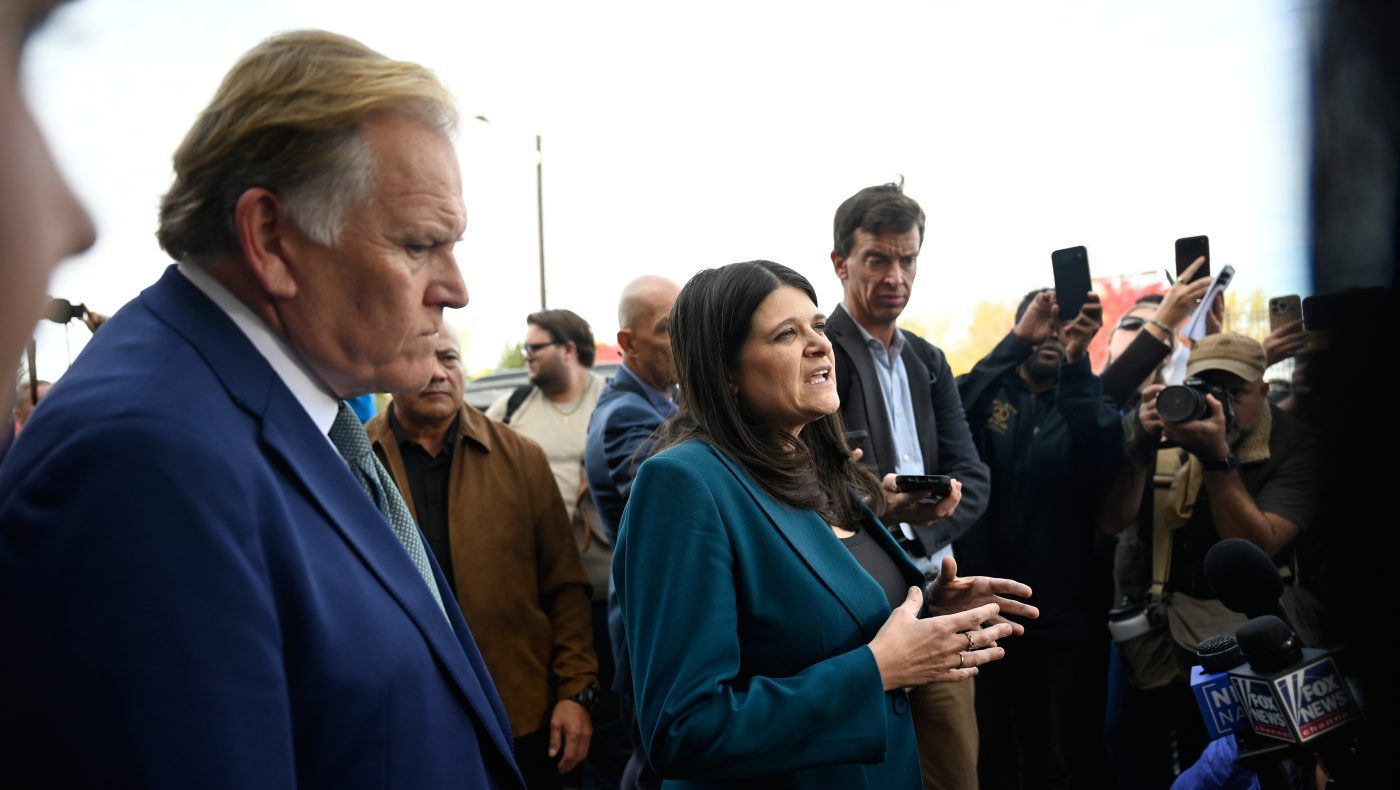
The governor pointed to recent developments, including a notable cross-party endorsement in Michigan, as evidence of the shifting political landscape. He referenced Representative Haley Stevens (D-Mich.) backing Republican Senate candidate Mike Rogers, a move that has drawn attention amid Trump’s welcome of that endorsement. Despite such headwinds, Newsom insisted that the momentum is on the Democratic side.
However, Republicans were quick to push back. Representative Mike Lawler (R-N.Y.), who is fighting for reelection in a competitive district, dismissed the notion of a Democratic wave. “People are feeling the pain,” Lawler said, arguing that Democratic policies in states like California and New York have made them among the most expensive places to live. “I don’t think the blue tsunami, as Gavin Newsom predicts, is going to be reaching New York in terms of my congressional seat.”
Polling data suggests Democrats are well-positioned in the battle for the House. Decision Desk HQ (DDHQ), The Hill’s election partner, gives Democrats an 83% probability of winning the House, where they need a net gain of at least three seats. In the Senate, Democrats must flip four Republican-held seats to take control, and DDHQ estimates a 62% chance of doing so.
The political environment has been shaped by President Trump’s low approval ratings on the economy and his handling of the Iran war, which have weighed on Republican candidates. Trump has urged GOP voters to close the turnout gap by acting as if he were on the ballot, a common midterm strategy for presidents seeking to mobilize their base.
Meanwhile, some Republicans are bracing for internal debate if losses occur. Representative Don Bacon (R-Neb.) said Sunday that the GOP would need to revisit its ideological direction, suggesting the party has strayed from “Ronald Reagan principles” during Trump’s two administrations. “I think the Republican Party, I think America yearns for those principles … And I surely would like to see a debate, and I know I want to be a part of it,” Bacon said on CNN.
As Election Day approaches, both parties are making final arguments. Newsom’s “tsunami” prediction has energized Democrats, but Republicans remain confident that voter frustration will counter any Democratic wave. The outcome will hinge on a handful of toss-up races across the country, as control of the House hangs in the balance.