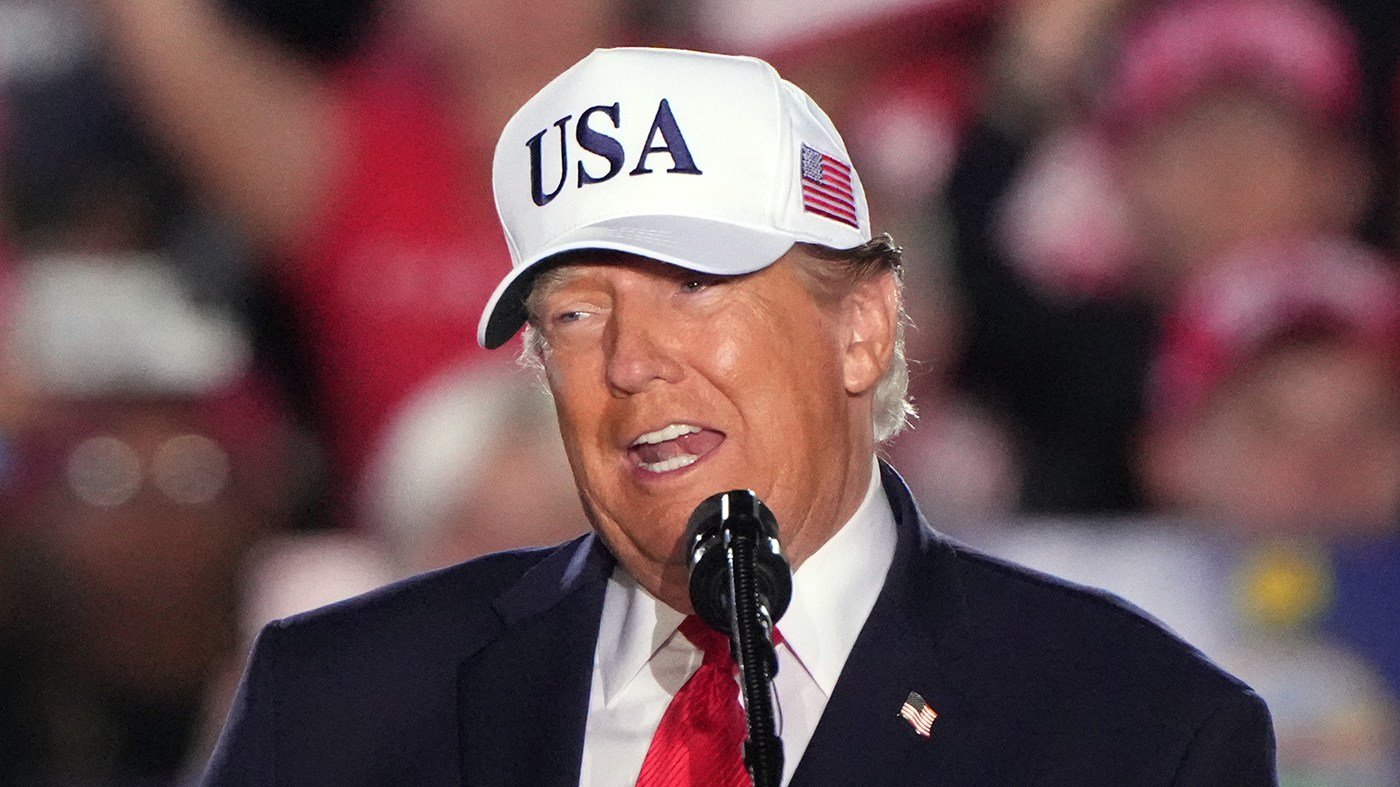
President Trump's political standing is on the line as the midterm elections approach, with a possible Democratic wave threatening to curtail his agenda and define his legacy. Over the past weeks, Trump has held 28 in-person rallies and numerous tele-rallies, focusing on Republican strongholds like Ohio, Texas, Iowa, Kansas, and even Alaska, in a bid to keep those states safely red. He also visited deep-red states like Mississippi and South Carolina, where races have tightened unexpectedly.
Despite Trump's claims that his rallies have energized GOP candidates, recent polling suggests otherwise. A New York Times/Siena College poll released the day before Election Day showed Democrats leading in Senate races in Ohio, Texas, Iowa, Kansas, and Alaska. Trump's heavy investment in these states means he could bear the blame for any Democratic gains, potentially impacting the GOP beyond just this election cycle.
Republicans are warning that a blue wave would hinder Trump's ability to push his agenda over the next two years, including judicial appointments and Cabinet changes. One anonymous Republican strategist noted, "It impacts his ability to drive policy over the next two years, or if a Supreme Court nomination comes up, or fill in the blank in terms of even Cabinet turnover. All of that too will help shape his legacy, and it's how people remember you at the end that guides you into the history books."
The Republican National Committee has echoed these concerns, with spokeswoman Natalie Baldassarre stating, "The president knows what's at stake this cycle, which is why he's barnstormed the country to encourage our voters to support Republican candidates that will advance his agenda and deliver for the American people." The RNC also warned that Democratic control would lead to obstruction and "disastrous economic policies."
A Closing Message That Missed the Mark
However, Trump's final pitch before the midterms seemed to miss the mark. In a 37-minute address at the Lincoln Memorial Reflecting Pool, Trump spent the first 22 minutes discussing the pool's renovation, showing before-and-after photos and inviting Interior Secretary Doug Burgum to speak. He also touted his beautification projects and crime reduction in Washington, D.C.
Republican operative Rob Stutzman called the speech "another Captain Queeg moment," referencing the unstable commander from "The Caine Mutiny." Another GOP strategist reacted with disbelief, saying, "What the utter f*** was that?" The strategist added, "Republicans were hoping that he would have some sort of a closing message, some sort of American message with it, with a wonderful backdrop that could maybe be of help in the closing hours here. As we Republicans are losing touch with the public, it looked like he was losing touch with reality."
One national Republican operative expressed frustration, noting the speech "perfectly encapsulates his messaging throughout this entire campaign cycle, but it's deeply frustrating when we need to be laser-focused on turning out our low propensity voters tomorrow."
Yet, a third strategist defended Trump, arguing the Reflecting Pool was "a hook" to discuss issues like crime and immigration. "It's one of these things that wherever you get the opportunity to speak to a national audience, you're going to talk about the midterms even if you have to start with something else," the strategist said.
Trump did eventually urge Republicans to vote, saying, "If the people that voted for me and voted in the last election where we had such a great victory, if they go out and vote, just a good portion of them, we will win in a landslide." He acknowledged the historical trend of the president's party losing midterms, adding, "We gave this a very strong shot."
The GOP's strategy has relied heavily on turning out low-propensity voters, a tall order in a non-presidential election. Trump's presence on the trail was meant to make voters "pretend" he was on the ballot. Republican donor Dan Eberhart noted, "The amount of rallies he did shows he 'believes' that he's on the ballot tomorrow. He worked hard, and he's right: tomorrow's outcome is a reflection on him."
White House spokesman Davis Ingle defended Trump's efforts, calling him the GOP's "best messenger" and "unmatched motivator" committed to maintaining Republican majorities. As the polls close, the results will not only determine control of Congress but also the trajectory of Trump's presidency and his place in history.