A majority of American adults are bracing for higher gas prices in the year ahead, as the war with Iran continues to disrupt global energy markets, according to a new Reuters/Ipsos survey.
The poll, released Monday, found that 59 percent of 4,531 respondents anticipate gas prices will increase over the next 12 months. Only 17 percent said they expect prices to improve, while 13 percent foresee no change and 11 percent were unsure or declined to answer.
Partisan Divide on Fuel Outlook
The survey reveals a stark partisan split: more than 8 in 10 Democrats and over 6 in 10 independents believe prices will keep rising. By contrast, just over a third of Republicans agreed, while a plurality of GOP respondents—39 percent—said they expect prices to drop.
The poll, conducted June 3–8, carries a margin of error of plus or minus 2 percentage points.
War and Negotiations
The Middle East conflict, now past the 100-day mark, remains volatile. Over the weekend, Iran and Israel exchanged fire, and negotiations to end the war are on shaky ground. President Trump told reporters early Tuesday that talks with Iran are “going well” and that he “could have at least an idea by one or two days from now” on a potential deal. He has consistently struck an optimistic tone throughout the crisis.
Meanwhile, the Strait of Hormuz—a critical chokepoint for global oil shipments—remains largely closed. In the past 24 hours, only 10 ships transited the waterway, a sharp drop from the typical daily average of 60 vessels, according to hormuzstraitmonitor.com.
Gas Prices: Recent Relief but Persistent Risk
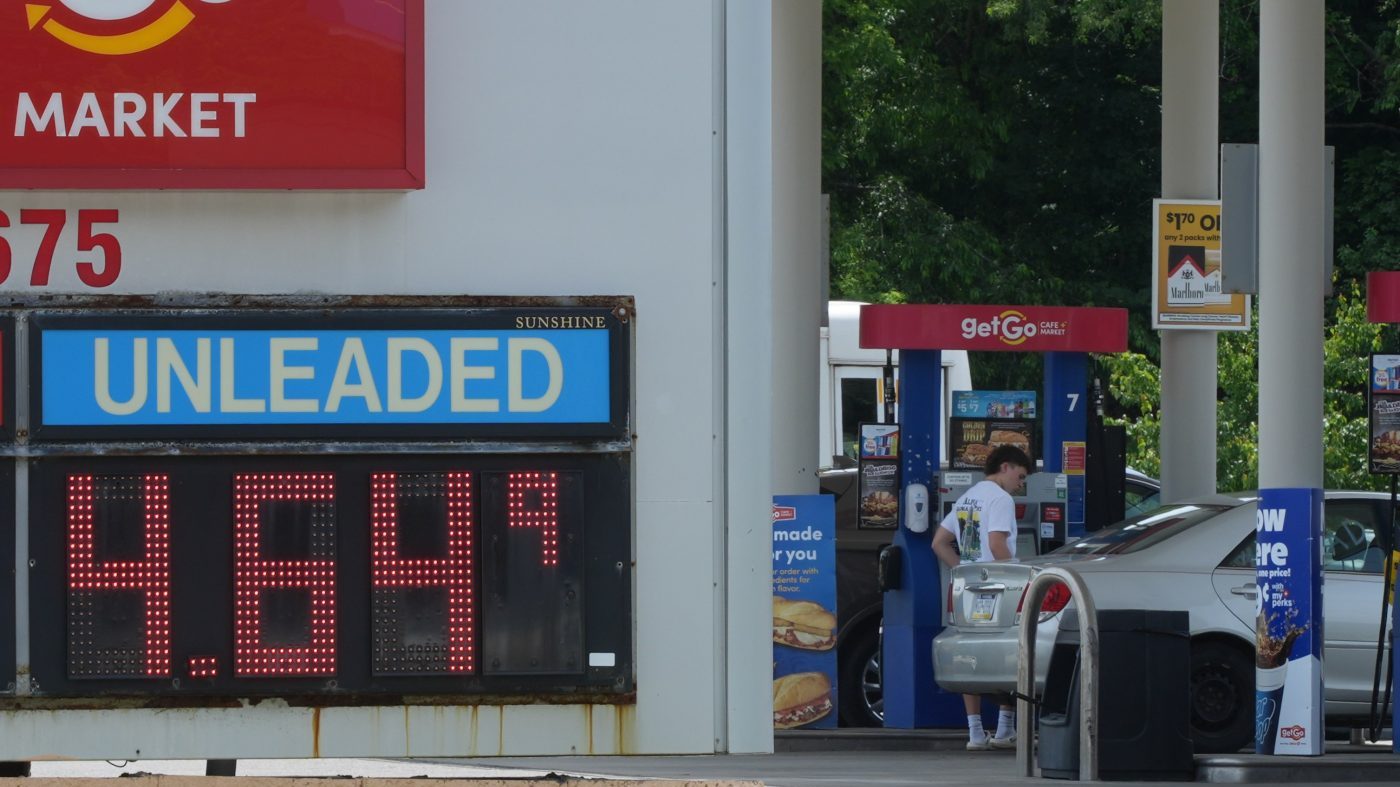
Domestic fuel prices have eased somewhat over the past month. As of Tuesday, the national average for a gallon of regular gas stood at $4.16, nearly 37 cents lower than a month ago, per the American Automobile Association (AAA). Diesel has also fallen, to $5.32 a gallon from $5.65 a month earlier.
Still, prices remain far above pre-war levels. On Feb. 26—two days before the U.S. and Israel launched strikes on Iran—the average for regular gas was under $2.99 a gallon, AAA reported.
Patrick De Haan, head of petroleum analysis at GasBuddy, attributed the recent decline to lower oil costs and “improving refinery runs.” But he warned that with the Strait of Hormuz still “effectively closed,” any “further deterioration” in the Middle East “could send prices sharply higher.”
“For now, motorists may enjoy the savings at the pump, but the risk of a significant reversal has not gone away,” De Haan added.
The ongoing conflict has also squeezed other sectors. Trump has promised farmers relief from soaring fertilizer costs linked to the war, while wheat production has fallen to 1972 levels, raising the prospect of broader grocery price hikes.