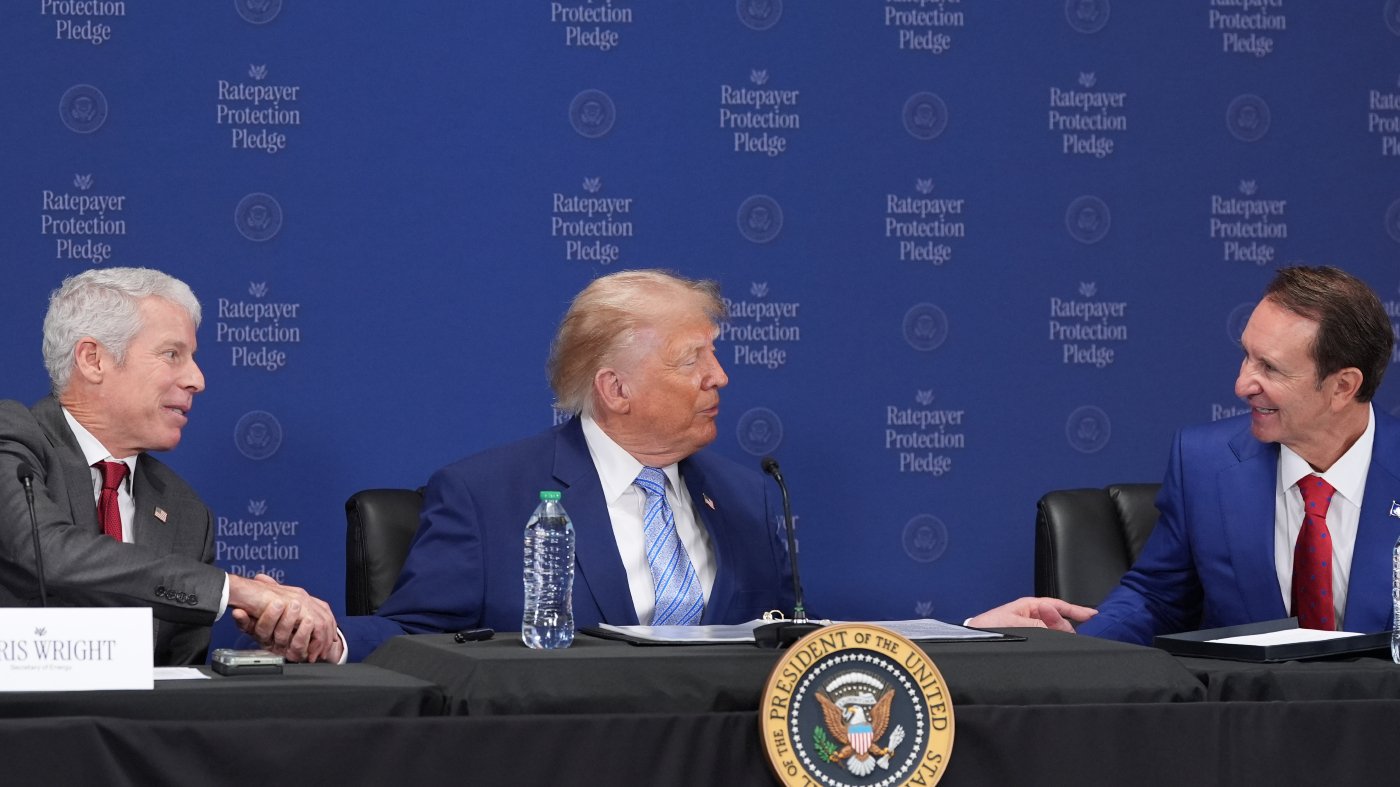
President Trump on Thursday broadened his initiative requiring data centers to shoulder the costs of their electricity usage, simultaneously defending the facilities as vital economic engines. The White House announced that utilities, state governments, and electric cooperatives have joined the voluntary pledge, which major tech companies had already signed.
The pledge, dubbed the Ratepayer Protection Pledge, stipulates that data centers should either generate their own power or pay for the electricity they consume, including associated infrastructure and resources. It also calls for investments in local communities and, where feasible, making backup power available during emergencies.
While the White House frames the pledge as a consumer safeguard against potential rate hikes driven by data centers' soaring energy demands, Trump took care to highlight their benefits. “You have communities that really want the data centers, and frankly, those are the smart communities because it means tremendous numbers of jobs, very little actual disruption,” he said.
Trump touted the massive investments tech companies are pouring into AI infrastructure. “You have to convince your community how great these things [are],” he added. “You can’t fight it. You have to go with it, and you’re going to have all that protection.”
The administration unveiled a website listing signatories, including 27 data center developers, 55 utilities, and 106 electric cooperatives. Twenty-three Republican governors have also signed on, a White House official confirmed.
Despite the White House's claims that the pledge will mitigate consumer impacts, critics from both the left and right question its effectiveness. Travis Fisher, director of energy and environmental policy studies at the libertarian Cato Institute, argued that enforcement is ambiguous. “There’s no enforcement …. if you wanted to call somebody out for violating the pledge, what does that even mean?” he said.
The pledge's website attempts to counter such skepticism, stating that “The Ratepayer Protection Pledge now has commitments from every one of them — and from the developers who actually build the facilities.” Fisher noted that defining which costs belong to data center companies is complex, and that state commissions and utilities set retail rates, while governors' influence over regulators may be limited.
Left-wing critics have also dismissed the pledge as toothless. Jesse Lee, a senior advisor at Climate Power and former Biden White House official, warned it could backfire. “I honestly think that this will result in higher prices because these companies will feel like they did something to get people off their back, and now they don’t have to worry about keeping rates under control,” he said. “All of it is not only toothless but completely vague, so there’s no specifics about what they’re actually supposed to do.”
The expansion of the pledge comes as AI data centers drive up electricity costs, a trend that has caught the attention of policymakers. Meanwhile, the administration faces other pressing issues, including a potential escalation of military strikes against Iran and ongoing debates over voter ID legislation.