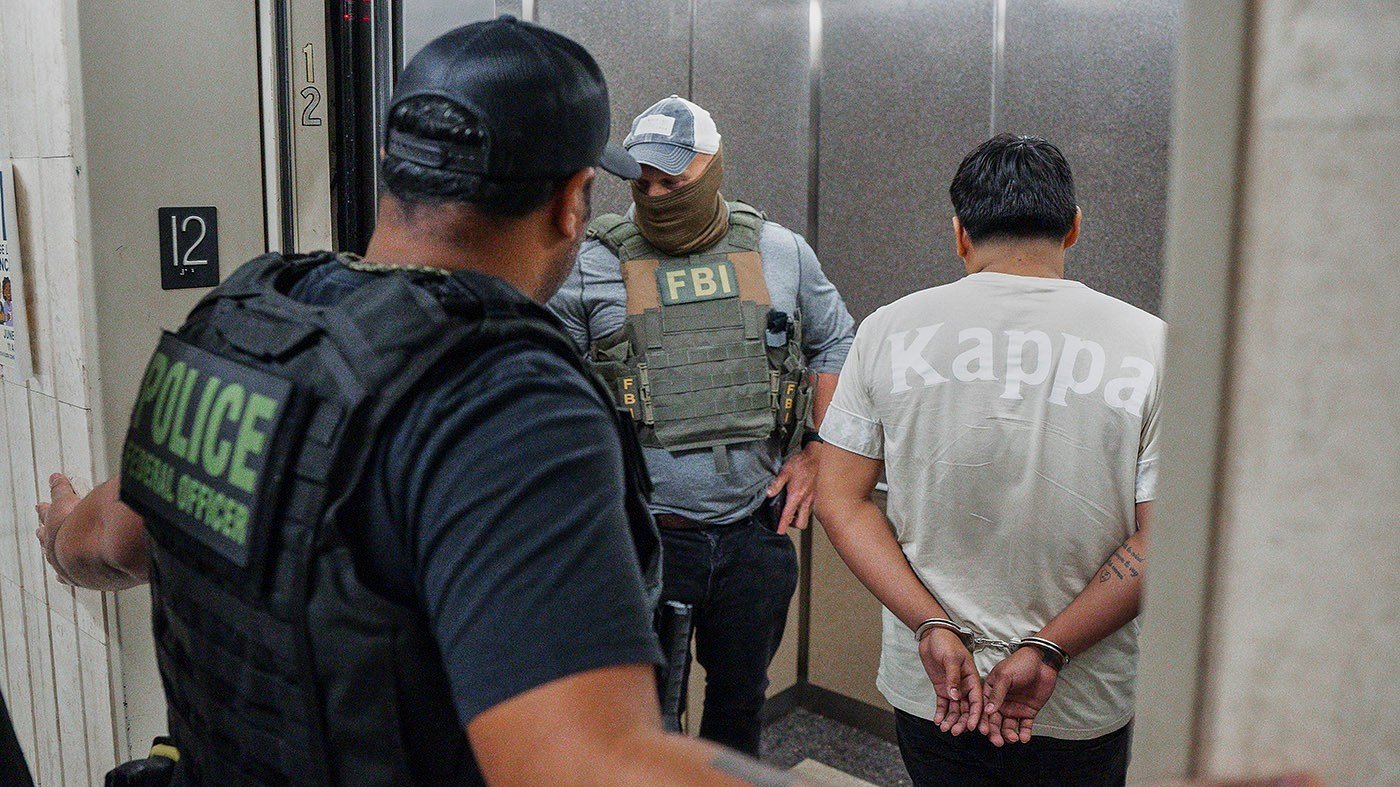
Immigration arrests under the Trump administration have surged to record levels, with a significant portion of those detained having no criminal record at all. According to data from the Deportation Data Project, more than half of the individuals arrested by U.S. Immigration and Customs Enforcement (ICE) in July and August had no prior law enforcement interaction, while another 24% faced charges but were never convicted. This trend has sparked concern among some Republicans in Congress.
Representative Maria Elvira Salazar (R-Fla.), whose district has a majority foreign-born population, voiced her concerns, saying, "I've been telling the administration that do not conflate the gangster with the gardener, the nanny with the narco." Her remarks reflect a growing unease about the expansion of enforcement beyond criminal priorities.
The administration has long maintained that it is focusing on removing "the worst of the worst," but the data tells a different story. Aaron Reichlin-Melnick, a senior fellow at the American Immigration Council, noted that the administration is "expanding its mass deportation operations away from people who are public safety threats... and towards everybody else in an effort to hit the quotas put on them by the White House."
The Department of Homeland Security (DHS) has issued conflicting statements. On social media, the agency claims that 70% of those arrested have criminal records, a figure that experts say is demonstrably false. "The 70 percent figure has not been true since May of 2025," Reichlin-Melnick said. "DHS has been giving the 70 percent figure for at least a year now. It's not true. It hasn't been true."
In contrast, top officials have publicly acknowledged the shift. Homeland Security Secretary Markwayne Mullin stated, "These individuals that we're going after — I don't care if you have a criminal background or don't have a criminal background, you chose to break the law when you came across our border illegally. It's our position and our job to hunt you down and send you back to where you came from." Border czar Tom Homan echoed this, saying, "Just over half of everybody we're arresting is a criminal. So about half are noncriminals."
The increase in arrests can be attributed to several factors, including a more covert enforcement strategy under Mullin, which replaced the highly publicized raids of his predecessor, and new tactics such as arresting immigrants at airports. David Bier, director of immigration studies at the Cato Institute, explained that "all the different tactics coming together really for the first time" have contributed to the spike. He also noted that extensive overtime and ample resources have enabled officers to work intensively to meet targets.
Representative Pramila Jayapal (D-Wash.), the top Democrat on the House Judiciary subcommittee on immigration, criticized the quieter approach, saying, "They are continuing this strategy quietly now because it was unpopular when it was loud. But they're going to find out in November that it's unpopular when it's quiet as well." She added, "They're just arresting anyone. It's just all about their ultimate number."
Reichlin-Melnick highlighted that many of those arrested are individuals already in the immigration system, with pending applications or check-ins. "We're seeing this expanded to people at airports, people who overstayed their visa solely because the U.S. government didn't get around to adjudicating their case in time," he said. "More and more of those people are now being swept into the mass deportation machine, despite the fact that they have pending applications with the U.S. government and have been complying with every obligation put on them." He added that these individuals are "the easiest targets" because they have provided their information to the government.
As the administration pushes forward with its enforcement agenda, the debate over who is being targeted and why continues to intensify, with implications for the upcoming midterm elections. For more on related political developments, see our coverage on the Dallas RNC convention and the impact of Trump's policies on children.