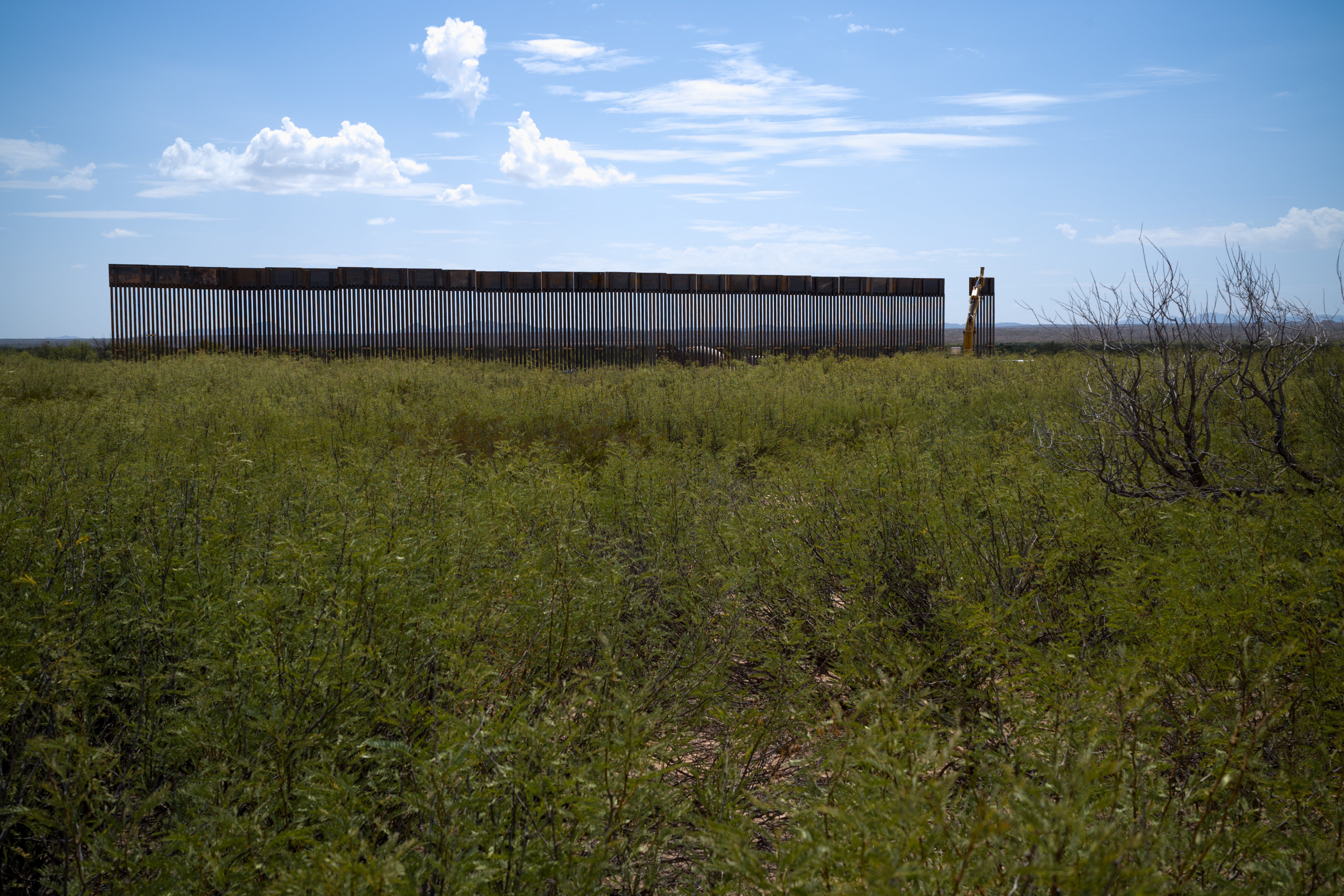
The Trump administration on Wednesday petitioned the Supreme Court to lift a lower court's injunction that halted border wall construction in Texas's Big Bend region, arguing that the judge's decision improperly overrides executive authority.
Solicitor General D. John Sauer, in a filing, called the block "baseless" and contended that it undermines the government's ability to secure a significant portion of the southern border. He wrote that "such judicial usurpation of Congress's commands and the Secretary's authority amply warrants a stay."
The dispute centers on a decision by U.S. District Judge Kathleen Cardone, who earlier this month blocked the project in response to a lawsuit filed by the Center for Biological Diversity, a preservation group, and a recreation guide. Judge Cardone, an appointee of former President George W. Bush, concluded that the planned construction is substantial enough to require explicit congressional authorization.
The administration, however, points to a federal immigration law that permits border barriers "to deter illegal crossings in areas of high illegal entry." Judge Cardone rejected that rationale, writing that if the Big Bend sector qualifies as high-illegal-entry, then so does every other sector, which would effectively grant waiver authority across the entire border.
Earlier this year, then-Homeland Security Secretary Kristi Noem waived environmental laws to expedite construction of barriers and roads in the region. The administration has said it will not build a large wall inside Big Bend National Park but is pursuing other construction activity there. It still appears to be planning wall segments elsewhere in the area, which follows the curve of the Rio Grande.
This emergency appeal is part of a broader pattern by the administration, which has repeatedly turned to the Supreme Court for relief when lower courts block parts of its agenda. The justices have often sided with the president, but not always. On Wednesday, the Court declined to revive restrictions on transgender inmates.
Sauer's request goes beyond seeking an interim stay; he asks the justices to fully reverse the lower court's decision now, without waiting for the case to proceed through the normal appeals process. He argued that "those errors are so obvious that this Court can swiftly correct them on the merits without further briefing or oral argument."
The case highlights ongoing tensions over immigration policy and executive power, with the administration pushing to expedite border infrastructure while environmental and conservation groups raise legal objections. The outcome could have broader implications for how courts review such waivers and for the pace of border wall construction along the southern frontier.