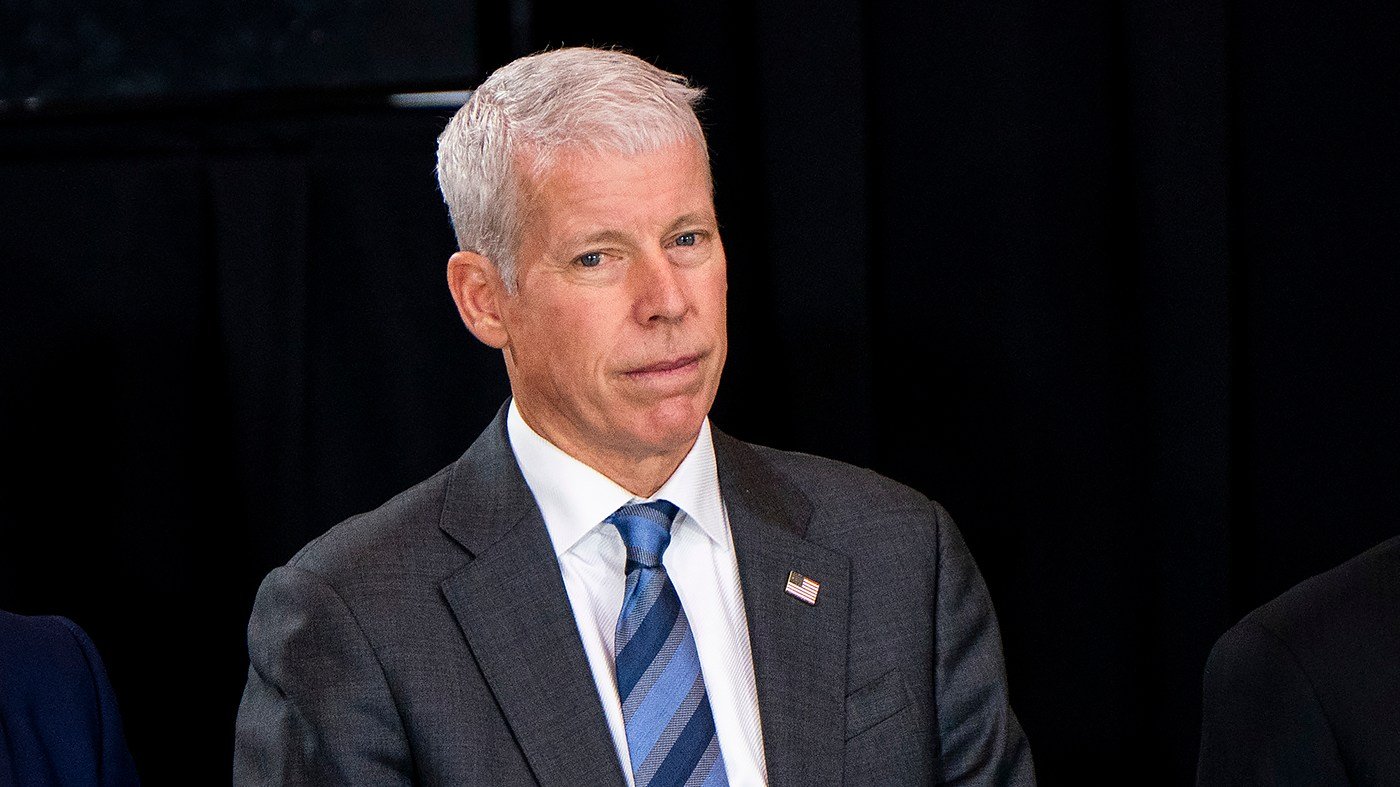
Energy Secretary Chris Wright is set to appear on four Sunday morning political talk shows, a day after the United States and Iran engaged in a new round of tit-for-tat military strikes in the Strait of Hormuz, a critical chokepoint for global oil shipments.
Iranian officials on Sunday claimed responsibility for an attack on an unmanned U.S. Navy vessel in the strait. That strike followed a U.S. military operation that targeted three Iranian crude oil carriers, which the Pentagon said was in response to "multiple unprovoked" attacks by Tehran on two American warships in the region.

The escalating confrontation has rattled energy markets. Brent crude, the international benchmark, surged to $96.28 per barrel on Friday, reflecting growing concerns about supply disruptions in the region that handles about a fifth of the world's oil.
Wright's media blitz comes as the Trump administration faces fresh scrutiny over its Venezuela oil policy. The administration has come under fire for a controversial deal that critics say bolsters the Maduro regime even as Washington presses Tehran. Vice President Vance has avoided calling the clashes a war, but he has defended the strikes as necessary to protect U.S. forces and interests.
The White House is treading carefully, mindful of the political fallout as the 2026 midterm elections approach. Administration officials are wary of being dragged into a broader conflict, but they also face pressure from GOP hawks to project strength against Tehran.
Meanwhile, the Republican Party is preparing for an unprecedented midterm convention in Texas this week, where party leaders will gather to plot strategy. But the chatter is already turning to the 2028 presidential race, with several potential contenders jockeying for position. A four-way contest has emerged for the Army secretary post after the previous nominee withdrew, adding to the administration's personnel turbulence.
President Trump spent the weekend at his golf club in Bedminster, New Jersey, with no public events scheduled as of Sunday morning, leaving the administration's response to the Iran crisis in the hands of his national security team.
The strikes on the oil carriers mark a significant escalation in the long-running shadow war between Washington and Tehran. U.S. officials have repeatedly warned that attacks on American naval assets in the region would be met with force, and this week's response signals a more aggressive posture.
Iran's attack on the unmanned vessel, which was not named in official statements, appears to be a deliberate provocation designed to test U.S. resolve without triggering a full-scale conflict. Analysts say the risk of miscalculation remains high, and the situation could spiral if either side misreads the other's intentions.
For the oil markets, the key question is whether the strikes will disrupt actual crude flows. So far, shipping traffic has continued, but insurance rates for tankers in the region are climbing, and some shippers are reportedly considering rerouting vessels to avoid the strait.
The administration's handling of the crisis is likely to be a central topic on the Sunday shows, where Wright will face questions about energy security, the impact on prices at the pump, and the broader strategic objectives in the region.