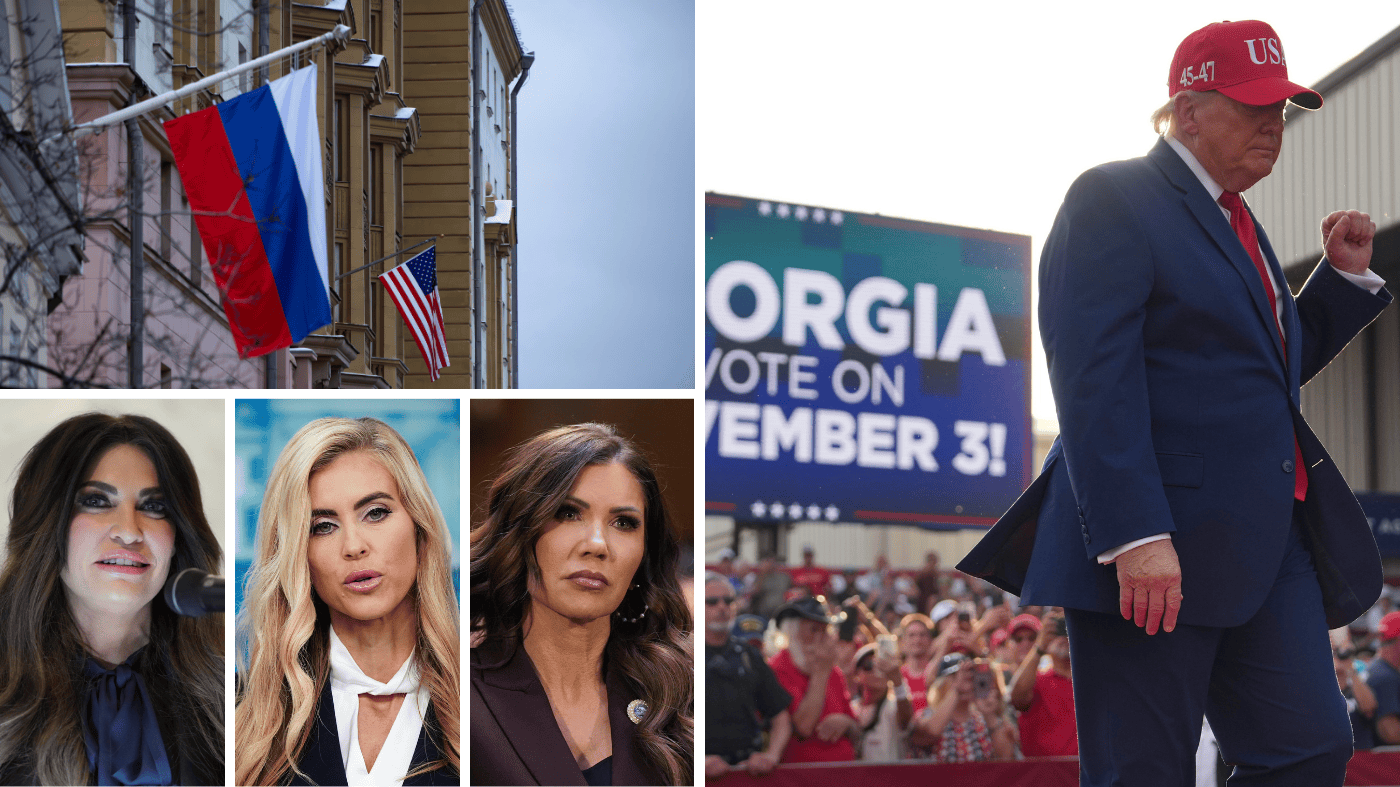
President Trump is facing mounting pressure to prevent the conflict with Iran from spiraling further, following the most intense wave of U.S. strikes in weeks. The military is already stretched, and the midterm elections are just weeks away. On Wednesday, Trump sought to downplay the war's effect on Republican candidates, even as his approval rating hit a record low of 33% and two-thirds of Americans disapprove of his handling of the conflict. Oil prices ticked above $90 a barrel on Wednesday, adding to economic concerns.
Asked how many more Iranian targets the U.S. could hit, Trump said, "I don't think it will be very much longer," while insisting the election isn't influencing his decisions. "I'm not affected by the election. Number one, I'm not running, but my party's running, and I'm going to help my party. But I think my party respects the fact that we're not allowing Iran to have a nuclear weapon." However, Reuters reported that the White House is deliberately avoiding a major escalation until after Nov. 3.
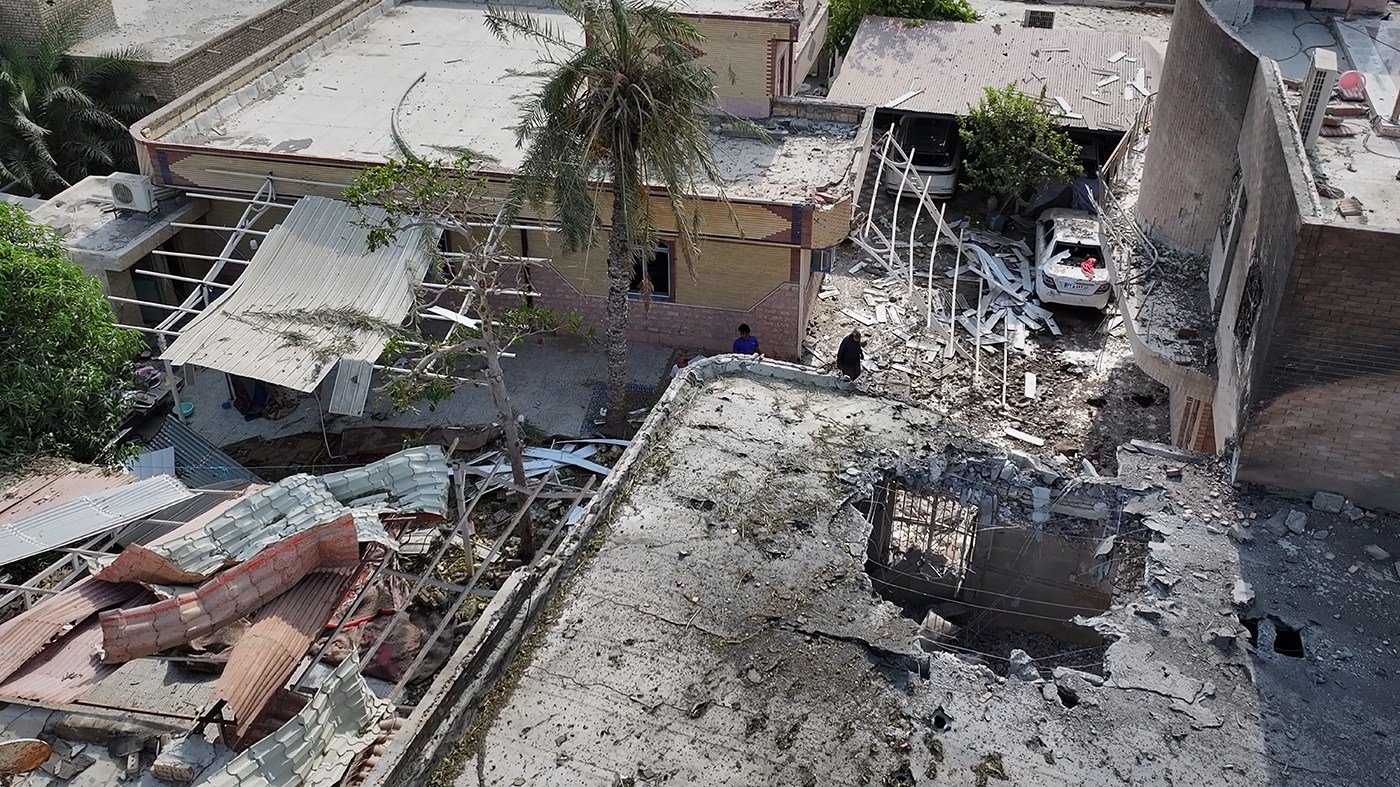
On Tuesday night, U.S. bases in Bahrain, Iraq, Jordan, and Kuwait came under Iranian attack, prompting Trump to warn Iran on TruthSocial that further strikes would be met with justified retaliation. The recent back-and-forth marks the largest outbreak in fighting after a month of relative calm. The U.S. launched roughly 100 strikes on Tuesday, claiming they were preemptive actions against Iranian attempts to place sea mines in the Strait of Hormuz. Iranian state media reported that a U.S. strike hit a home in southern Iran during a wedding, killing two women and two children and injuring 60 others.
Analysts see the latest escalation as part of a familiar pattern. Mona Yacoubian, director of the Middle East Program at CSIS, said the conflict has seen "unstable lulls of no-war/no-peace eventually collapse into a renewal of tit-for-tat strikes." She added, "This is not a turning point in the conflict, and Trump is not 'mowing the lawn'—which would be a strategy to pursue post-conflict. We're still very much in the conflict."
The U.S. has also reportedly adopted a "tanker-for-tanker" policy, striking two Iranian tankers in direct retaliation for attacks on tankers in the Strait. Ship-tracking firm Kpler reported that traffic through the strait dropped by 50% on Monday, with only five successful crossings compared to ten per day over the weekend.
Behnam Ben Taleblu of the Foundation for Defense of Democracies described the administration's approach as "a very militarized form of containment," which he sees as a viable alternative to economic pressure. "The Trump administration is comfortable with this," he said, "and it has a winning approach to present the regime with a series of hybrid crises, and to see where it will buckle, break, or bend, and then strike at those weak points."
Tehran, meanwhile, is sending mixed signals. Iranian President Masoud Pezeshkian called for the U.S. to return to the Memorandum of Understanding signed in mid-June, which was meant to establish a ceasefire, reopen the Strait, and set up talks on Iran's nuclear program. But Trump and Secretary of State Marco Rubio have dismissed that possibility. "That ship, in many ways, has sailed," Rubio said, arguing that Iran has failed to engage seriously on its nuclear ambitions. "The core issue here is they're never going to have a nuclear weapon," he added. "And as long as they continue to endeavor or claim to want one, they're going to pay a price for it, and that price is going to be primarily economic. But we reserve the right to take military action when necessary."
Yacoubian noted that a return to the MOU is unlikely because both sides "remain quite far apart on core issues," and distrust has grown. "The MOU as it was signed largely favored Iran," she said, "so a return would maintain several points in Iran's favor." Meanwhile, Mohsen Rezaei, secretary of Iran's Supreme National Security Council, warned that the U.S. will "fail to climb out of the infernal depths you have created for yourselves" in the face of Iran's new strategy on the battlefield, in diplomacy, and in countering the economic siege.
As the administration weighs its next moves, the political stakes are high. Republican leaders have acknowledged the war's toll on their prospects, with Senate Majority Leader John Thune admitting the GOP majority is at risk amid Trump's headwinds. The president's allied nonprofit groups are already launching midterm ads to shore up support, but the conflict's length and cost could weigh heavily on voters.