President Trump has reached deep into trade law history to escalate his tariff campaign against Canada, invoking a nearly century-old statute that shifts the legal and political foundation of the dispute.
On July 20, Trump used Section 338 of the Tariff Act of 1930 to slap a 50 percent tariff on roughly $20 billion worth of Canadian imports. The move marks the first time this obscure provision has been deployed in such a manner. The targeted products are an eclectic mix: hockey sticks, wine, cement, furniture, clothing, fishing rods, and swimming pools. But the tariff itself is less significant than the strategic shift it represents. The administration has quietly changed the narrative from one of retaliation to one of discrimination.

For years, Washington framed Canada's trade actions as reciprocal responses to U.S. tariffs. Retaliation implies a back-and-forth, where both sides can claim they are merely reacting to the other. Discrimination, however, is a different charge. Section 338 does not authorize tariffs simply because another country retaliates; it allows them when a country treats American commerce worse than that from other nations. The White House now argues that Canada deliberately disadvantaged U.S. producers while giving competitors—like European cheese exporters—better treatment.
The administration points to Canadian auto quotas, provincial restrictions on American alcohol, and dairy tariff-rate quotas that allegedly favor European imports over U.S. products. But these claims are contestable. The alcohol issue, for instance, stems from decisions by provincial liquor boards, not the federal government in Ottawa. Section 338 is unusual in that it lets Washington treat a province's choice as national discrimination. Instead of asking whether Canada's response was justified, the new approach asks whether Canada crossed the line from reciprocal retaliation to unequal treatment—a much stronger negotiating position.
For four decades, U.S.-Canada trade disputes followed a predictable script: Washington imposed duties, Ottawa retaliated, and Canada challenged them under NAFTA, the WTO, or USMCA. Lawyers won cases, politicians settled, and the cycle repeated. Trump's Section 338 proclamation signals impatience with that cycle. Rather than waiting for another round of litigation, he is using an almost-forgotten statute to redefine the dispute. But the law has limits: it caps additional duties at 50 percent and ties them to the specific discrimination found. A flat rate across unrelated goods is hard to call the tailored offset the law contemplates.
The choice of products reinforces the strategy. Many targeted industries are concentrated in Ontario and Quebec, Canada's manufacturing heartland and most politically influential provinces. The administration largely spared sectors America cannot easily replace, including energy, potash, critical minerals, and products already covered by Section 232 tariffs. This is not indiscriminate protectionism; it is economic pressure designed to maximize political leverage while minimizing disruption to North American supply chains. The delayed implementation date—tariffs take effect August 19—gives both governments weeks to negotiate over cars, alcohol, and dairy before the duties bite. These tariffs are leverage first, revenue second.
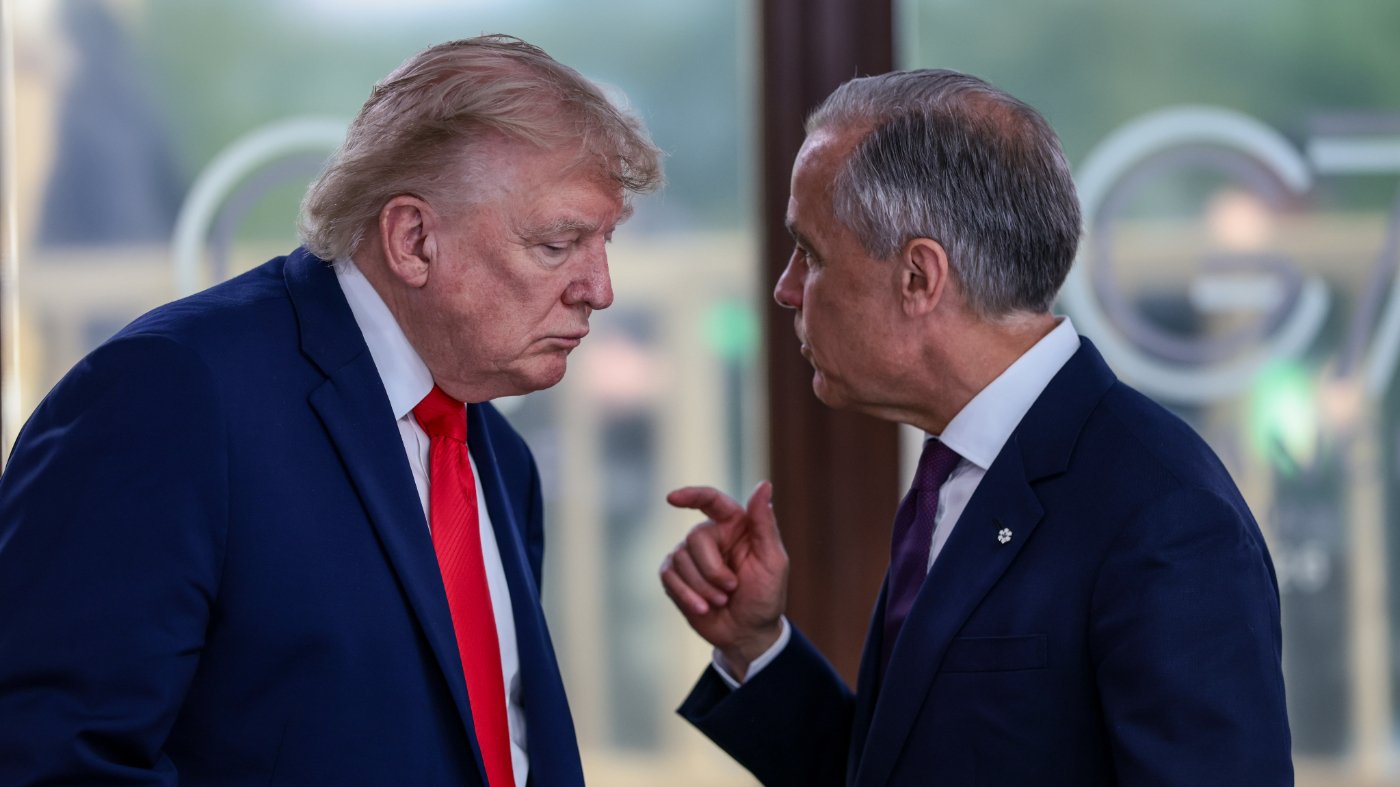
Prime Minister Mark Carney has responded by promising intensified negotiations rather than immediate retaliation. That may prove Trump's biggest victory, but Ottawa can negotiate and litigate at once. Canada will argue that its measures were responses to earlier U.S. tariffs, not independent acts of discrimination. Whether Section 338 applies in those circumstances has never been tested in modern courts. Canada's stronger ground is the remedy and the statute's novelty: the law allows duties only to offset specific discrimination, and a flat 50 percent across unrelated goods offsets nothing in particular. Because Section 338 has never been used in its 96 years, no court has ever construed it—so reviving a dormant power this way, to override USMCA, invites a challenge.
If the strategy succeeds, its implications extend far beyond Canada. Other governments that selectively target American exports in future trade disputes could find their actions recast not as lawful countermeasures but as discrimination subject to Section 338. The bigger warning is where this points next: the same discrimination theory is already aimed at Canada's AI policy, privacy, and data rules—the next measures Washington can recast as discrimination against American technology firms, even as it warns it would override signed trade deals. Trump has done more than impose another tariff; he has tried to rewrite the rules of North American trade diplomacy. This move echoes broader tensions, as seen in how global allies condemn Trump's new tariffs as completely unjustified, and adds to the feud with Senate leaders over stalled agenda.