The 2028 Democratic presidential contest is already taking shape, with the field expected to expand rapidly after the 2026 midterms. Several potential candidates have begun laying the groundwork for what could become a multi-billion-dollar campaign. The prevailing view among strategists is that 2028 will mark another wave election, continuing the cycle of voter discontent that began with Donald Trump's 2016 victory. Democrats believe the appeal of Trumpism is fading, and voters will be seeking a fundamentally different direction—one that emphasizes tangible results over rhetoric.
That dynamic puts governors at the forefront of the conversation. Unlike members of Congress, who are saddled with a legislative body that holds just 16% approval in Gallup polling, governors have executive authority and a record of delivering on promises. Congressional Democrats fare only slightly better, with a mere 18% approval among all voters and 42% among self-identified Democrats. For senators like Mark Kelly of Arizona, Jon Ossoff of Georgia, Chris Murphy of Connecticut, Cory Booker of New Jersey, Chris Van Hollen of Maryland, and Raphael Warnock of Georgia—along with House members Alexandria Ocasio-Cortez of New York and Ro Khanna of California—these numbers present a steep climb.
The historical advantage of congressional experience has eroded. During the Cold War, voters prized lawmakers with foreign policy credentials, as seen with nominees like John F. Kennedy, Lyndon B. Johnson, Hubert Humphrey, and George McGovern for Democrats, and Richard Nixon, Barry Goldwater, and Gerald Ford for Republicans. But in today's political climate, where voters are frustrated by gridlock and unmet promises, the ability to get things done matters more than legislative résumés.
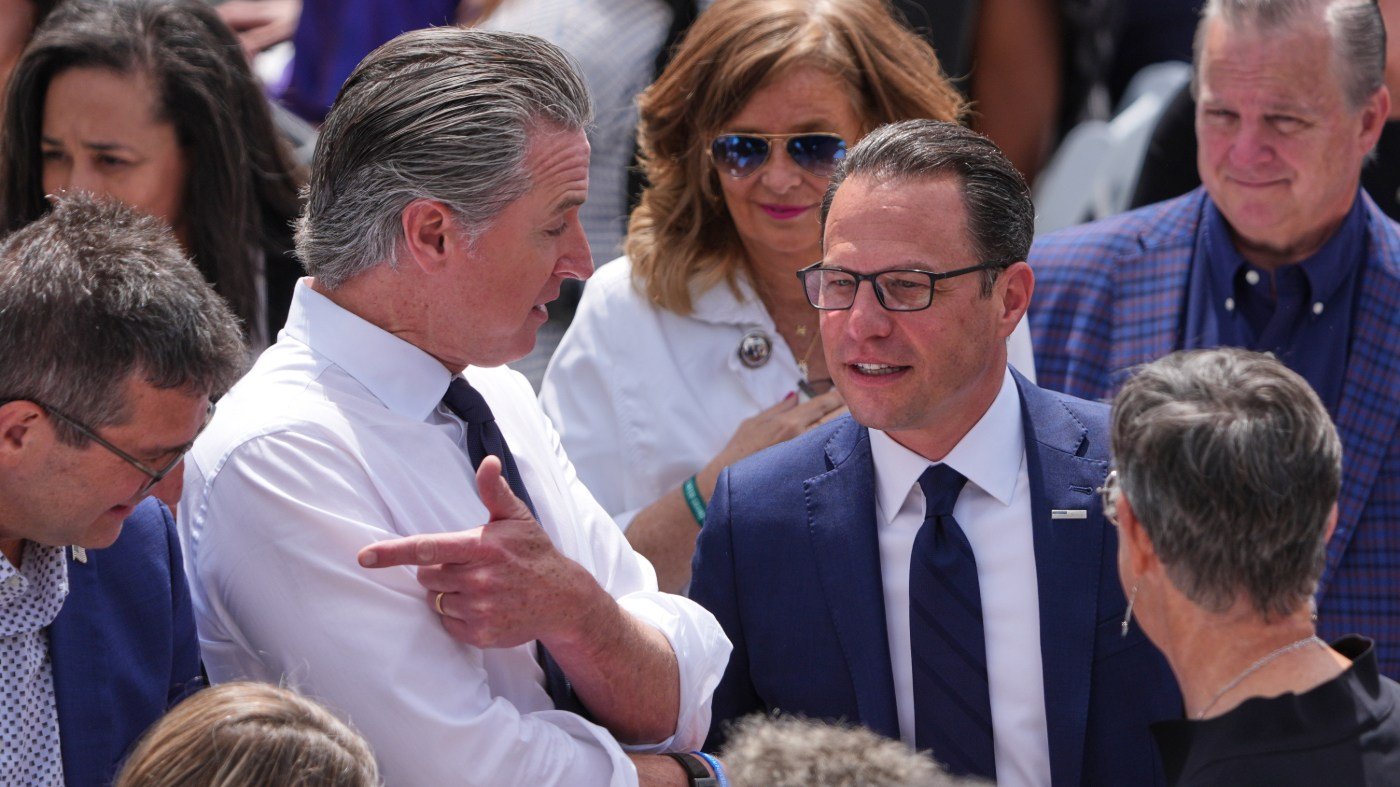
Governors like Pennsylvania's Josh Shapiro, who is currently cruising to reelection on a message of competence and efficiency, exemplify this shift. Shapiro's popularity stems from his reputation for "getting stuff done," a trait that resonates with a electorate weary of partisan bickering. Alongside Shapiro, Kentucky's Andy Beshear, California's Gavin Newsom, and Maryland's Wes Moore are consistently named as top contenders. Each has authored books outlining their vision, and their gubernatorial experience positions them as executives ready to govern from day one.
The Electoral College reality also favors governors from key states. A candidate who can deliver a must-win state or break through in a traditionally red state adds significant strategic value. For instance, Beshear's success in a deeply conservative state and Shapiro's strength in a critical swing state make them particularly attractive. As Ronald Reagan's biographer Lou Cannon noted, Reagan's eight years as California governor were essential preparation for the presidency. Reagan himself told a gathering of governors in 1981 that the jobs were remarkably similar.
This preference for governors is not new. At the 1787 Constitutional Convention, Elbridge Gerry proposed that state governors should choose the president, arguing they were best equipped to evaluate the necessary qualities. Though that idea was rejected, many early presidents came from governorships. As former Georgia Governor and Senator Herman Talmadge famously quipped, "A governor makes decisions and executes them. A senator makes decisions and talks about them."
The current political mood echoes the pessimism Alexis de Tocqueville observed in the 19th century, when he wrote of a nation falling from excessive pride to excessive humility. More recently, political scientist Wilson Carey McWilliams in 2000 described a "politics of disappointment"—declining wages, social decay, and widening gaps between rich and poor. That sentiment persists today, and many voters are looking for a leader who can address these systemic issues.
Unless the next president can tackle income inequality, improve healthcare, childcare, and housing, and lift the nation out of culture wars, the malaise President Jimmy Carter warned about may become permanent. Electing a governor, with their hands-on executive experience, could be the antidote voters are seeking. As the 2028 race heats up, the Democratic Party's path to the White House may well run through statehouses across America.