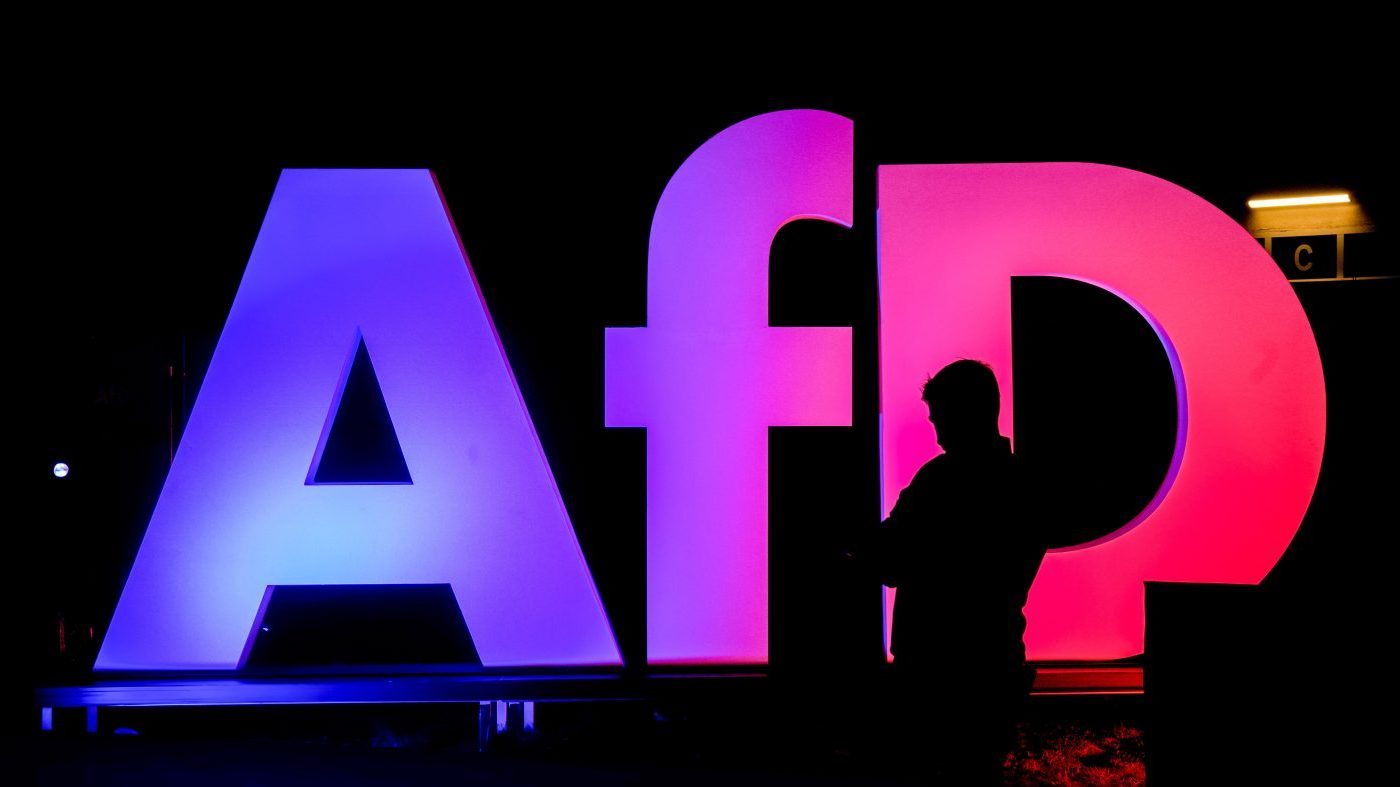
The far-right Alternative for Germany (AfD) scored a decisive victory in the Saxony-Anhalt state election on Sunday, prompting one of its leading candidates to publicly thank tech billionaire Elon Musk for his backing.
Ulrich Siegmund, a prominent AfD figure in the state, took to X to express gratitude to Musk, writing: “Thank you, @elonmusk, for your support and for your clear and highly important perspective on the political developments of our time — including here in Germany.” The post came in response to Musk’s own message on the platform, where he wrote “Gut gemacht!” — German for “good job.”
The AfD’s landslide win, which fell just short of an outright majority, has sent shockwaves through Germany’s political establishment. Chancellor Friedrich Merz, whose center-right Christian Democratic Union (CDU) suffered a heavy defeat, said his party was “deeply shocked” by what he called “the most serious election defeat that the CDU has had for years, for decades.”
President Trump also weighed in on the outcome, posting an image on his Truth Social platform that highlighted the AfD’s rising poll numbers over recent years. The president’s endorsement aligns with a broader trend of U.S. figures, including Vice President Vance and Secretary of State Marco Rubio, who have previously criticized German authorities for labeling the AfD as an “extremist” group in certain regions. Rubio called that designation “tyranny in disguise” in a May 2025 social media post.
Musk has long been an outspoken supporter of the AfD, which campaigns on anti-migration and pro-Russia platforms. In January 2025, during a virtual appearance at an AfD rally, the Tesla and SpaceX founder described the party as the “best hope for Germany” and urged voters to move beyond the “past guilt” of older generations — a clear reference to the country’s Nazi history. His remarks followed an op-ed he wrote for a German news outlet expressing support for the party.
The AfD’s rise has also complicated U.S.-German intelligence cooperation. In the wake of the government’s “extremist” label, Republican Sen. Tom Cotton (Ark.) asked then-Director of National Intelligence Tulsi Gabbard to withhold intelligence sharing with Germany’s domestic intelligence agency until the AfD is treated as a “legitimate opposition party” rather than a “right-wing extremist organization.”
The party, for its part, has consistently rejected accusations that it is undemocratic or anti-constitutional, according to the Associated Press. The Saxony-Anhalt result is likely to intensify debates both in Germany and abroad over how to handle the AfD’s growing influence, with Musk’s and Trump’s endorsements adding a transatlantic dimension to the controversy.
As the political fallout continues, Merz’s CDU faces internal pressure to recalibrate its strategy ahead of upcoming federal elections. The AfD’s victory, while not a majority, signals a significant shift in the state’s political landscape and raises questions about the future of Germany’s traditional party system.