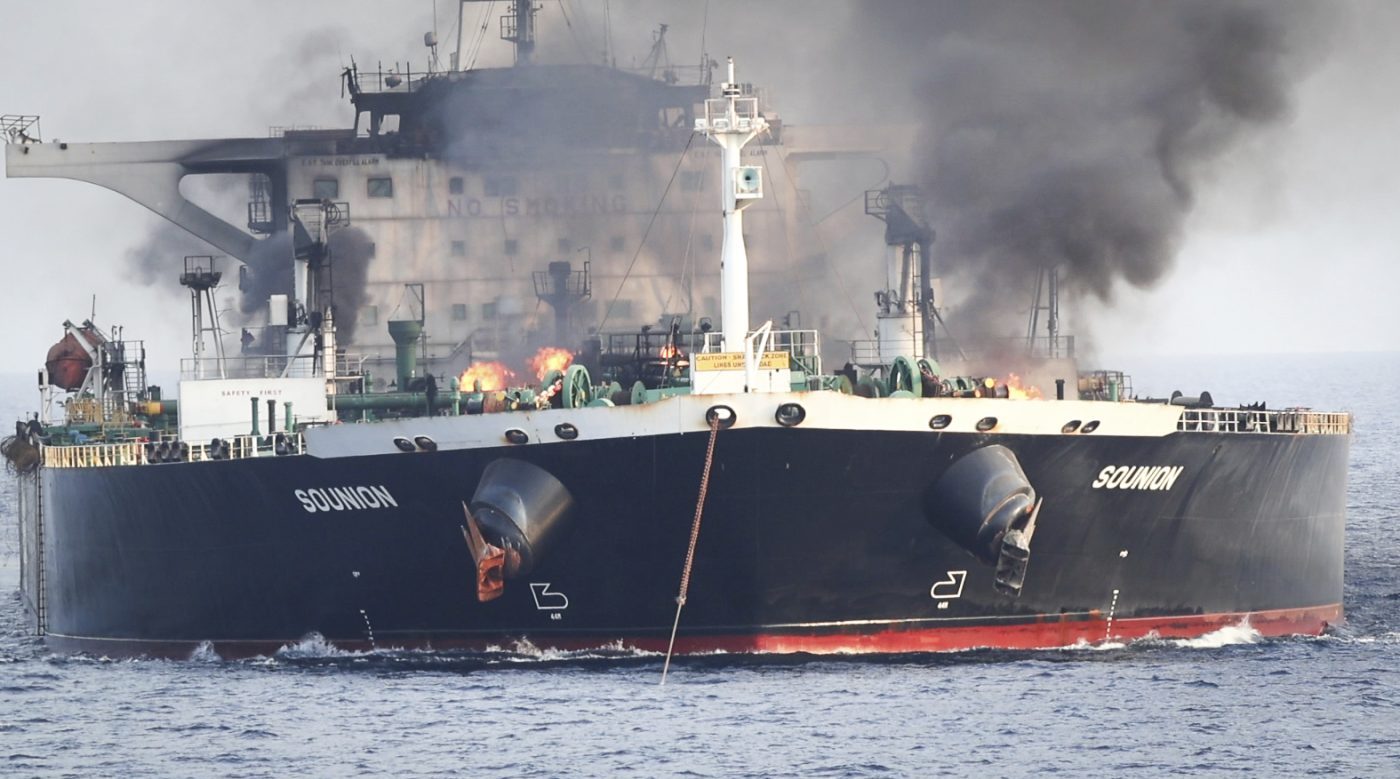
Yemen's Houthi militants struck two Saudi Arabian oil tankers on Thursday, escalating a blockade of the Bab al-Mandeb Strait and sending international oil prices above $100 a barrel for the first time in weeks. The attacks threaten to further destabilize global energy markets already rattled by Iran's closure of the Strait of Hormuz.
The Houthis claimed responsibility for hitting the vessels Encelia and Layla with ballistic missiles, cruise missiles, and drones, according to the group's SABA News Agency. The assault marks the first Houthi action since they announced a blockade of Saudi ships transiting the strategic waterway earlier this week. That blockade came in retaliation for a strike on Sanaa International Airport, which the Houthis blamed on Riyadh but the Saudi-backed Yemeni government said it carried out.
Oil Markets Reel
Brent crude futures jumped to roughly $101 per barrel on Thursday, up from about $79 a month ago, according to market data. U.S. average gas prices climbed to nearly $4.10 per gallon, compared with $3.92 a month earlier, AAA reported. The Bab al-Mandeb Strait, at the southern mouth of the Red Sea, carries about 8% of global oil traffic, per the U.S. Energy Information Administration. Kpler data shows roughly 6.2 million barrels of oil per day have passed through the strait over the past month, two-thirds of it from Saudi Arabia, which uses the route to bypass the Strait of Hormuz.
With Houthi-controlled territory lining the strait, the blockade effectively traps most Saudi oil exports in the Middle East. This compounds a 10% reduction in global oil flow since Iran shut down the Strait of Hormuz in February amid its conflict with the U.S. and Israel. Asian refiners, particularly in India, face severe supply disruptions, Kpler analysts warned.
International Energy Agency Executive Director Fatih Birol said Tuesday that threats to the Red Sea choke point “exacerbate” concerns over oil supply security and “uncertainty over the market outlook.” He noted that Gulf exports remain below late-June highs but are still well above levels seen between March and mid-June. Oman's Foreign Ministry urged all parties to avoid escalation that could “endanger freedom of navigation.”
Rerouting and Risks
With the Bab al-Mandeb effectively closed, Asian refineries are exploring alternative routes. One option involves shipping Saudi crude from the Red Sea port of Yanbu through the Suez Canal and around Africa's Cape of Good Hope to Asia, according to Al Jazeera. That detour would add significant time and distance: a voyage from Yanbu to South Korea would jump from 24 to 54 days, Kpler estimated.
“Maintaining current export rates would require materially higher terminal productivity, making logistics the key bottleneck,” said Homayoun Falakshahi, Kpler's head of crude oil analysis. Another wild card is potential Iranian interference with Suez Canal traffic. Retired U.S. Navy Admiral James Stavridis warned this month that Iran, using Houthi proxies, could attempt to close the canal, which handles more traffic than the Strait of Hormuz.
Trump's Warning
President Trump responded to the tanker strikes by vowing to hold Iran accountable. “A year ago the United States of America attacked, very powerfully, the Houthis, for their interference with commerce and trade,” Trump wrote on Truth Social, referencing U.S. military strikes from March to May 2025. He acknowledged the Houthis had acted “responsibly” since then but said “now they are starting up again.” Trump declared that further attacks would result in “major military punishment” for Iran and the Houthis, whom he called a “Surrogate and/or Proxy of Iran.” He designated the Houthis a foreign terrorist organization in January 2025.
This latest escalation comes as the White House navigates a complex regional landscape. Trump has linked a potential Saudi nuclear deal to normalization with Israel through the Abraham Accords, a topic that has drawn scrutiny from nonproliferation advocates and pro-Israel hawks. Meanwhile, the House passed an Iran war powers resolution as the administration weighs a major escalation of military strikes against Tehran. The Houthis, for their part, have laid out red lines: they demand no alliance between Middle Eastern countries and the U.S. or Israel against Iran, no use of the Red Sea for attacks on Iran, and no escalation of hostilities toward Tehran and its allies.