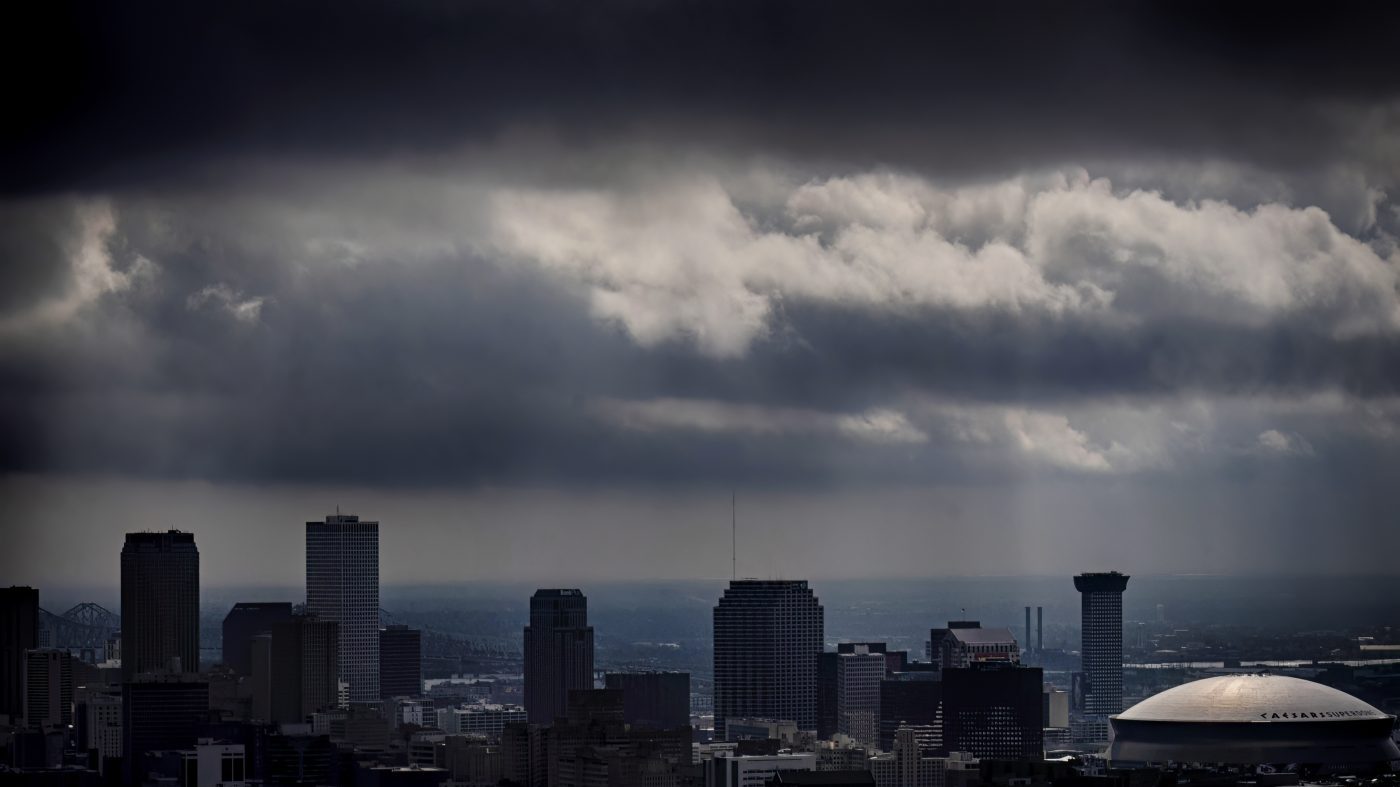
A new study published in Nature Sustainability delivers a stark verdict for New Orleans: the city has passed a climatic tipping point that will ultimately lead to its submersion, and residents should begin planning for an organized evacuation.
The authors argue that despite global efforts to curb emissions, coastal Louisiana is already locked into a trajectory of sea-level rise that makes long-term habitation untenable. “While climate mitigation should remain the first step to prevent the worst outcomes, coastal Louisiana has evidently already crossed the point of no return,” they write.

Perhaps more controversially, the study contends that adaptation measures—such as building levees, elevating homes, or reinforcing infrastructure—could actually backfire. “Migration research demonstrates that each decision to adapt in place rather than relocate creates additional barriers to future mobility,” the paper states, citing increased financial investment in property, deepened social networks, and psychological attachment to community.
This finding challenges the conventional wisdom that investing in resilience is always beneficial. The authors suggest that such investments may lock residents into a dangerous status quo, making eventual relocation more costly and emotionally difficult.
The study comes amid a broader political debate over climate policy. The EPA’s recent easing of refrigerant rules has sparked debate over costs and climate impact, while a separate EPA repeal of a climate rule has drawn warnings from doctors about ignoring the chronic disease crisis linked to pollution.
From a scientific standpoint, the mechanism behind the threat is well understood. A warmer atmosphere holds more moisture—about 7 percent more for every 1 degree Celsius of warming—leading to more intense rainfall and flooding. NASA data shows global average temperatures have risen at least 1.1 degrees Celsius since 1880.
For New Orleans, the implications are existential. The city’s location in a deltaic plain already sinking due to subsidence, combined with accelerating sea-level rise, creates a compound risk that engineering solutions may only postpone.
The study’s call for evacuation planning injects a new urgency into local and state policy discussions. It also raises uncomfortable questions about federal disaster spending and whether current approaches inadvertently encourage continued habitation in high-risk zones.
As climate-driven displacement becomes a reality for more communities, the New Orleans case may serve as a bellwether for how the nation grapples with managed retreat—a politically fraught but increasingly necessary conversation.