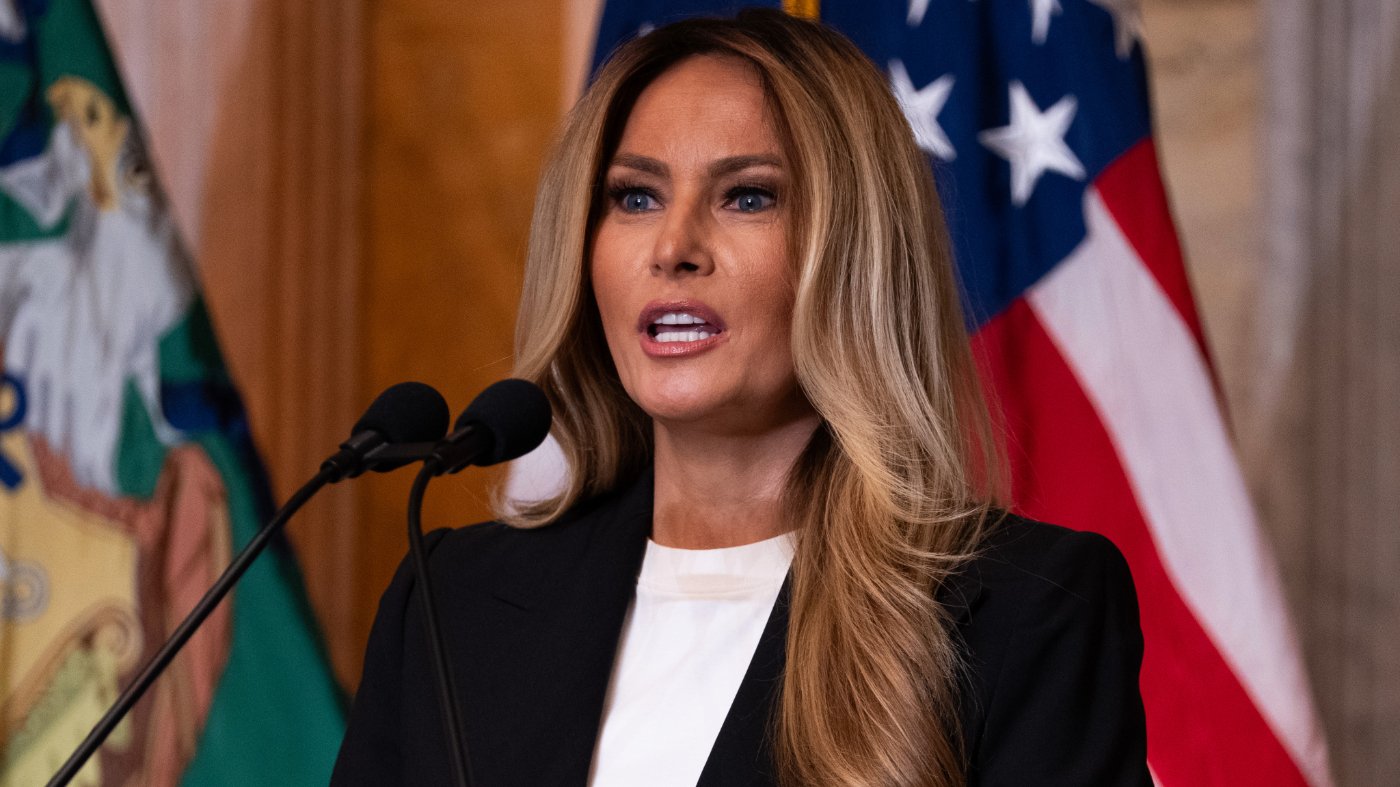
On June 11, First Lady Melania Trump and Treasury Secretary Scott Bessent unveiled Fostering the Future Accounts, a program that lets state child welfare agencies open Trump Accounts for approximately 330,000 children in foster care nationwide. The move aims to ensure that vulnerable youth do not miss out on the wealth-building benefits of the accounts.
Twenty-three governors have committed to enrolling children under their states' care. Arkansas Governor Sarah Huckabee Sanders acted first, pledging days before the federal announcement to enroll all roughly 4,300 foster children in her state. Instead of requiring individual sign-ups, the government will enroll them automatically, guaranteeing no child is overlooked.
Arkansas's child welfare agency underscored the importance of this approach, noting that opening an account 'can be challenging, especially for youths who must enter foster care. This program helps close that gap and ensure that all children can begin to save for their future.' The statement encapsulates a key lesson for Trump Accounts: when enrollment is difficult, it should be done on behalf of the child rather than left to parents.
Opt-in systems consistently fail families with the fewest resources, meaning the children who would benefit most are often the least likely to be enrolled. Fostering the Future demonstrates that federal and state governments can collaborate to achieve full participation in Trump Accounts.
Trump Accounts officially launched on July 4, with the first $1,000 deposits reaching eligible children born between 2025 and 2028. Each account serves as a gateway to multiple resources: the federal seed deposit, employer matches from companies like JPMorgan Chase and Intel, a $6.25 billion philanthropic pledge from Michael and Susan Dell, and growing state contributions. But a child receives none of these without an account, and opening one requires parents to file IRS Form 4547 or register at TrumpAccounts.gov, verify their identity, and complete a multistep process. As of late May, nearly 6 million children had been signed up, but more than 67 million eligible children had not.
This gap was predictable. In the SEED for Oklahoma Kids experiment, the nation's longest-running randomized trial of children's investment accounts, the state treasurer opened accounts for children at birth, and fewer than one family in a thousand opted out. Where enrollment was left to families, only about 6 percent opened accounts. Maine tells a similar story: when enrollment depended on each parent, the program reached 40 percent of eligible newborns; when it began enrolling every newborn automatically, coverage hit 100 percent.
Fostering the Future shows the way forward for the other 67 million children. Foster children were left out because no parent was positioned to act for them. Millions of others are left out because forms, identity checks, and busy lives get in the way. The cause differs, but the result is identical: children without accounts through no fault of their own. The remedy is the same: if the government can enroll every child in foster care, it can enroll every child in America. The tools already exist; what remains is the policy design: enroll every child automatically and let any family opt out. The Social Security Administration recently announced it will work with states to incorporate Trump Account enrollment into hospital forms used to request a newborn's Social Security number, potentially facilitating automatic account creation.
States are already engaging at every point of policy design. Oklahoma's governor signed a $12.5 million appropriation to deposit $250 into eligible children's Trump Accounts. Alabama passed legislation excluding Trump Account contributions from state taxable income. State treasurers' offices, which have managed children's college savings for decades, are exploring roles as account trustees. California Governor Gavin Newsom used Tax Day to urge families to claim both CalKIDS, his state's children's savings program, and the federal $1,000. Funding, tax relief, account management, outreach, and now enrollment itself are all in play.
States are also proven leaders in early wealth building. California, Pennsylvania, Maine, and Nevada already operate statewide children's savings accounts with automatic enrollment, reaching every newborn at scale and sustainably. Full inclusion is achievable in practice, and states know how to deliver it. That experience is why the Treasury Department should actively engage states as partners in Trump Accounts. States can help enroll children, add money, and manage the accounts for the long term.
None of this requires waiting. The federal government has just shown how it works: recognize a responsible institution, let it open the accounts, and every child in its care is included. Every child in America deserves that. The Treasury Department should adopt automatic enrollment for Trump Accounts, and states should be partners in achieving it. All kids in, building wealth from day one.
Jin Huang is the Irving Louis Horowitz Professor in Social Policy and co-director of the Center for Social Development at Washington University in St. Louis.
Related coverage: Trump's 'Freedom Fuel' Stations Spark Mystery Over Ownership and Pricing and Senate Democrats Demand Probe Into Trump's Billion-Dollar Crypto Windfall.