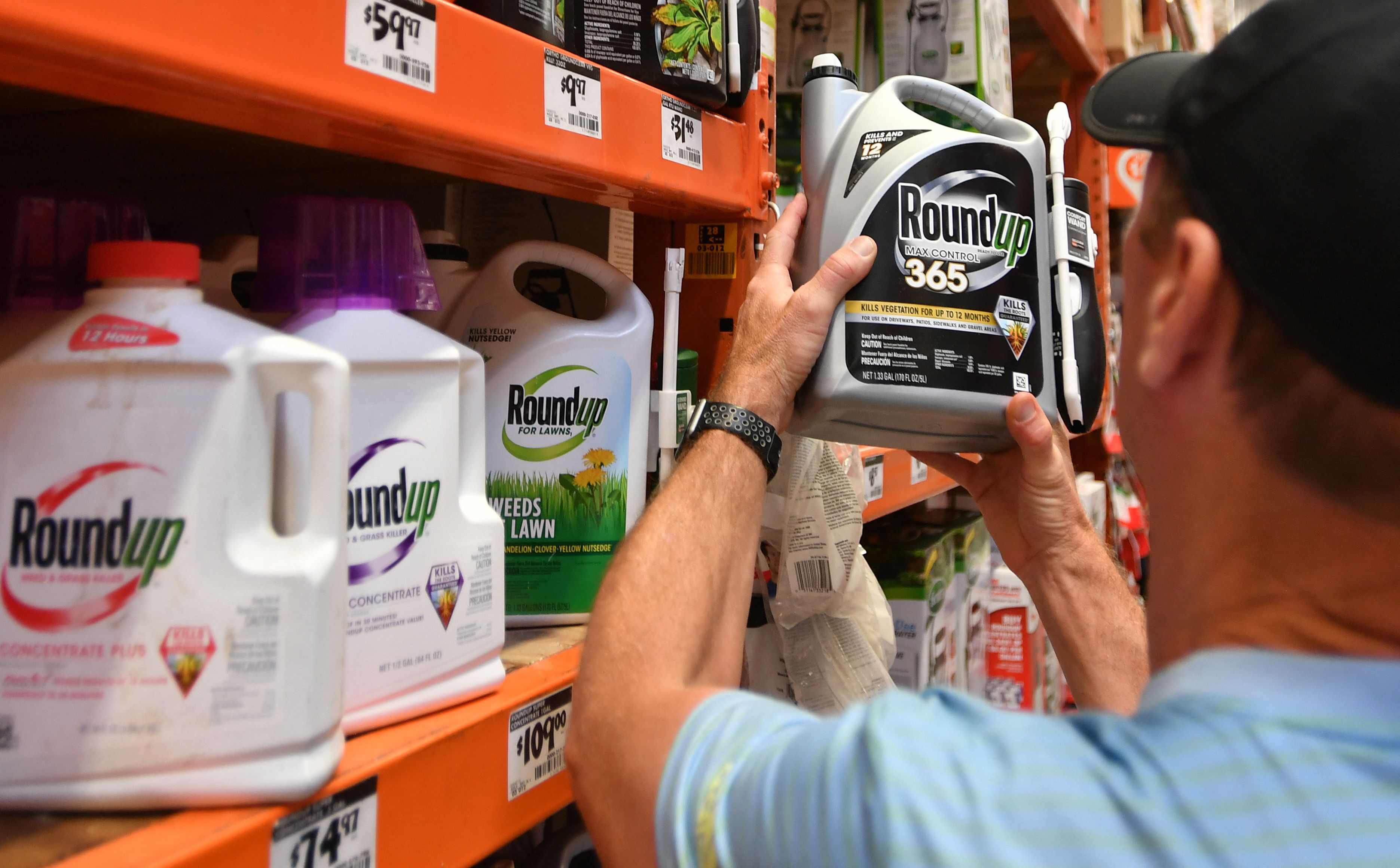
The Supreme Court has delivered a decisive ruling in Monsanto v. Durnell, holding that the Federal Insecticide, Fungicide and Rodenticide Act (FIFRA), combined with the Constitution's Supremacy Clause, prevents a state jury from requiring a cancer warning on Roundup that the Environmental Protection Agency has repeatedly declined to mandate. The decision, handed down last month, is a significant win for federal preemption in product labeling.
Glyphosate, the active ingredient in Roundup, is the world's most widely used herbicide. For 50 years, farmers have relied on it to protect over 100 crops, contributing to the affordability and abundance of American food. Over that same period, the EPA has consistently concluded that glyphosate poses no cancer risk when used as directed—a finding echoed by regulators in the European Union, Canada, Australia, Japan, and New Zealand.

The Supreme Court's ruling effectively bars a single Missouri jury from overriding these expert determinations. The outlier view stems from a 2015 assessment by a working group of the International Agency for Research on Cancer (IARC), which classified glyphosate as "probably carcinogenic." However, IARC evaluates hazard—whether a substance could cause cancer at any dose—not risk, which considers real-world exposure levels. By that same metric, IARC has also flagged red meat, very hot drinks, and overnight shift work as hazards—matters best left to scientific debate, not a lay jury's afternoon deliberation.
John Durnell, the plaintiff, suffers from non-Hodgkin lymphoma, a devastating disease that affects tens of thousands of Americans annually. His illness is tragic, but the legal question was never about his suffering. It was about who decides what a pesticide label must say—and the consequences for the entire country when one jury makes that call.
No manufacturer prints 50 different labels for 50 states, let alone one for each county. A label is inherently national. When a Missouri jury mandates a cancer warning on Roundup, it effectively sets a rule for Idaho, Georgia, and every state in between. Congress anticipated this chaos in 1972, when it amended FIFRA to prohibit states from imposing labeling requirements "in addition to or different from" federal law. The goal was a single label, vetted by a single expert agency. A label rewritten by the last jury to sit is not a label—it's a lottery, changing with every courtroom. A lay jury sees only the gravely ill plaintiff before it, not the millions who used the product safely or the harsher chemicals glyphosate replaced. Congress entrusted the pen to an agency that must weigh both harm and benefit.
This ruling does not grant manufacturers blanket immunity. Any company selling a pesticide that deviates from its approved label or otherwise violates FIFRA remains fully accountable in state court and to the EPA, which can revoke registrations or impose penalties. The decision only forecloses a jury's power to deem a product "misbranded" for following federal instructions.
The debate over glyphosate is part of a broader fight about federal authority and state power. As recent Supreme Court decisions on privacy have shown, the balance between national standards and local control remains a contentious issue. Some other product will inevitably test this ruling in another courtroom. The core question was never just about weedkiller: it was whether one jury, moved by the suffering before it, can rewrite a judgment the rest of the country must live by. The court's answer is clear—a federally mandated warning must mean the same thing in every state, and whoever writes it must account for everyone the jury never sees.
Cory L. Andrews, general counsel of the Washington Legal Foundation, which filed an amicus brief supporting Monsanto, praised the decision as a necessary check on runaway litigation. The ruling, he argued, preserves the integrity of federal regulatory science and prevents a patchwork of state-imposed labels that would confuse consumers and burden interstate commerce.