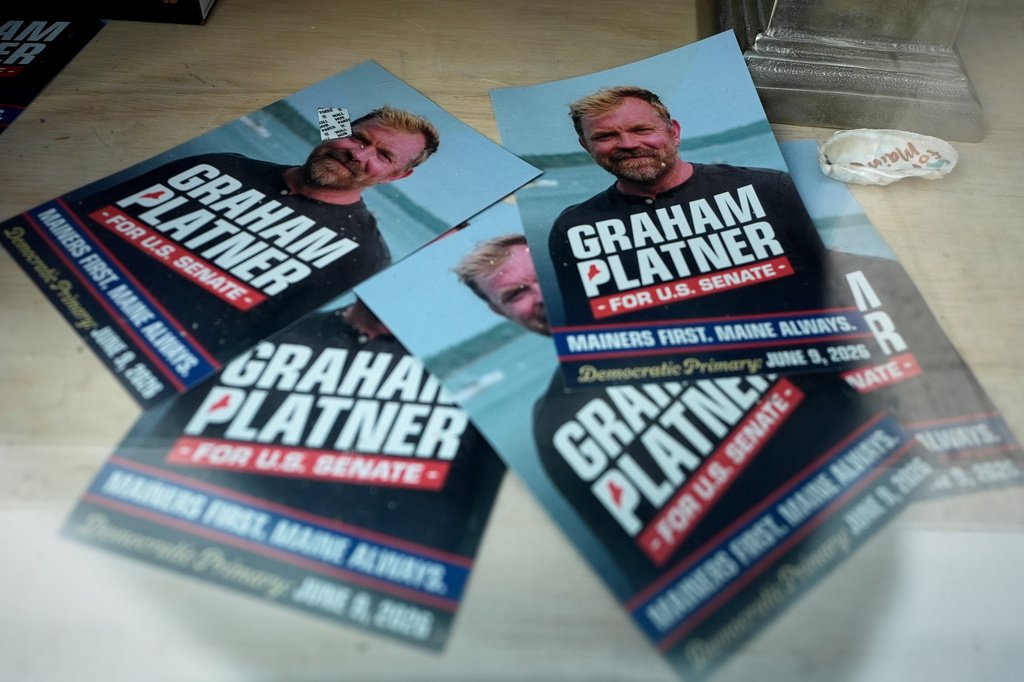
It’s tempting to write off Graham Platner’s failed Senate campaign as an isolated disaster. But the truth is more uncomfortable: his brief rise in Maine’s Democratic primary reveals a political culture where winning trumps everything—until the scandal becomes too big to ignore.
Platner, a Marine combat veteran and self-styled progressive champion, was the party’s best hope to unseat Republican Senator Susan Collins in a state that’s become a battleground. For months, prominent Democrats—including Senators Bernie Sanders and Elizabeth Warren, along with Representative Ro Khanna—endorsed him, raising money and stumping on his behalf. They did so despite a long list of red flags that would have sunk a Republican candidate in a heartbeat.

Those red flags included a Nazi tattoo that Platner had worn for nearly two decades, only covering it up when he decided to run for office. He had called police officers “bastards,” used anti-gay slurs, and described war as “the most enjoyable experience of my life.” He questioned why Black people don’t tip, sent explicit texts to women other than his wife, and made light of sexual assault, saying women should avoid getting “blacked out” around people they don’t trust.
All of that was survivable, apparently, because Platner was the candidate who might flip the Senate. As Bellows enters Maine Senate race after Platner's scandal exit, it’s worth asking: what took so long for party leaders to pull the plug?
The answer came only after a woman accused Platner of rape—an allegation he denies. The accusation, made on national television by a named accuser, finally broke the dam. Sanders, Warren, and Khanna quickly withdrew their endorsements, and Platner officially exited the race Monday. But the damage was done, exposing a party that had been willing to overlook almost anything in pursuit of victory.
This isn’t just about Platner. It’s about a broader political culture where character is treated as a luxury—nice to have in calm times, but the first thing sacrificed when the stakes feel high. And the stakes always feel high. Every election is billed as “the most important of our lifetime,” which means there’s never a good time to hold your own side accountable.
New York Times columnist Frank Bruni captured this mindset perfectly in May, when he wrote that despite being “deeply troubled” by Platner’s “Nazi tattoo” and “fondness for ‘gay’ and ‘gayest’ as put-downs,” he would vote for him anyway. Bruni’s reasoning: Donald Trump poses an “extraordinary threat,” and supporting Collins would be “irresponsible, nonsensical and perilous.”
That logic is dangerously circular. If every election is a battle against existential threats, then no flaw in your own candidate is disqualifying. But character matters, not because it guarantees good judgment, but because its absence almost always predicts how someone will behave once in power. Power doesn’t transform people—it reveals them.
Platner’s downfall should serve as a warning. But if Democrats simply replace him with another candidate who checks the same boxes—like Bellows, who entered the race after his exit—without examining how they got here, the lesson will be lost. Because when winning is the only thing that matters, you’ll eventually find yourself supporting someone like Graham Platner. And that’s a price no party should be willing to pay.