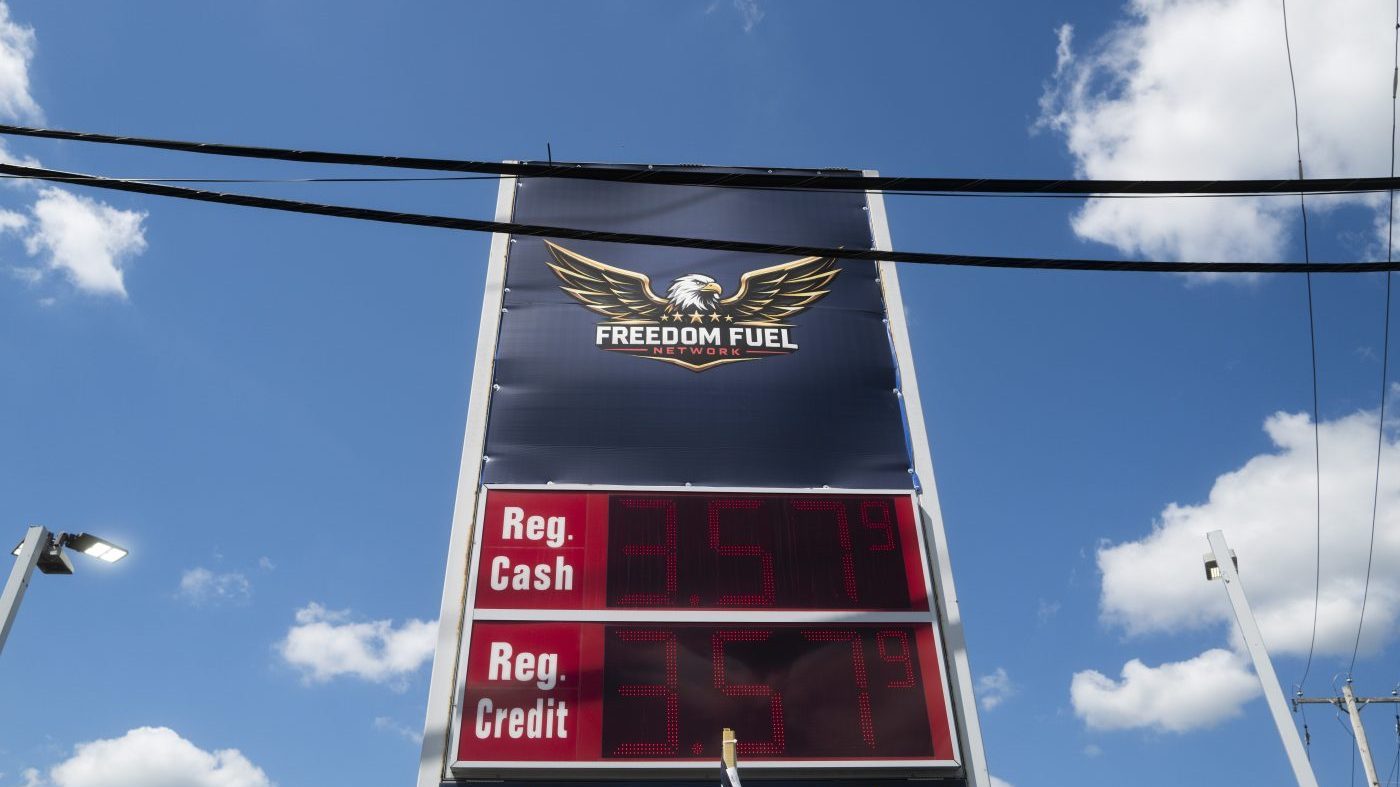
Just days after the White House celebrated the launch of the so-called "Freedom Fuel Network" with a headline price of $3.47 per gallon, tracking data from GasBuddy shows that the advertised discount is already fading. By Friday morning, the majority of the network's 25 stations were charging $3.57 per gallon, according to GasBuddy's Gas Price Map, with none offering the original $3.47 rate.
The White House initially promoted the network on social media platform X, tying the lower prices to President Trump and claiming he was "leading the charge to lower gas prices this summer." However, administration officials have since distanced themselves, stating the Trump administration neither operates the Freedom Fuel Network nor subsidizes its prices. A White House spokesperson told a CBS affiliate in Harrisburg, Pennsylvania, that prices at the stations "will fluctuate — possibly coming down even further — depending on the market and the location."
Despite the political confusion, the price hike is real. Social media users in New Jersey and Pennsylvania posted videos and images showing $3.57 per gallon at multiple locations. One New Jersey station tracked by GasBuddy had dropped from $3.89 on Wednesday to $3.57 by Friday, but that still remains above the initial $3.47 promise. The network's stations remain generally cheaper than nearby competitors, but the gap is narrowing.
Energy analysts say the model is likely unsustainable. Tom Kloza, an energy advisor for Gulf, told The New York Times that such promotions are inherently short-lived. "The period where one sells at the disadvantaged prices is measured in hours and not days or weeks," Kloza said, pointing to the current wholesale price of oil as a barrier to maintaining deep discounts.
Critics have questioned who is funding the Freedom Fuel Network and whether the stations are operating at a loss. Some have likened the concept to socialism, while others blame the Trump administration's policies — particularly the ongoing tensions with Iran — for broader upward pressure on gas prices. According to AAA data, the national average for a gallon of regular gas was well below $3.47 a year ago, adding fuel to the political debate.
The price fluctuations come amid a broader political battle over energy costs. The White House has been pressuring gas stations to lower prices even as oil prices fall, while Democrats have seized on the Freedom Fuel rollout as a symbol of broken promises. In a related development, the Justice Department has pushed state-level investigations into potential gas price manipulation, as reported by our coverage of the federal probe.
For some drivers, the discount — however fleeting — is a welcome relief. Steve Wyrenski, a customer at a Pennsylvania Freedom Fuel station earlier this week, told the Associated Press the lower prices were a "godsend" for his business. Yet he made clear he is no supporter of Trump. "I don't support his policies," Wyrenski said. "I think he's caused a lot of the problems that this country's having."
The situation also highlights the broader volatility in the energy market. OPEC+ nations recently approved a modest output hike as oil prices dipped below pre-war levels, a move that could eventually ease pump prices. But for now, the Freedom Fuel experiment illustrates the difficulty of sustaining politically motivated price caps in a volatile market.
As the summer driving season heats up, the question remains whether the Freedom Fuel Network can survive the economic realities of the oil market — or whether it will become another flashpoint in the ongoing partisan fight over energy policy. A severe heat wave has already threatened Trump's planned July 4 events, and the rising gas prices may further complicate the administration's messaging on economic relief.