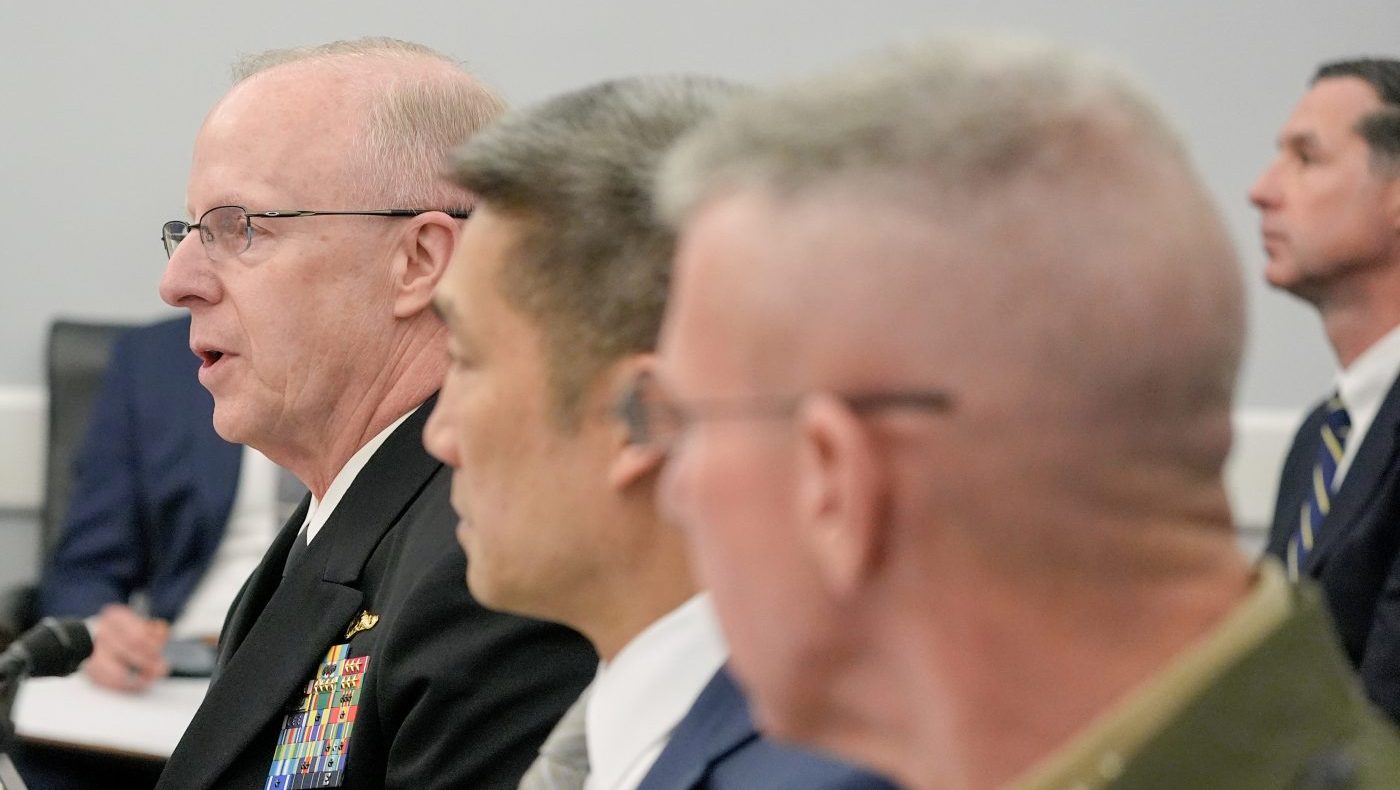
Adm. Daryl Caudle, the chief of naval operations, warned lawmakers Thursday that without emergency supplemental funding to cover the costs of the U.S. war in Iran, the Navy will be forced to slash training, routine operations, and personnel accounts by July.
Testifying before the House Armed Services Committee, Caudle said the fiscal year 2026 budget did not account for Operation Epic Fury, the ongoing military campaign against Iran that began Feb. 28. “You see a large Navy force in the Middle East. So we’re burning bright … but it does come at cost, and it comes at operational costs,” he said.

The conflict is rapidly consuming fuel, maintenance dollars, and munitions. Caudle said that without additional money, “I do fear that I’ll have to start making decisions in the July time frame.” He specifically pointed to manpower accounts, warning that the Navy would have to freeze permanent change of station orders for 12,000 to 15,000 new sailors just as they are set to move from boot camp to their first assignments.
“My record recruiting is going to be thwarted without additional funding to PCS those individuals from boot camp and to pay enlistment and re-enlistment bonuses,” Caudle added.
The Pentagon’s tab for the Iran war has ballooned to nearly $29 billion as of Tuesday, up from $25 billion just two weeks ago. The Defense Department has been forced to pull money from other accounts to keep the operation running. The White House is expected to ask Congress for a supplemental package of $80 billion to $100 billion, with a large portion earmarked to replenish depleted munitions.
But the prospects for that request are in “big trouble,” GOP senators told The Hill this week, as lawmakers grow increasingly frustrated with the administration’s lack of a clear strategy in a war that President Trump is now trying to exit. Congress has yet to receive a formal supplemental request. Rep. Ken Calvert (R-Calif.), chair of the House Appropriations defense subcommittee, pressed Defense Secretary Pete Hegseth during a hearing Tuesday for a timeline. “I would hope we can get a supplemental bill here soon … Any idea of when we’re going to get this supplemental?” Calvert asked. Hegseth declined to answer, saying only that the Pentagon is “well aware of all of those dynamics.”
The funding crunch comes as the broader political landscape in the region remains volatile. CENTCOM Chief Faces Senate Grilling as Iran Ceasefire Wavers, adding pressure on the administration to secure additional resources. Meanwhile, the White House is also grappling with other pressing defense priorities, including ongoing debates over Ukraine aid and internal turmoil at agencies like the FDA, where Makary Out as FDA Chief After Clash Over E-Cigs and Internal Turmoil.
If the supplemental fails to materialize, the Navy’s operational readiness could take a serious hit, undermining its ability to sustain the current pace of operations in the Middle East and elsewhere.