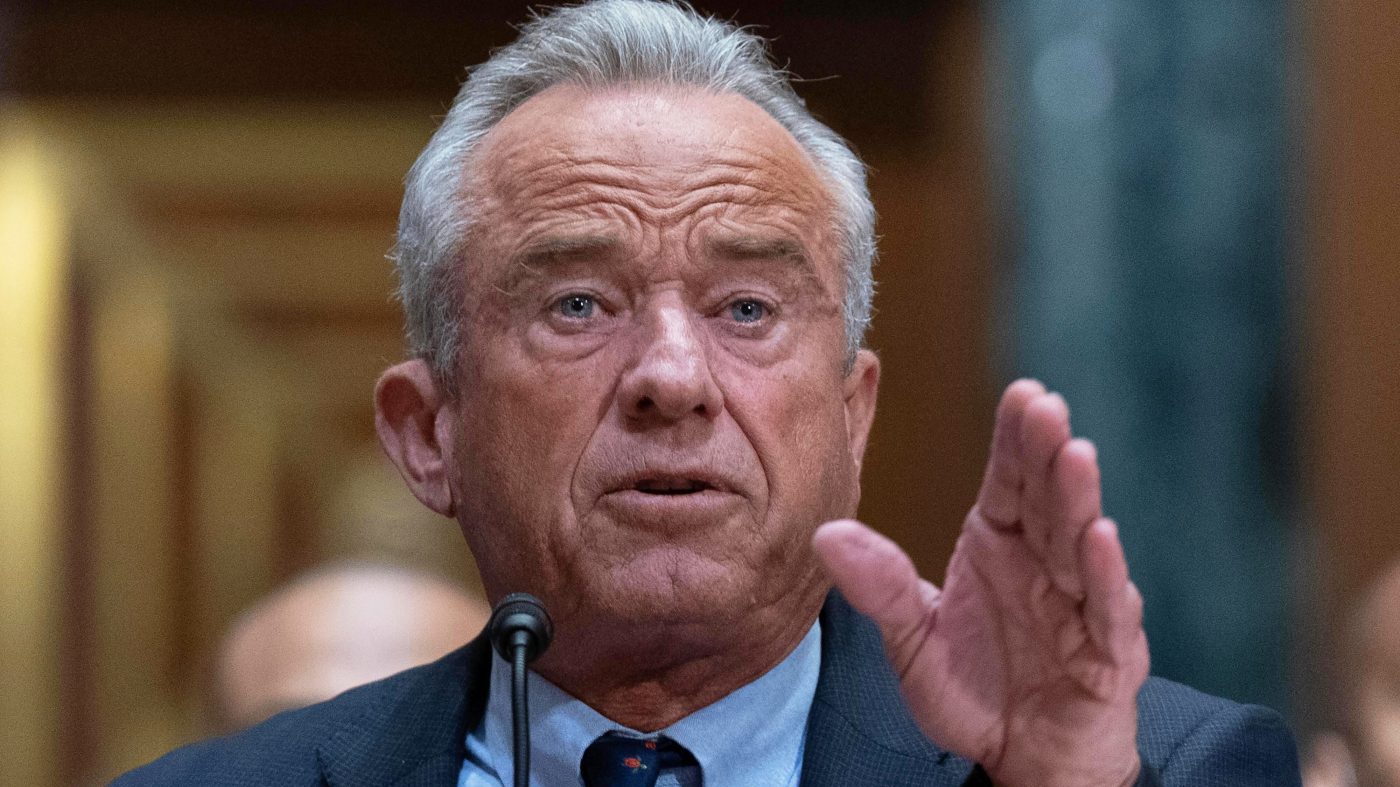
The Cleveland Clinic has forcefully pushed back against a report that Health and Human Services Secretary Robert F. Kennedy Jr. operated a robotic arm during a patient’s heart surgery, clarifying that he was only an observer during his recent visit.
“He briefly observed a robotic heart surgery as part of a broader tour, which included a demonstration using a disconnected teaching console that was unable to perform any surgical functions,” a clinic spokesperson told The Hill on Thursday. “He played no role in the patient’s care.”

The statement came after KFF Health News reported Wednesday that Kennedy “briefly tested the teaching console” of the clinic’s robotic hands “with a live patient splayed open for heart surgery in the room.” The article has since been updated to reflect the clinic’s statement.
The episode sparked immediate criticism online, with one doctor calling the HHS chief’s presence in the operating room a “horrifying and grotesque violation of HIPAA,” the federal health privacy law. Ian Fields, M.D., a urogynecologist, wrote on X: “I’m curious how he was ever allowed in a functioning operating room to begin with…” Another user questioned whether the surgery was paused for a photo op, writing: “Was the patient’s heart exposed just sitting there while they stopped the surgery and let Kennedy play with the tools? Still sounds like a lawsuit to me.”
KFF reporter Amanda Seitz, who accompanied Kennedy on the tour, clarified in a follow-up post that multiple doctors continued working on the patient while Kennedy observed. “Then, Kennedy sat at the machine that controls the robotic hands with a surgeon,” she wrote. “Cleveland Clinic did not allow anyone to take photos/videos in OR.”
Dr. Vamsi Aribindi questioned the clinic’s claim that the robotic arm was “disconnected,” explaining that the da Vinci Surgical System requires an instrument “swap” to enable control. He noted that Kennedy could have done anything on the console without affecting the surgery as long as he did not hit the foot pedal to switch instruments.
Kennedy’s trip to Ohio was part of his “Take Back Your Health” tour promoting the department’s “Make America Healthy Again” agenda. Besides the Cleveland Clinic, he met with health system CEOs, visited a Head Start program, a regenerative farm, and an addiction recovery facility, according to HHS.
Privacy concerns about high-profile visitors in operating rooms are not new. In a similar vein, a federal judge recently blocked a DOJ bid for transgender youth records at a Rhode Island hospital, underscoring the sensitivity of patient data. Meanwhile, other political figures have faced health-related scrutiny, such as Rudy Giuliani’s recovery from viral pneumonia.