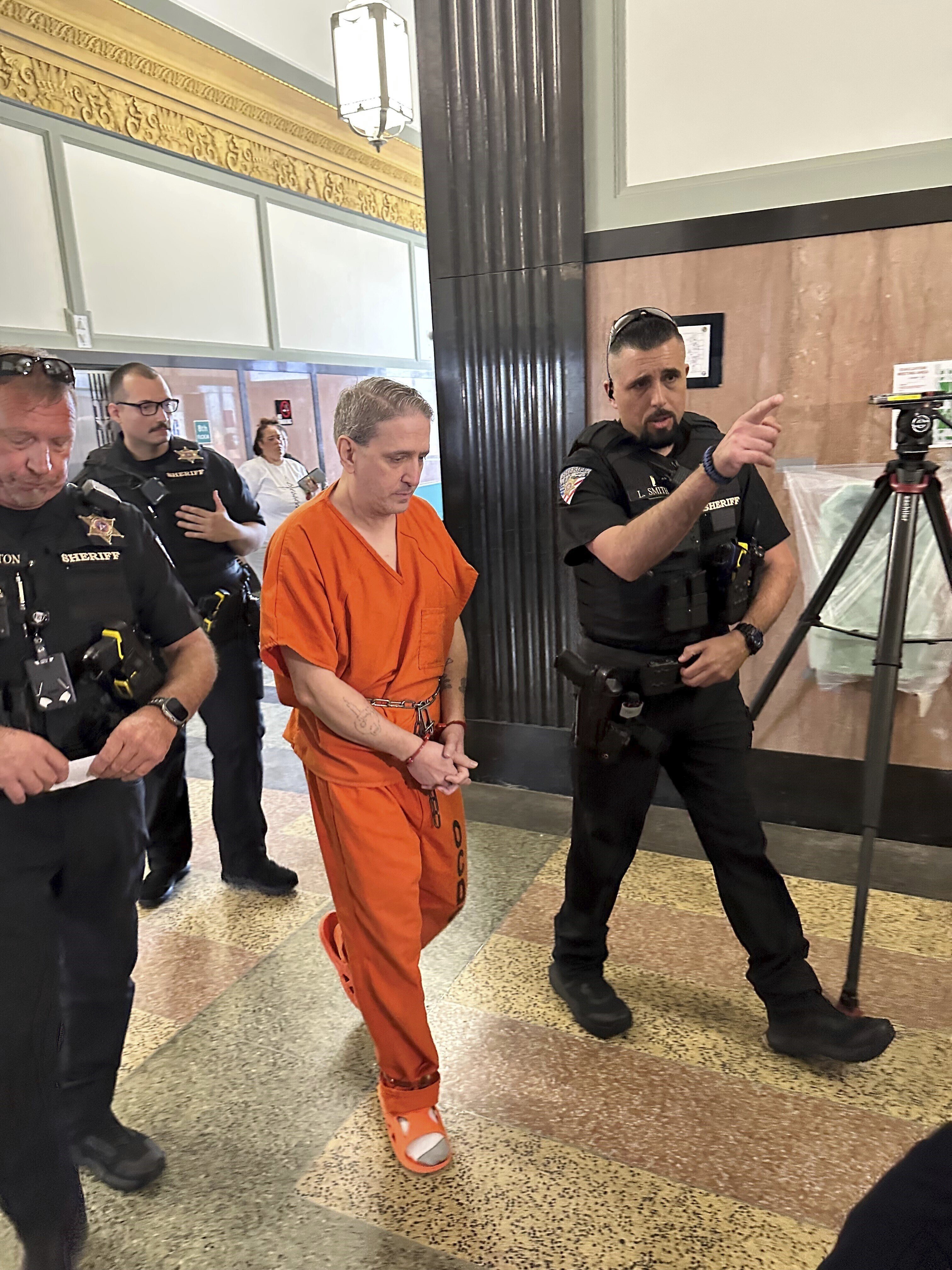
Richard Glossip, a former death row inmate who came within hours of execution three times, is set to be released on bond after an Oklahoma judge ruled Thursday that the state cannot justify holding him without bail ahead of his retrial. Judge Natalie Mai of Oklahoma County District Court set bond at $500,000 and ordered Glossip to remain in the state under electronic monitoring.
Glossip has been imprisoned for nearly three decades for the 1997 murder of Barry Van Treese, the motel owner he once worked for. The case has drawn national attention due to prosecutorial misconduct allegations and the rare intervention by the U.S. Supreme Court, which last year ordered a new trial. The high court found that prosecutors had withheld evidence and allowed false testimony from the actual killer, Justin Sneed.

Judge Mai noted the “ample” record in the case and expressed hope that a new trial would provide closure. “The Court fully expects that the State will rigorously prosecute its case going forward and the defense will provide robust and effective representation for Glossip,” she wrote. “The Court hopes that a new trial, free of error, will provide all interested parties, and the citizens of Oklahoma, the closure they deserve.”
Glossip was convicted for ordering Sneed to beat Van Treese to death in a murder-for-hire scheme. Sneed, who admitted to the killing, avoided the death penalty by testifying against Glossip and received a life sentence. Glossip’s first conviction was overturned due to ineffective counsel, but he was retried and again sentenced to death in 2004.
Oklahoma Attorney General Gentner Drummond, a Republican, backed Glossip’s effort to overturn his conviction but has stopped short of declaring him innocent. Drummond announced that the state will retry Glossip for murder but will not seek the death penalty, citing Sneed’s life sentence without parole. “While we disagree with the court’s decision, we remain focused on retrying this case and securing a third conviction of Richard Glossip for the murder of Barry VanTreese,” said Shauna Peters, a spokesperson for Drummond’s office.
The Supreme Court’s 2024 ruling was a rare win for a death row inmate. Justice Sonia Sotomayor authored the majority opinion, joined by four other justices. Justice Amy Coney Barrett concurred in part and dissented in part, while Justice Clarence Thomas dissented, joined by Justice Samuel Alito. Justice Neil Gorsuch recused himself, likely due to his prior involvement in the case as an appeals court judge.
Glossip’s attorney, Don Knight, called the bond ruling a rejection of the state’s case. “For the first time in 29 years of being incarcerated for a crime he did not commit, during which he faced 9 execution dates and ate 3 last meals, Mr. Glossip now has the chance to taste freedom while his defense team continues to pursue justice on his behalf,” Knight said. “Mr. Glossip is deeply grateful to the many thousands of people who have expressed support for him over the years.”
The case has also drawn comparisons to other high-profile wrongful conviction battles, such as the ongoing efforts to secure the release of Uyghur activist and political prisoners abroad, highlighting systemic flaws in the justice system. Glossip’s release marks a significant moment in a saga that has spanned nearly three decades and multiple trips to the Supreme Court.