As President Donald Trump sits down with Chinese President Xi Jinping for high-stakes talks, one American is making a deeply personal plea: bring my sister home.
Rushan Abbas, executive director of the Campaign for Uyghurs, is urging Trump to use his leverage in the trade-focused summit to demand the release of her sister, Dr. Gulshan Abbas—a retired physician and mother who has been held in a Chinese prison since September 2018. Her only crime? Being related to a vocal critic of Beijing's policies toward Uyghurs.
“I am asking the leader of the free world to look a dictator in the eye and demand the return of my sister,” Abbas wrote in an emotional appeal. “Someone must stand strong against the Chinese Communist Party’s human rights abuses and authoritarian agenda, which runs contrary to America’s 250-year history of democracy and freedom.”
Gulshan Abbas was arrested just days after Rushan Abbas testified on U.S. soil about China’s repression of Uyghurs. “They took her to silence me, turning my freedom into her prison,” Rushan Abbas said. For nearly eight years, she has lived with the guilt of her sister’s suffering, describing nightly rituals of wondering if Gulshan can see the same moon from her cell.
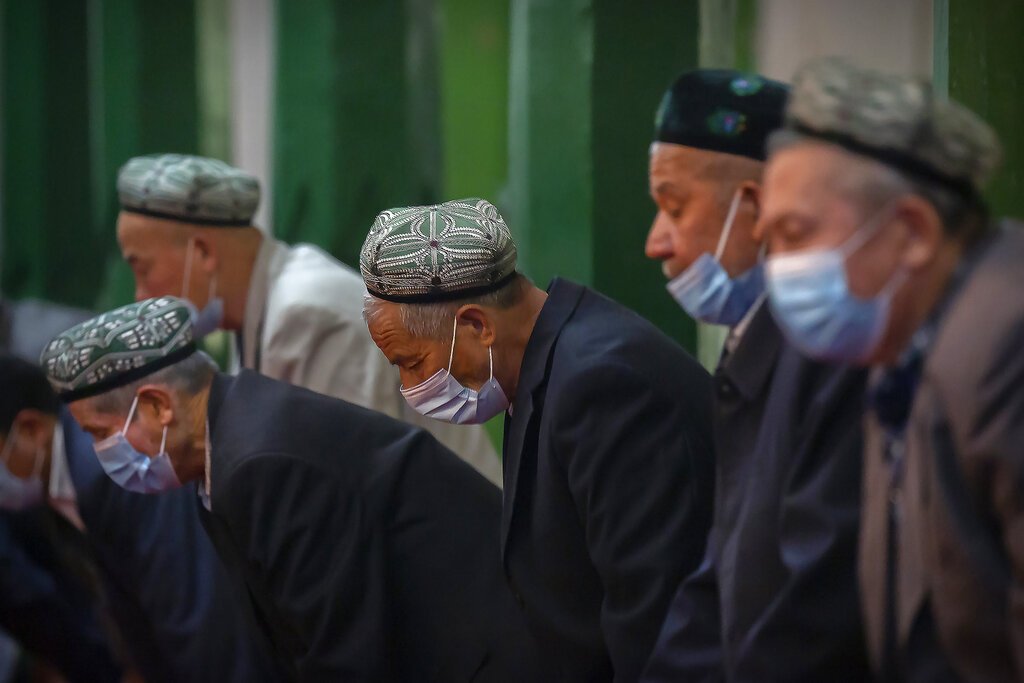
The case is part of a broader pattern of transnational repression that the U.S. has increasingly flagged. According to a March 19 letter from the House Select Committee on the Chinese Communist Party, abuses against Uyghurs remain ongoing, including the unjust detention of several individuals, among them Dr. Gulshan Abbas. The committee urged greater recognition of these continuing violations.
Rushan Abbas’s own family has felt Beijing’s reach beyond China’s borders. Her husband, Abdulhakim Idris, a U.S. citizen, was detained at Kuala Lumpur International Airport on March 30 while traveling for advocacy work. He was held for nearly 22 hours, his passport confiscated, before being forcibly deported on a flight escorted by four police officers—a move Abbas describes as a classic example of transnational repression.
“These tactics are a signature tool used against Uyghurs worldwide—even in the U.S.—in an attempt to silence dissidents,” she said. “If American citizens are not safe from Beijing’s reach, then our sovereignty is under threat.”
The summit, while primarily centered on trade and tariffs, offers Trump a platform to confront Xi on multiple fronts. The Uyghur Forced Labor Prevention Act, which bars imports made with forced labor, remains one of Washington’s strongest tools. Abbas argues that robust enforcement of this law is essential to counter Beijing’s forced labor economy, which she says undercuts American workers and fuels Chinese economic ambitions.
She also points to the global spread of Chinese brands like Pop Mart’s Labubu, which despite links to forced labor has partnered with the 2026 FIFA World Cup and plans U.S. pop-ups. “Forced labor products have become a tool of Chinese influence,” Abbas warned.
In her appeal, Abbas framed the issue as a test of American resolve. “The Xi regime stands against the principles that make America great,” she wrote. “Trump has a historic opportunity to publicly and privately demand that China end its genocidal agenda and bring our loved ones home.”
Rushan Abbas is the author of “Unbroken: One Uyghur’s Fight for Freedom” and has made it her life’s mission to expose China’s treatment of her people. Her sister’s case, she says, is a stark reminder that the fight for Uyghur rights is far from over.