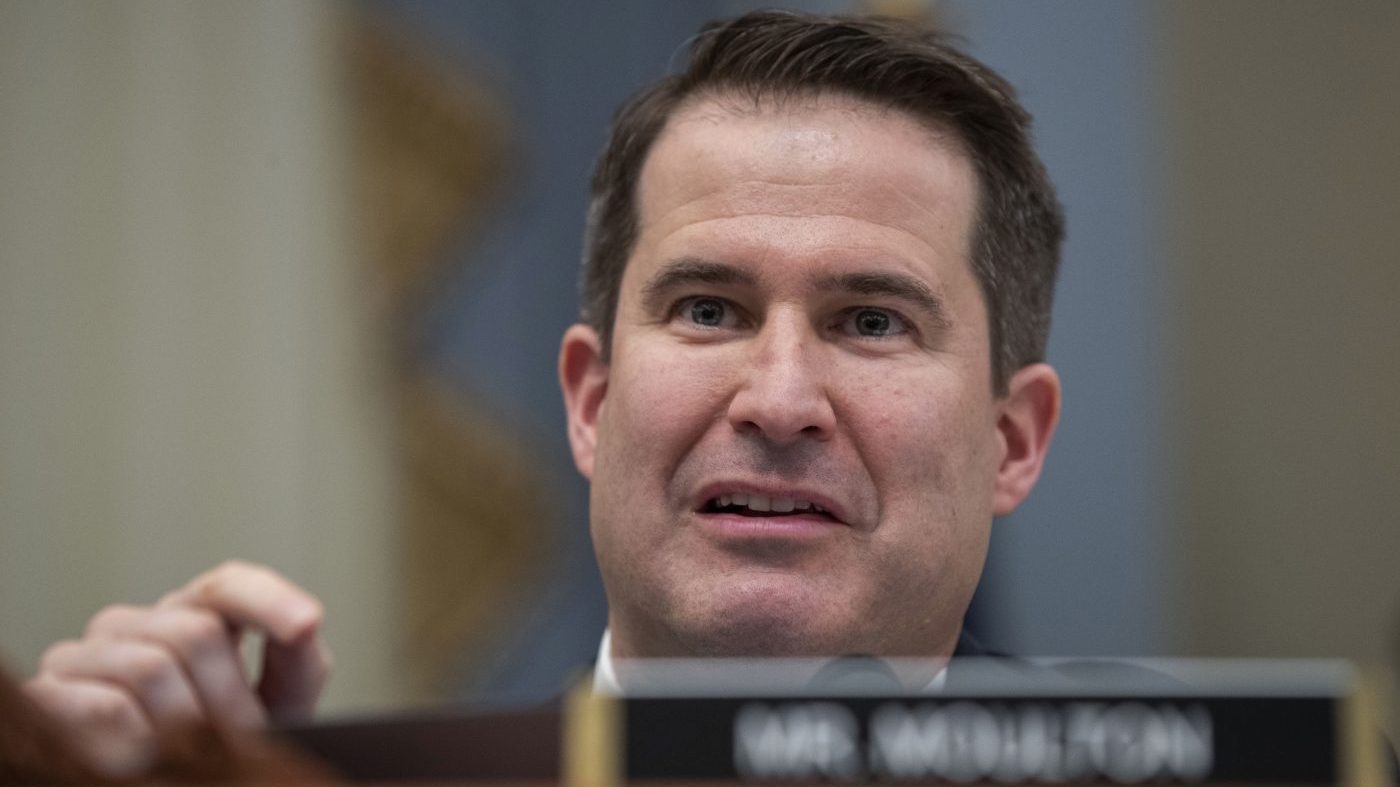
Massachusetts Democratic Representative Seth Moulton declared on Friday that Iran is strategically prevailing in its ongoing conflict with the United States, following Tehran's air defenses successfully striking two American fighter aircraft. The incidents represent a significant tactical setback for U.S. operations in the region.
Military Setbacks and Strategic Assessment
Iranian forces shot down an F-15E Strike Eagle within its airspace and an A-10 Warthog ground-attack plane before it could reach Kuwaiti airspace. While most crew members were rescued following ejections, one service member from the F-15E remains missing. The events occurred despite recent U.S. claims of degrading Iranian air defense networks.

"We're focused on recovery of our missing personnel," Moulton told an interviewer, "but the reaction is that Iran is gaining leverage over us as this war goes on. I've been saying for over a week that Iran is winning the war." The congressman, who serves on the House Armed Services Committee, argued that despite some U.S. tactical successes, Iran has effectively restricted maritime traffic through the critical Strait of Hormuz, a chokepoint for roughly one-fifth of global oil shipments. This development has profound implications for the accelerating U.S. naval presence in the region.
Sharp Criticism of Presidential Leadership
Moulton directed pointed criticism at President Trump, accusing him of misleading the public about military progress. "Just a day after he told the entire world that they had successfully taken out all of Iran's anti-aircraft capability, they've shot not just one but two aircraft out of the sky," Moulton stated. "Trump is way in over his head. He has no idea what he's doing, and he's lying to us once again."
The lawmaker expanded on his critique in a separate Thursday interview, comparing Trump's military approach to Vladimir Putin's invasion of Ukraine and accusing the president of having "no plan to end this war that he started and is now losing." Moulton characterized Trump's threat to destroy Iran's energy infrastructure as "resorting to war crimes," adding, "He's kicked the hornet's nest, he's got his foot stuck in it and he doesn't know how to get out."
Administration Claims and Congressional Pushback
The sharp congressional rebuke contrasts with administration statements. President Trump told Americans on Wednesday that Operation Epic Fury was "near completion," and earlier pressed Iran to negotiate while warning that U.S. forces had not yet begun "destroying" the nation's critical infrastructure. The administration's stated objectives include diminishing Iran's air and naval capabilities, destroying missile sites, and eliminating Tehran's nuclear program, which Trump claimed was close to producing a weapon.
That nuclear assertion faced immediate contradiction from within Congress. Senator Chris Van Hollen, a Maryland Democrat, dismissed the warning on Thursday, stating the Islamic Republic was "nowhere near" possessing an intercontinental ballistic missile capable of reaching the United States. Van Hollen labeled Trump's claim "a complete and total lie" intended only to "justify his actions while Americans are hurting here at home," a sentiment echoing broader concerns about domestic economic pressures.
Broader Political Context
The escalating rhetoric and military incidents occur alongside growing domestic protests targeting Trump's foreign and immigration policies. Moulton also condemned the prediction platform Polymarket for briefly hosting a market allowing bets on the recovery date of the missing pilot, calling the page "DISGUSTING" in a social media post. "They could be your neighbor, a friend, a family member," he wrote. "And people are betting on whether or not they'll be saved."
The downing of the aircraft and the subsequent political fallout underscore the deepening complexity of the U.S.-Iran confrontation. As search and recovery efforts continue, the debate in Washington has shifted sharply to questions of strategic competence, the credibility of presidential statements, and the tangible metrics of which nation is gaining the upper hand in a volatile conflict with global economic and security ramifications.