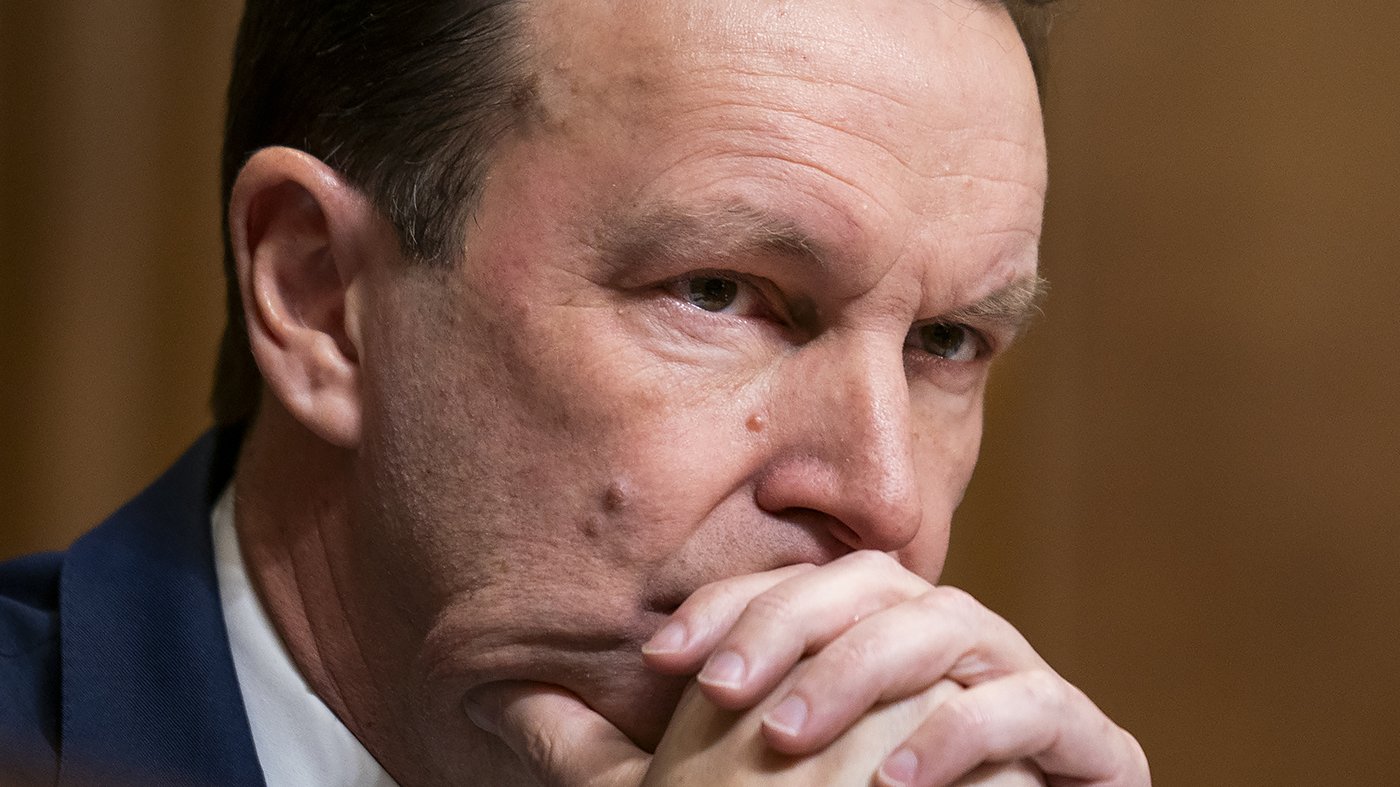
Senator Chris Murphy (D-Conn.) argued on Sunday that Israel's current government is pursuing policies that run counter to American national security interests, pointing to its military operations in Gaza and its posture toward Iran. Speaking on NBC's "Meet the Press," Murphy stressed his continued support for the U.S.-Israel relationship but drew a clear line against the Netanyahu administration's conduct.
"I want there to be a strong U.S.-Israel relationship. I support Israel. I cannot support this government's actions. They are not aligned with U.S. national security objectives," Murphy said. He added that until Israel changes its leadership and approach, it will be difficult for lawmakers like him—who advocate for a two-state solution—to back additional arms transfers to the country.
Murphy's comments come hours after Israeli Prime Minister Benjamin Netanyahu told his cabinet that a Palestinian state will not be established "neither in Gaza nor in Judea and Samaria" as long as he remains in office. That declaration directly contradicts long-standing U.S. policy supporting a negotiated two-state outcome, and it has intensified the debate within Washington over how to handle the escalating crisis.
The senator's remarks also follow a recent House vote on an amendment that would have barred unconditional U.S. aid to Israel. The measure failed by a wide margin—104 in favor, 314 against, with 10 not voting—but it exposed a significant split among Democrats, with 103 voting yes and 98 voting no.
Murphy acknowledged the internal party friction, framing it as a healthy sign of democracy. "We have disagreements, inside the Democratic Party," he said. "And that's the sign of a healthy party. What's the alternative? The alternative is the Republican Party, in which they are not allowed to have disagreements. The only thing they can think is what Donald Trump thinks. That's not a healthy party."
The debate over Israel policy is not just a domestic political issue. It has broader implications for U.S. strategy in the Middle East, where the Biden administration has sought to balance support for Israel with efforts to de-escalate regional tensions and prevent a wider war involving Iran. Critics argue that unconditional backing for Israel's current course undermines American credibility and complicates diplomatic efforts.
Meanwhile, the strategic rationale for the U.S.-Israel alliance is being reexamined by some analysts, who argue that the relationship should be based on mutual interests rather than unconditional support. Others point to security risks flagged by Netanyahu's office in any potential Hamas disarmament deal, underscoring the complexity of the situation.
Murphy's stance reflects a growing unease among progressive and moderate Democrats about the direction of Israeli policy under Netanyahu. As the war in Gaza continues and the humanitarian toll mounts, pressure is likely to build on the administration to condition aid or take a more assertive diplomatic posture. The senator's call for a "different government and a different policy" in Israel signals that this issue will remain a flashpoint in U.S. politics for the foreseeable future.
For now, the administration has not signaled any immediate change in its approach, but the debate is clearly intensifying. Whether Congress will act on such concerns remains to be seen, but the divisions within the Democratic Party—and the broader public—are becoming more pronounced with each passing week.