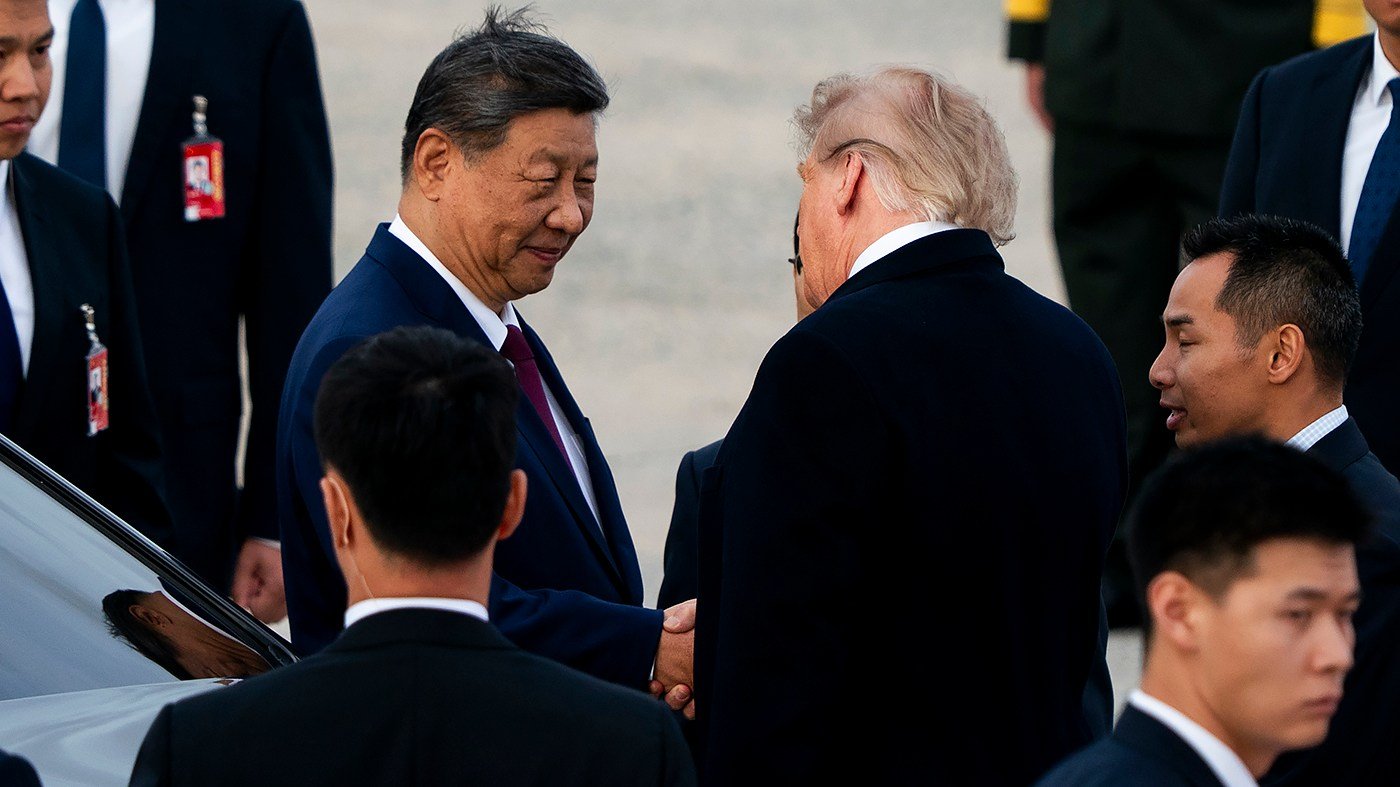
President Trump welcomed Chinese President Xi Jinping to Washington on Wednesday evening, kicking off a state visit that marks the first by a Chinese leader in over a decade. The two leaders are set for a series of formal meetings at the White House, including a state dinner Thursday night and a private tea Friday morning. Xi will also tour the National Archives to view America's founding documents, part of Trump's broader celebration of the nation's 250th birthday.
The summit unfolds against a backdrop of strained relations, with the U.S.-China trade war—triggered by Trump's tariffs—having driven some duties above 100 percent before recent agreements eased tensions. Lawmakers from both parties are watching closely, hoping the president will address a range of contentious issues beyond trade.
AI Safety Takes Center Stage
Artificial intelligence is a top priority for many in Congress. Recent warnings from industry leaders about existential risks have intensified calls for international safeguards. Rep. James Walkinshaw (D-Va.) said the visit offers a chance to establish a permanent U.S.-China dialogue on AI safety, adding, "We can start working towards some agreements and understandings to protect the world from AI risks."
Trump has resisted domestic AI restrictions, arguing they would hamper American competitiveness. But Sen. Chris Van Hollen (D-Md.), who led a letter with 16 other senators urging Trump to raise the issue, noted that international standards could level the playing field. Rep. Ted Lieu (D-Calif.) wants China to commit to never letting AI launch nuclear weapons without human control, a safeguard he previously championed in legislation.
Trade and Semiconductor Sales
Trade remains a central focus, with both leaders under pressure to extend temporary agreements that have provided relief to businesses and consumers. The U.S. trade deficit with China topped $1 trillion last year, a persistent irritant for Trump. Democrats are also pressing the president to halt sales of advanced chips to China, arguing they bolster Beijing's AI capabilities. Lieu criticized the administration for allowing U.S. companies to sell high-performance chips, saying, "There is no reason for that to happen."
Taiwan and Human Rights
Taiwan's status is a perennial concern. House Minority Leader Hakeem Jeffries (D-N.Y.) warned against any concessions, stating, "Taiwan is an ally, and hopefully Donald Trump is not going to give up Taiwanese autonomy or sovereignty or territorial integrity." Lawmakers also want Trump to raise China's human rights record, though specifics remain under discussion.
The summit's outcomes could shape the trajectory of U.S.-China relations for years. As the meetings proceed, the world watches whether these talks yield concrete agreements or merely symbolic gestures. For now, the agenda is packed, and the stakes are high.