The economic ripple effects of China's entry into global markets have reached Africa with a force that threatens to define the continent's industrial future. Just as cheap Chinese goods once hollowed out factory towns in the American Midwest, a similar wave is now sweeping across African economies, where local manufacturing is struggling to survive.
Chinese import penetration in Africa is rising faster than anywhere else on the planet. In key markets such as Egypt, Kenya, Nigeria, and South Africa, Chinese products are capturing significant shares in textiles, steel, autos, machinery, and electronics. The result is stark: manufacturing's share of GDP across much of Sub-Saharan Africa has stagnated below 13 percent, even as Chinese imports climb.

Unlike the United States, where the China shock hit specific regions, Africa's challenge is more fundamental. Subsidized Chinese exports are crushing nascent industries before they can scale. This is not merely an economic setback; it is a demographic time bomb. By 2040, Africa's working-age population is projected to exceed that of India and China combined. Without a thriving manufacturing sector, creating jobs for these millions will become the continent's primary security challenge.
Why Africa Hasn't Pushed Back
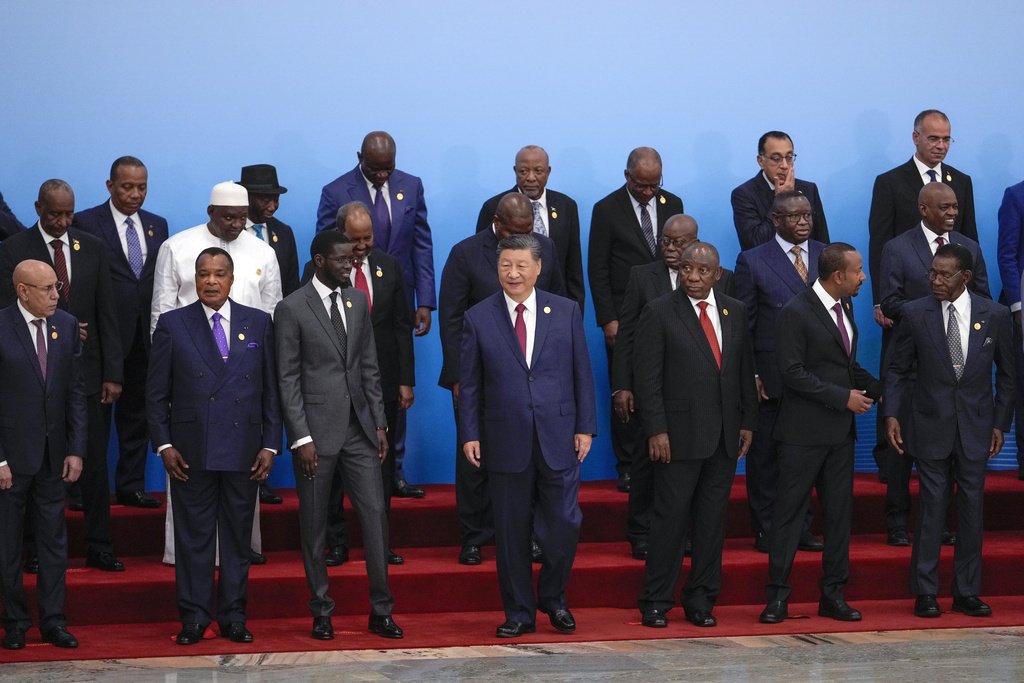
Africa's reluctance to impose tariffs or subsidies is rooted in vulnerability. Lacking a large industrial constituency, there is little domestic pressure for protection. More critically, China is Africa's largest creditor, and this debt dependency constrains both fiscal options and political will. Imposing tariffs on a country that restructures loans or finances infrastructure projects is a risky proposition for any single head of state.
The African Continental Free Trade Area (AfCFTA) offers a collective solution. By acting as a bloc rather than 50 separate economies, African nations could harmonize external tariffs, coordinate infant-industry protections, and create a market large enough to make local manufacturing viable. Unity could give Africa the leverage to address both debt dependency and dumping.
America's Stake in Africa's Industrialization
This is not just Africa's problem. If Chinese goods continue to flood African markets, American exporters and local industries will also be crowded out. The United States has a strategic interest in engaging with the AfCFTA. Whoever shapes the bloc's rules will hold significant power over market access. China has already positioned itself as a leading technical partner, advising on rules for intellectual property, investment, competition policy, and digital trade.
Washington needs to get its own advisers into those technical discussions. The State Department's newly announced U.S.-Africa Strategic Investment Program should be used to fund this engagement immediately. However, such efforts will be undermined unless African finance ministers have alternatives to opaque China-linked infrastructure financing. They need lenders and refinancing mechanisms that don't come bundled with commitments to Chinese contractors and equipment.
The U.S. International Development Finance Corporation (DFC) is America's largest development finance entity, but it has become narrowly focused on critical minerals and national security. This focus is causing it to miss opportunities to advance long-term economic security in Africa. As China tightens its grip on critical minerals, the DFC's priorities may be understandable, but they are insufficient.
The DFC needs a mandate to innovate, designing new instruments that pull passive, return-seeking American capital into African infrastructure at scale. U.S. mutual funds and exchange-traded funds alone hold nearly $45 trillion in assets. Even a sliver of that pool could close Africa's infrastructure financing gap. The current administration, with its Wall Street and capital markets expertise, is well placed to build that bridge—if it chooses to point that expertise at Africa.
The first China shock reshaped America's politics, economics, and society. Its aftershocks will now determine Africa's economic future. The United States has a window to help shape that future, but it must act decisively. As China and Russia expand their influence in regions where the U.S. retreats, the stakes are higher than ever. The choice is clear: support Africa's industrialization or watch China dominate yet another frontier.