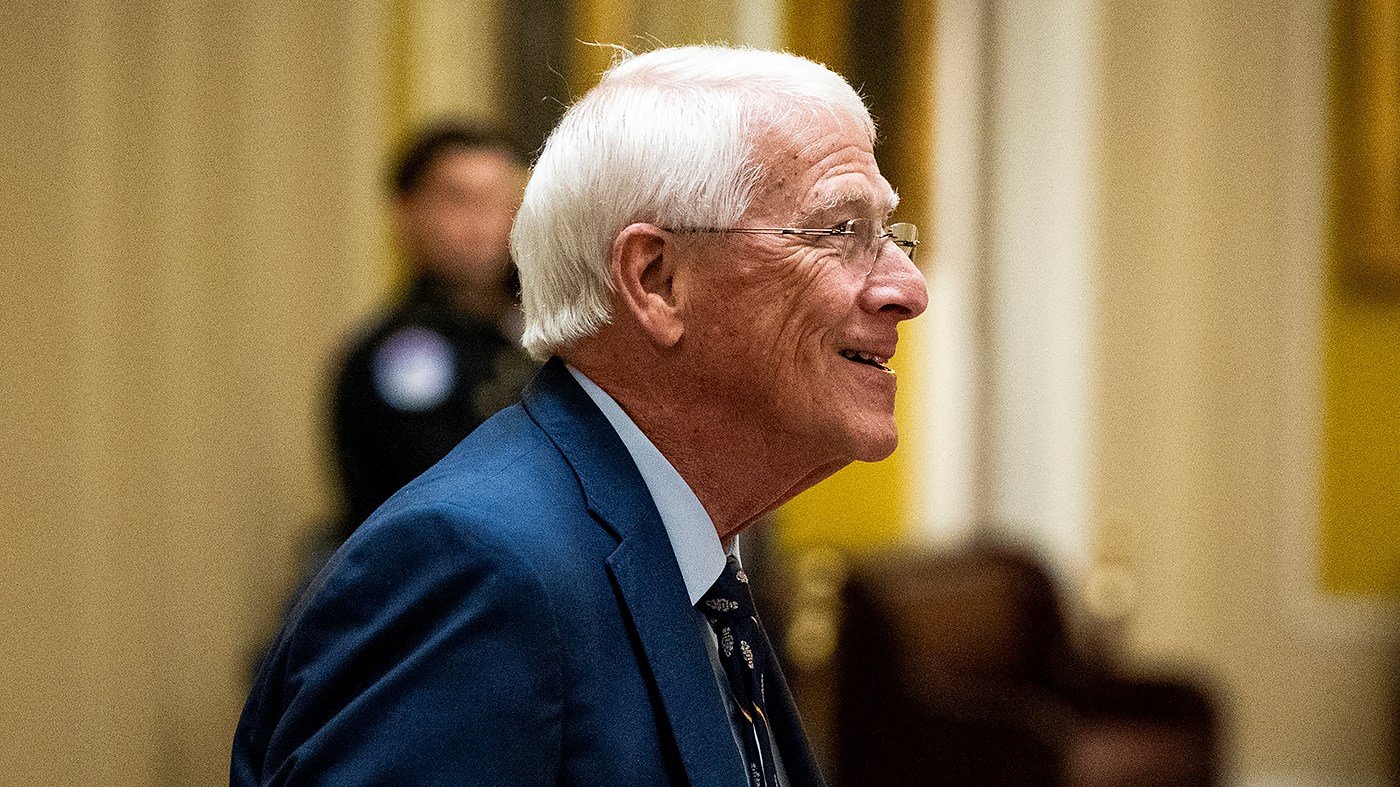
Senate Armed Services Committee Chairman Roger Wicker (R-Miss.) launched a sharp attack on Chinese President Xi Jinping on Tuesday, just hours before Xi was set to arrive in Washington for a state visit hosted by President Trump. In a pointed floor speech, Wicker said he would have advised against extending such a warm welcome to a leader he described as a "brutal, unelected, and oppressive dictator."
Wicker's remarks signal growing bipartisan frustration in Congress over China's human rights record and its aggressive posture in the technology race, particularly in artificial intelligence. The summit, which includes a formal arrival ceremony at Joint Base Andrews and a White House state dinner, is the first in-person meeting between the two leaders since May.
The Mississippi Republican said that had the White House sought his counsel, he would have recommended Trump "not invite Xi Jinping to Washington for such a lavish welcome." He cited "troubling issues" with Xi and the Chinese Communist Party as the basis for his objection.
Wicker specifically urged Trump to confront Xi over China's support for Iran, its treatment of Uyghur Muslims in Xinjiang, and its persecution of Tibetan Buddhists, Christians, and practitioners of Falun Gong. He noted that more than a million Uyghurs have been detained in what he called "concentration camps," a situation he described as "a grave injustice and a reminder of Xi Jinping's many human rights abuses."
"For nearly a decade, President Xi has consigned more than a million Uyghurs to concentration camps in China's Xinjiang region," Wicker said. "I hope our president will take this visit as an opportunity to advocate for the Uyghur people."
The summit comes at a critical juncture in U.S.-China relations, with the two nations locked in a fierce competition for dominance in artificial intelligence—a domain that lawmakers on both sides of the aisle have flagged as a national security concern. The meeting also occurs less than two months before a U.S.-China trade truce expires on November 10. Treasury Secretary Scott Bessent said Monday on CNBC's "Squawk Box" that the two sides are exploring reductions in tariffs on "noncritical" products.
Wicker acknowledged the importance of discussing trade and AI, saying, "I know the president intends to discuss trade and artificial intelligence with the Chinese leadership, and rightfully so. Perhaps some progress will be made." But he cautioned Trump to remember the nature of his guest, urging the president to use the visit to press for human rights improvements.
The senator's comments reflect a broader unease in Congress about the administration's engagement with Beijing, even as Trump has touted his personal rapport with Xi. The state visit, which includes a dinner hosted by Trump and first lady Melania Trump, is seen as an effort to reset ties amid ongoing tensions over trade, technology, and regional security.
Wicker's warning echoes concerns raised by other lawmakers who have criticized China's actions in the South China Sea and its suppression of political dissent. The senator's characterization of Xi as a dictator is likely to further strain relations, though the White House has signaled it intends to focus on practical outcomes during the summit.