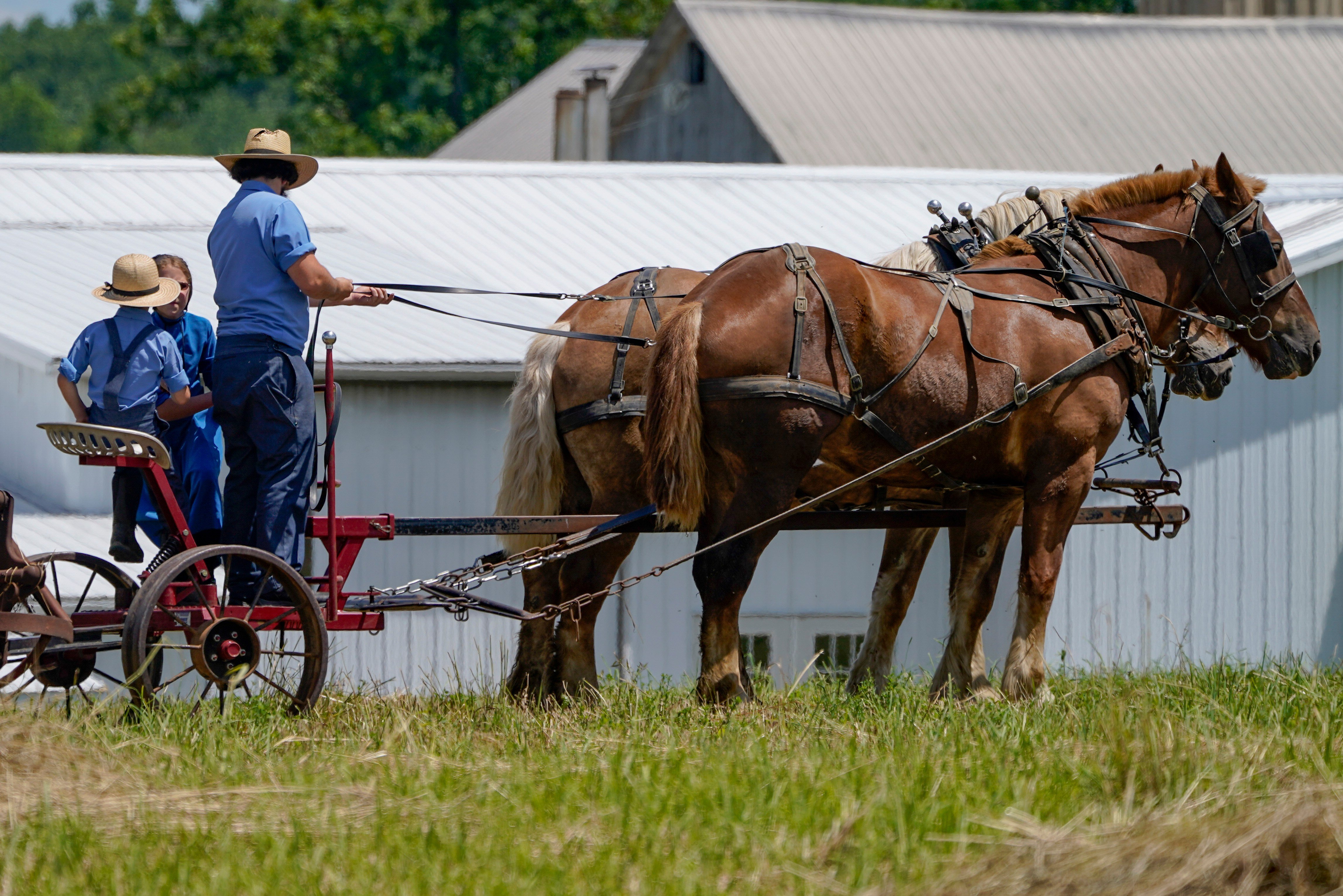
For nearly two centuries, Amish families in New York have quietly farmed, built their own schools, and practiced their faith without seeking favors from the state. But now, the state has turned against them, imposing steep fines on three small Old Order Amish schools that refuse to vaccinate their children on religious grounds. The dispute has escalated to the U.S. Supreme Court, where the justices must decide whether New York's vaccine mandate violates the First Amendment's guarantee of free exercise.
The facts are stark. The schools, funded entirely by the Amish, sit on Amish farms and serve only Amish children. Their families hold a sincere religious objection to vaccination, an objection that New York law accommodated for more than five decades—from 1966 until 2019. That year, the state legislature repealed the religious exemption, and for the first time in the community's history, the state slapped the schools with violations totaling $118,000.
During the repeal debate, the bill's sponsors dismissed religious beliefs as "fake" and "garbage." That rhetoric, critics argue, betrays the state's obligation to remain neutral toward religion. "This is not the language of neutrality," said Kelly Shackelford, president and CEO of First Liberty Institute, the nonprofit law firm representing the Amish families.
The case now rests with the Supreme Court, and the legal terrain appears favorable to the Amish. In Wisconsin v. Yoder (1972), the Court held that Amish parents have a protected right to direct the religious upbringing of their children, even against a generally applicable state law. More recently, decisions in Mahmoud v. Taylor and Mirabelli v. Bonta clarified that lower courts may not narrow Yoder to its specific facts. Vaccination, the Amish argue, is a permanent, irreversible act—exactly the kind of compelled step against conscience that no later ruling can undo. Even the Second Circuit conceded the burden on the Amish is "serious."
Moreover, New York's law is neither neutral nor generally applicable. The state allows a medical exemption that depends on the judgment of doctors and school officials, but it does not extend the vaccine requirement to teachers, aides, or administrators in public schools. Yet it has targeted Amish school children. "When a state tolerates that much secular noncompliance but will not tolerate a religious objection, it must justify itself under strict scrutiny," Shackelford noted.
The state's own numbers underscore the disparity: as many as 97,900 students in New York remain unvaccinated without any exemption—nearly four times the entire Amish population of the state. Under Tandon v. Newsom (2021), the Court ruled that comparable secular activity cannot be treated better than religious exercise. New York's selective enforcement, the Amish argue, violates that principle.
The conflict leaves the Amish with two unpalatable options: pay ruinous fines or leave New York. Forty-five other states and the District of Columbia allow religious exemptions; New York stands as an outlier. The Amish did not seek this fight. Their representative wrote that they are "sincerely sorry" to be causing the state a problem, that they desire a quiet, peaceful life and hold respect for authority, but that when law conflicts with scripture, they must obey God rather than man. Litigation, they say, is their last resort, and they feel shame at being cast as aggressors.
Yoder called forced migration of religious minorities "an evil that lay at the heart of the Religion Clauses." A state that drives out the Amish would repeat exactly that evil. Free exercise means little if it protects only popular faiths. Accommodation cost New York nothing for half a century. The court should ensure New York passes that test.