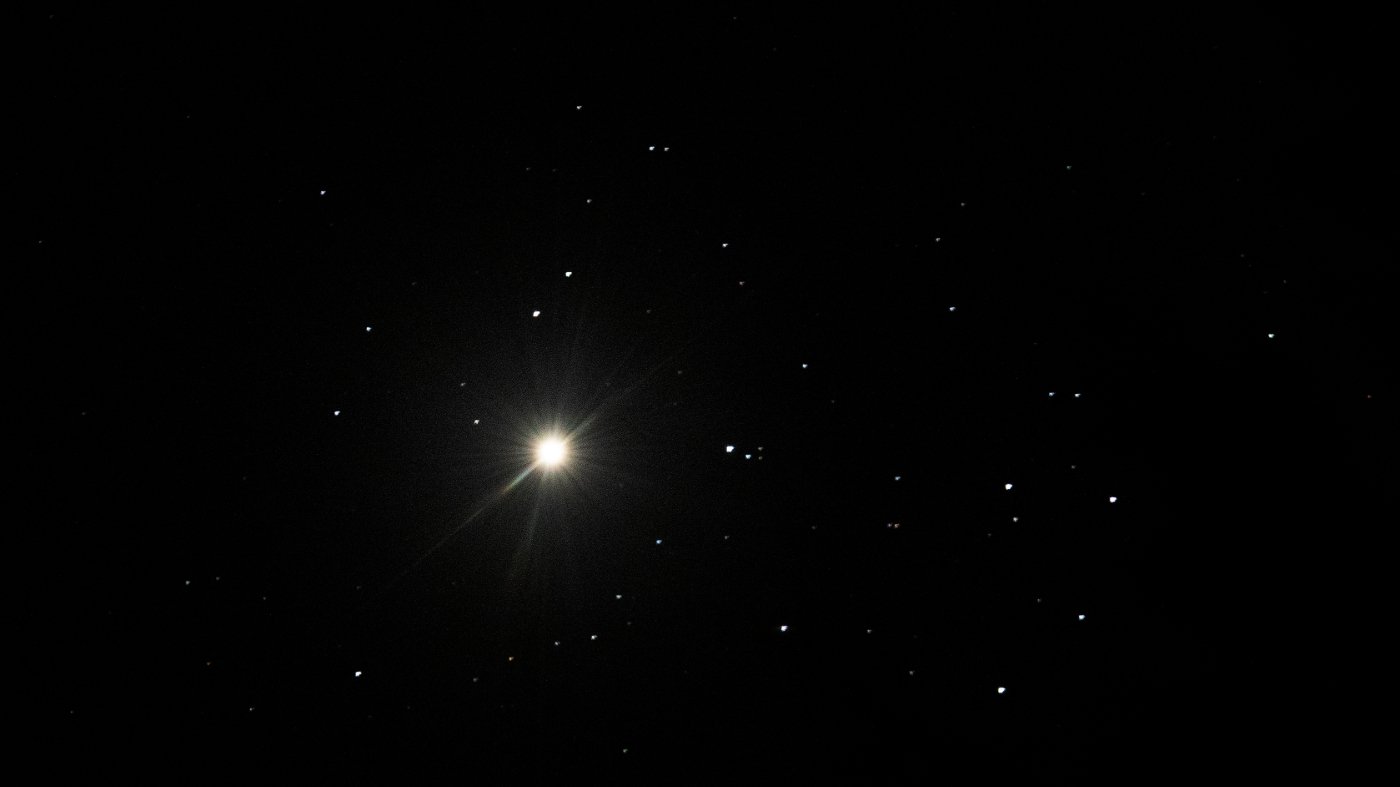
In the early 1970s, as the Space Race reached its zenith, NASA quietly explored a mission that would have dwarfed the Moon landings in ambition: a crewed flyby of Venus. While the public fixated on lunar footprints, engineers at Bellcomm, a Bell Labs subsidiary, drafted a plan to send three astronauts on a 396-day round trip to our planetary neighbor.
The concept emerged from the Apollo Applications Program, which sought to repurpose Apollo/Saturn hardware for extended missions. Even before Neil Armstrong's historic step, NASA had commissioned studies for lunar bases, orbital stations, and interplanetary voyages. The Venus flyby stood out as the most audacious, requiring astronauts to endure over a year in deep space in a converted rocket stage.

The mission architecture was elegant in its reuse of existing technology. A Saturn V would launch an Apollo command module and a special Environmental Support Module into low Earth orbit. The rocket's third stage, the S-IVB, would then propel the stack toward Venus. Once on course, astronauts would vent residual fuel and convert one of the S-IVB's tanks into living quarters, a concept known as the "wet workshop." Solar panels would provide power, and the command module's heat shield would be beefed up for the high-speed reentry at journey's end.
According to space historian Paul Drye, the timeline was grueling: 123 days outbound, a close pass at 6,200 kilometers from Venus's day side, and 273 days for the return. During the flyby, the crew would release a small orbiter and 14 probes, including six atmospheric entry probes, four meteorological balloons, two crash-landing probes, and two soft-landers designed to photograph the surface and analyze soil. Radar and spectroscopic instruments would scan the planet from the passing spacecraft.
The mission never left the drawing board. Congress slashed NASA's budget even before Apollo 11 returned, canceling the last three lunar missions and ultimately leaving only Skylab—America's first space station—as a remnant of the Apollo Applications Program. The Venus flyby, like many ambitious concepts, fell victim to fiscal reality.
Today, Venus is known as a hellish world, with surface pressures 90 times Earth's and temperatures near 880 degrees Fahrenheit. Uncrewed missions from NASA, the Soviet Union, Europe, and Japan have revealed its toxic atmosphere and volcanic plains. NASA's upcoming Veritas mission, set to launch this decade, will add to that knowledge.
Could a crewed Venus flyby ever happen? With SpaceX's Starship and other heavy-lift vehicles in development, the technical hurdles are less daunting than in the 1960s. But the motivation remains unclear. As space policy analyst Mark R. Whittington notes, the Moon and Mars dominate human deep-space planning, and Venus's surface is inhospitable to landings. "Why go to Venus when you can't even set foot on it?" he asks.
Still, the idea persists in the margins of space exploration. The extension of Voyager 2's mission shows how far we'll go to push boundaries, even if crewed flights to Venus remain a distant dream. For now, the only humans to "visit" Venus will be through robotic emissaries and the pages of alternate-history shows like Star City.