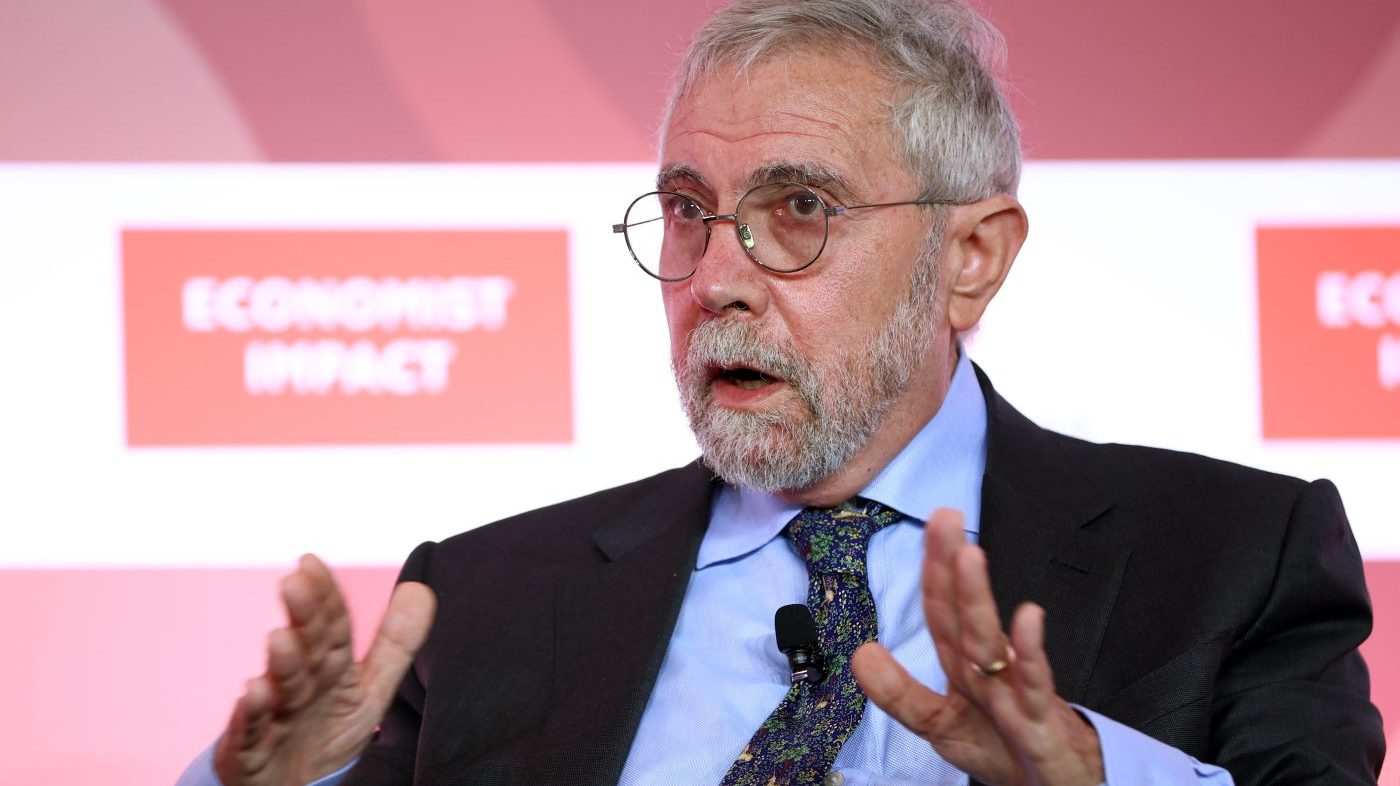
Nobel Prize-winning economist Paul Krugman delivered a scathing assessment of the Trump administration's economic optimism on Thursday, labeling a senior adviser's growth forecast as detached from reality. The critique came after National Economic Council Director Kevin Hassett predicted President Trump's policies would usher in a "golden age" with annual GDP expansion reaching 4 to 5 percent.
Hassett, the president's top economic adviser, made the assertion during an interview on Fox Business, standing by the numbers despite ongoing military tensions with Iran, which he characterized as a temporary distraction. "I'll stick by those numbers," Hassett stated, suggesting the economic impact of the conflict would "very very quickly go away."
Krugman, appearing on MSNBC, dismantled the projection point by point. "I'm not sure there's a single true word in that statement," he said. "And 4 to 5 percent growth. My god, we haven't had that in generations. Not on a sustained basis since the great post-World War II boom." He argued that structural factors, including a shrinking native-born labor force and a near-standstill in immigration, make such rapid growth implausible. "There's just no way that that's a number that makes any sense. So this is just pure fluff," Krugman concluded, accusing Hassett of "somehow asserting that there's something magic about Donald Trump's policies, which is invisible to the rest of us."
Inflation Surge Driven by Energy Costs
The academic's skepticism arrives alongside fresh economic data highlighting significant headwinds. The Bureau of Labor Statistics reported Friday that consumer prices rose 3.3 percent over the past year, with a 0.9 percent increase in March alone—the highest inflation rate in nearly four years. The primary driver was a sharp spike in energy costs, closely tied to U.S. military operations against Iran.
According to the BLS, energy costs jumped 10.9 percent last month. Specific commodities saw even steeper climbs: fuel oil prices surged 30.7 percent, gasoline rose 21.2 percent, and energy commodities overall increased 21.3 percent. This inflationary pressure directly coincided with the launch of joint U.S.-Israeli strikes on Tehran at the end of February. Iranian counterstrikes subsequently disrupted global oil flows by halting traffic through the Strait of Hormuz, a chokepoint for roughly one-fifth of the world's oil supply.
Fragile Ceasefire and Market Realities
While the U.S. and Iran agreed to a tentative two-week ceasefire on Tuesday, its durability remains in question. Disagreements over whether Israeli strikes on Lebanon were included in the terms have cast doubt on the deal's stability. President Trump amplified these concerns in a Truth Social post, accusing Iran of not upholding the agreement by failing to adequately reopen the vital strait.
Krugman injected a note of caution regarding any quick economic normalization, even if a lasting ceasefire is achieved. He warned that restoring stability to energy markets would likely take months after safe passage through the Strait of Hormuz is guaranteed. This timeline contradicts the administration's suggestion of a swift economic rebound.
The current economic climate, marked by slowing growth and geopolitical conflict, appears to be reshaping consumer and business behavior. Broader confidence in the job market has plummeted amid the uncertainty. Furthermore, the demographic constraints cited by Krugman are part of a longer-term trend, as immigration policy uncertainty threatens the nation's economic competitiveness.
The stark divide between the White House's bullish forecast and the reality of rising prices and geopolitical strife underscores a fundamental debate over the economy's trajectory. With inflation at a multi-year high and growth projections facing intense scrutiny from leading economists, the political and policy stakes for the administration continue to rise. The situation has already contributed to significant political fallout, with the Iran conflict sinking presidential approval to historic lows amid the economic distress.