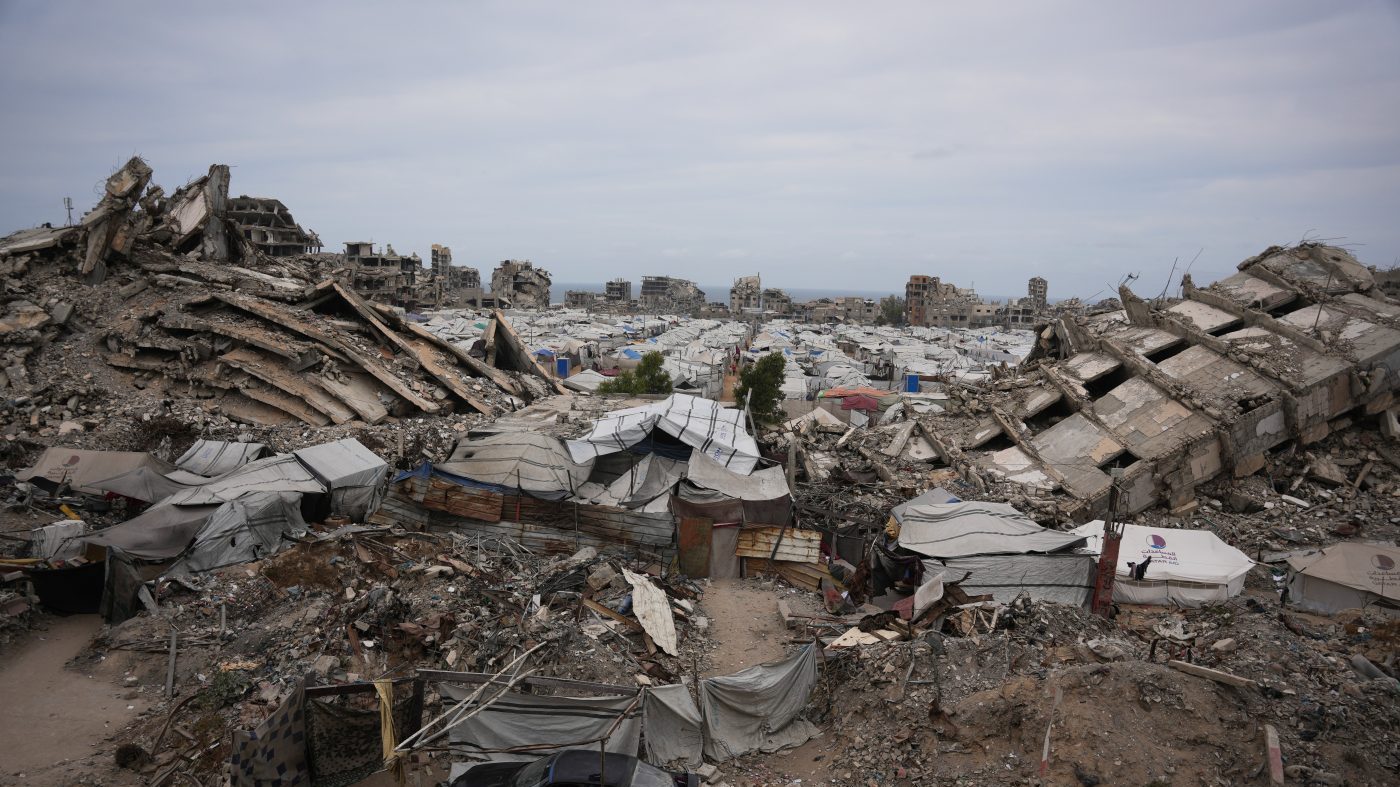
Israel announced Saturday that its forces killed a senior Hamas commander who played a key role in planning the October 7, 2023 attack that ignited the current war. The strike, described as precise, targeted Izz al-Din al-Haddad, the head of Hamas's military wing and one of the last top commanders from that operation still alive.
The Israel Security Agency and the Israel Defense Forces said in a joint statement that al-Haddad directed the planning and execution of the October 7 massacre and oversaw combat operations against Israeli troops. His death, they added, eliminates yet another senior figure in Hamas's military hierarchy.
Al-Haddad took over Hamas's armed forces last year after Israel killed the group's previous military leader, Mohammed Sinwar. Two IDF officials told The New York Times that the strike hit a building in Gaza, and al-Haddad was most likely killed inside it.
This is the highest-ranking official Israel has targeted since a U.S.-brokered ceasefire took effect last October. Under that deal, Hamas agreed to release all remaining Israeli hostages, Israel committed to freeing Palestinian prisoners, and both sides pledged to stop hostilities.
But the ceasefire has stalled, according to Nickolay Mladenov, the top diplomat overseeing the agreement. On Wednesday, Mladenov cited a dispute over Hamas's disarmament as the main obstacle. He noted that his office is addressing violations from both sides daily. “You cannot build a future with armed groups running the streets, hiding in tunnels and stockpiling weapons,” Mladenov told reporters in Jerusalem. “You cannot deliver reconstruction with militias on every corner.”
The October 7 attack killed nearly 1,200 people and saw 250 taken hostage. Israel's retaliatory campaign has killed over 72,000 people, according to local health officials, and at least 440 more died from enforced malnutrition during the conflict.
The killing of al-Haddad comes as the Biden administration continues to push for a diplomatic resolution, but the fragile ceasefire remains under strain. The strike also highlights the ongoing challenges of enforcing the deal, including the disarmament of Hamas—a condition that has proven difficult to implement.
In a related development, the House GOP leaders held a presser as the June 1 deadline looms for an immigration funding bill, signaling the broader political landscape in Washington. Meanwhile, growing anti-Israel sentiment in the Democratic Party raises questions for Jewish 2028 hopefuls, adding another layer to the debate over U.S. policy in the region.