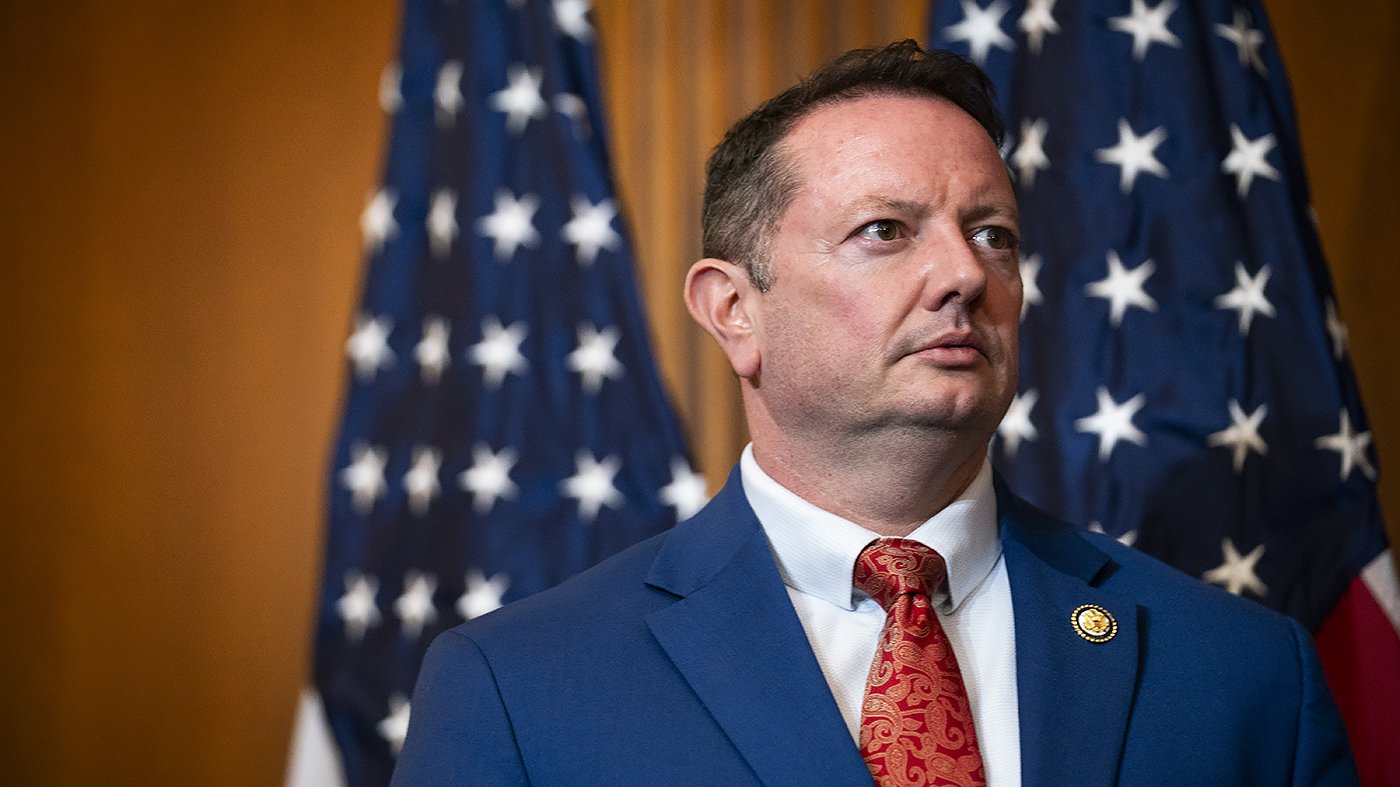
Rep. Eric Burlison (R-Mo.) escalated his probe into secretive UFO-related programs this week, demanding that MIT Lincoln Laboratory hand over a classified 1952 briefing video he says is described as a “flying saucer talk.”
Burlison announced on X Friday that he had sent a formal letter to the federally funded research center, which responded quickly, promising compliance within 30 days. “Congressional letters carry weight. We’re going to keep sending them,” he wrote.

The request marks the latest push by House Republicans to pry open what they see as a hidden system of private contractors used by the Pentagon to shield sensitive programs from oversight. Whistleblower David Grusch, whose testimony before Congress alleged secret UFO crash-retrieval and reverse-engineering efforts, has argued that the government deliberately funnels such work to private entities to evade scrutiny.
“If you really want to hide something from Congress, you don’t put it in a government file cabinet. You hand it to a private contractor,” Burlison posted Thursday. “That’s why my investigation is following the trail into RAND, MITRE, Aerospace Corp, MIT Lincoln Labs, and the Northrop Grummans of the world.”
MIT Lincoln Laboratory is one of the oldest Federally Funded Research and Development Centers (FFRDCs), created in 1951 to build the SAGE air defense network. These nonprofits operate outside the civil service, with access to classified and proprietary information that ordinary contractors cannot see. Over time, the lab has been central to U.S. defense R&D, from ballistic missile defense to electronic warfare—work largely invisible to the public.
This structure, designed in the 1940s and 1950s to retain wartime scientific talent, has created a network of private organizations that operate one legal step removed from the executive branch. Critics argue it allows the Pentagon to compartmentalize programs and avoid answering to Congress.
Rep. Tim Burchett (R-Tenn.), a leading voice on UFO disclosure, has echoed Grusch’s claims, accusing the Department of Defense of siloing information. “The federal government learned to do this during the Second World War,” Burchett said. “You have to imagine Oak Ridge National Laboratory, the Manhattan Project, thousands of people working on the atomic bomb and less than 12 knew what it was.”
For lawmakers, the issue extends beyond UFOs to basic accountability for taxpayer dollars. The Pentagon has consistently denied the existence of any retrieval or reverse-engineering programs, and says there is no evidence that UAP sightings are extraterrestrial. President Trump earlier this year directed his administration to release its UAP-related files.
Burlison’s move is part of a broader GOP effort to investigate the opaque world of defense contractors—similar to recent GOP criticism of the Pentagon’s abrupt troop deployment cancellations and looming House hearings on the $1.5 trillion defense budget. The question remains whether the 1952 video will shed light on a pattern of secrecy or become another footnote in a decades-long saga.