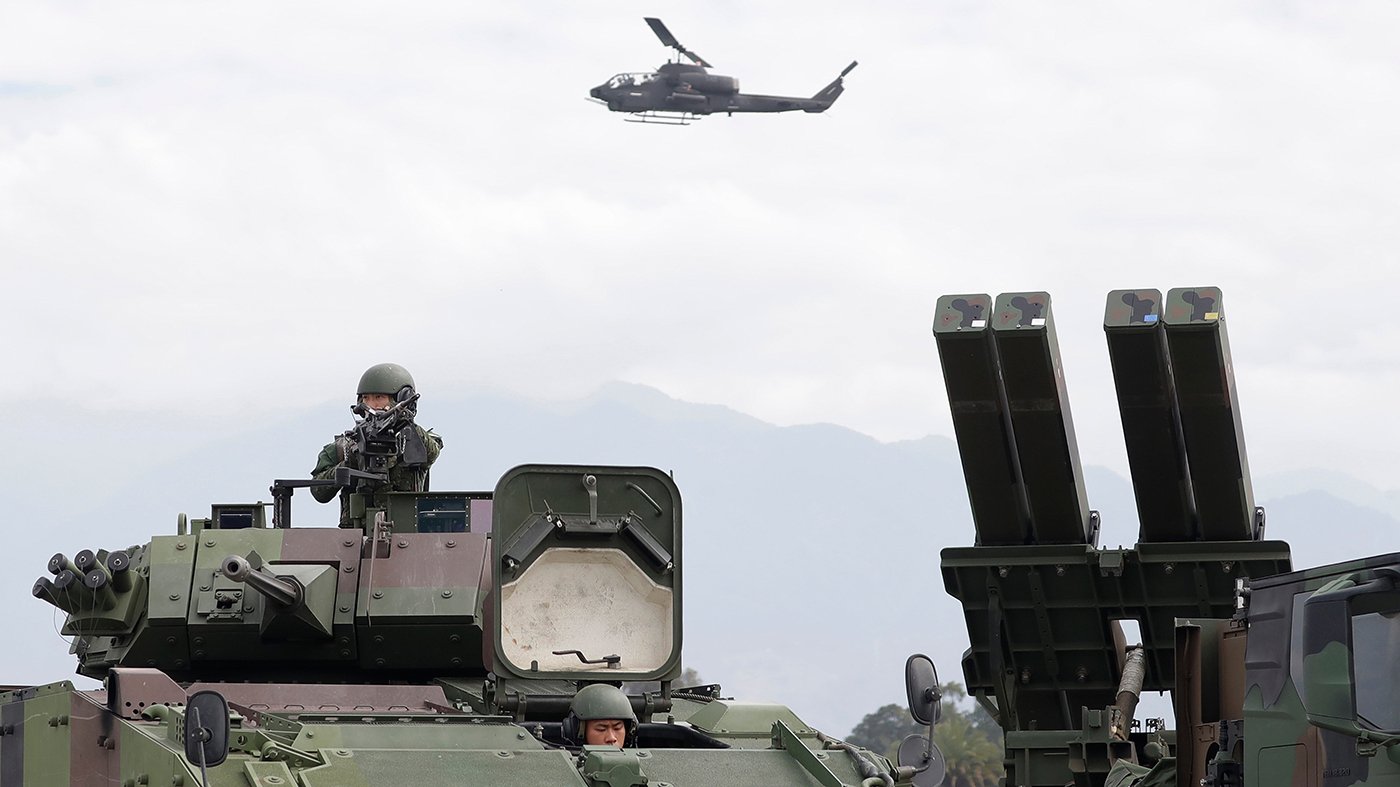
President Trump’s refusal to commit to defending Taiwan or to approve a pending $14 billion arms package has ignited a political firestorm, with bipartisan lawmakers and foreign policy experts warning that his post-summit ambiguity may embolden Beijing and undermine decades of U.S. policy.
En route back to Washington aboard Air Force One, Trump told reporters he would not “want to say” whether the United States would intervene militarily if China attacked the island. “I’m the only one who can make that determination,” he added, sidestepping a direct answer. He also declined to greenlight a major weapons sale to Taipei, saying he discussed the matter “in great detail” with Chinese President Xi Jinping and would decide “over the next fairly short period.”
The remarks align with what the U.S. has long called “strategic ambiguity”—a deliberate policy of not specifying whether Washington would defend Taiwan. But critics argue that Trump’s public discussion of the arms deal with Xi directly violates one of the “Six Assurances” made to Taiwan in 1982 by President Ronald Reagan, which state that the U.S. will “not consult with China” on arms sales to the island.
“Stating that the president of the United States is commenting on or discussing potential weapons sales to Taiwan with Beijing violates one of the ‘Six Assurances’ that President Reagan gave Taiwan and really does cross a line,” said Jack Burnham, an analyst at the Foundation for Defense of Democracies. He warned that Trump’s approach moves away from strategic ambiguity and effectively allows Beijing to influence U.S. policy toward Taipei.
The White House pushed back, with a senior administration official reiterating that Trump would make a decision soon and noting that he had already approved an $11.1 billion arms sale to Taiwan in December. That sale, the largest in years, was seen as a signal of continued U.S. support.
Taiwan’s foreign ministry issued a statement Friday emphasizing that arms sales are “not only a security commitment to Taiwan explicitly stated in the Taiwan Relations Act, but also a joint deterrent against regional threats.” The ministry expressed appreciation for Trump’s “continued support for cross-strait security” and stressed that “close cooperation between Taiwan and the US has always been the cornerstone of peace across the Taiwan Strait.”
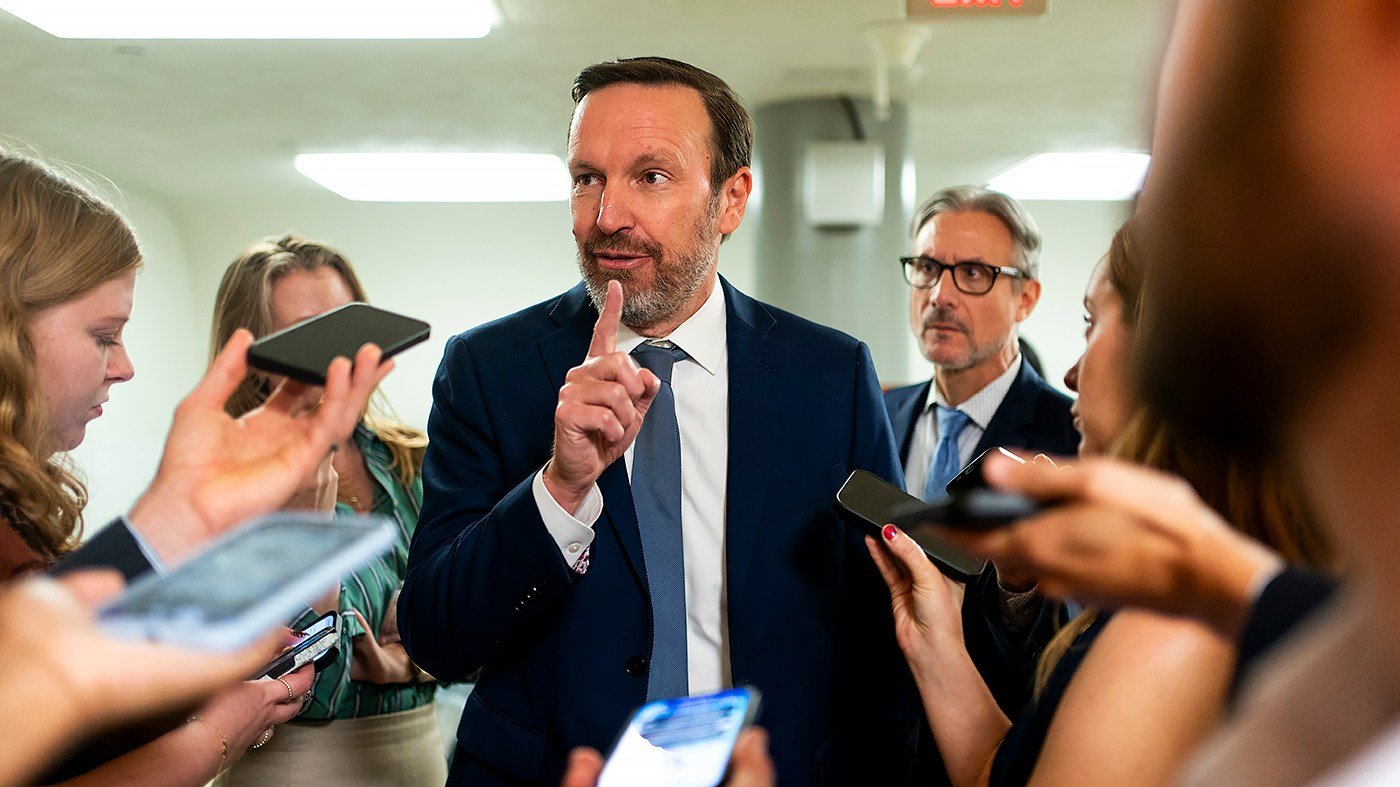
On Capitol Hill, lawmakers from both parties urged Trump to move forward with the $14 billion package. Rep. Carlos Gimenez (R-Fla.), who co-sponsored a bipartisan resolution reaffirming support for Taipei, told CNN he believed Trump would ultimately approve the deal. “I take what President Xi says with a grain of salt and I also take what President Trump says with a grain of salt,” Gimenez said. “What they’re saying publicly and what they’re saying privately may be actually two different things.”
The controversy comes amid heightened Chinese military activity in the Taiwan Strait, including what analysts call “grey zone” operations—maritime patrols and drills short of full-scale conflict. Taiwan has also reported a surge in cyberattacks on its infrastructure, which it attributes to Beijing. Meanwhile, Trump told Fox News he does not want to see Taiwan declare independence, saying, “We’re supposed to travel 9,500 miles to fight a war. I’m not looking for that.”
Nathan Sales, a former State Department counterterrorism coordinator under Trump, argued that actions speak louder than words. “President Trump has said he doesn’t want to see a war in the Taiwan Strait; the best way to preserve the peace is to give Taiwan the weapons it needs to deter an invasion by Communist China. And Beijing doesn’t get a vote on the arms we sell to Taiwan or any other country.”
The debate underscores a broader tension in U.S.-China relations. During their summit, Xi warned Trump that the “entire relationship” between Washington and Beijing would be jeopardized if the “Taiwan question” is not handled properly, according to the Chinese foreign ministry. As the Trump administration weighs its next moves, the question of whether the U.S. will maintain its longstanding support for Taiwan—or yield to Chinese pressure—remains unresolved.