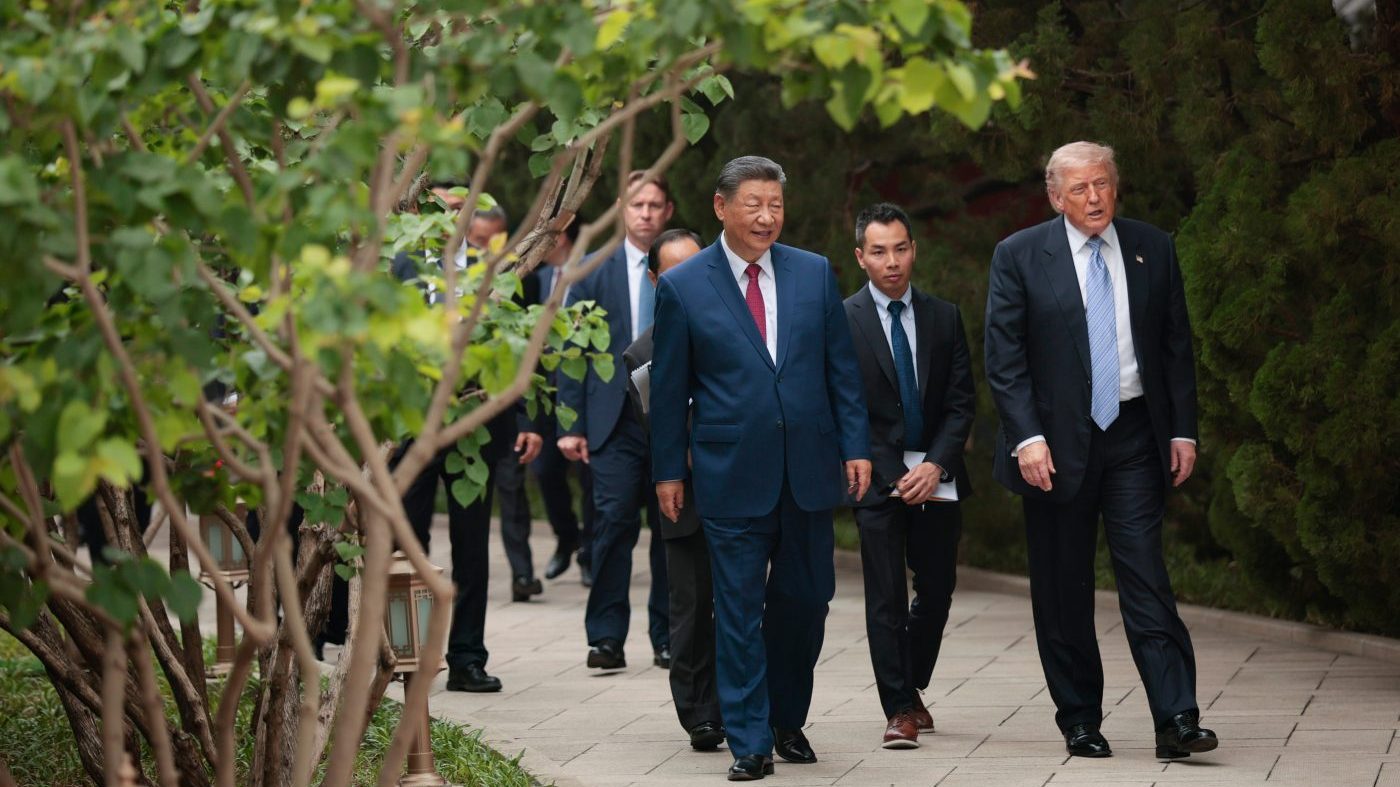
President Trump, in an interview that aired Friday on Fox News's Special Report, urged both China and Taiwan to de-escalate tensions while signaling no shift in U.S. policy toward the island. Speaking with host Bret Baier, Trump said Taiwan should feel “neutral” about its security following his recent visit to Beijing, dismissing the notion that his meeting with Chinese President Xi Jinping had altered the strategic landscape.
“Nothing’s changed,” Trump told Baier. “I will say this: I’m not looking to have somebody go independent.” His comment referenced Taiwan’s status, which Beijing considers a renegade province. The president stressed he does not want to see Taipei declare formal independence, a move that could trigger a military confrontation with China.
Pressed on whether the United States would come to Taiwan’s defense in the event of an attack, Trump demurred. “I’m not going to say that. There’s only one person that knows that and you know who it is? Me. That question was asked to me today by President Xi. I said I don’t talk about that,” he said.
The interview comes as bipartisan pressure mounts on the White House to approve a $14 billion arms package for Taiwan. Trump was characteristically evasive when asked about the sale. “I may do it. I may not do it,” he said, declining to tip his hand.
Under the U.S. “One China” policy, Washington acknowledges Beijing’s position that Taiwan is part of China but does not endorse it. At the same time, the United States maintains unofficial ties with Taiwan and has long provided it with defensive weaponry. Trump’s noncommittal stance on the arms deal leaves the issue in limbo, a dynamic that has frustrated both Republican and Democratic lawmakers who view the sale as a critical signal of U.S. commitment.
During his Asia tour, Trump made headlines by telling reporters he “made no commitment either way” on Taiwan during his summit with Xi. Chinese officials said they pressed the president on the matter, warning that taking sides would damage bilateral relations. Trump avoided any public pledge on Taiwan while in Beijing, a departure from the more robust language used by some of his predecessors.
The president’s remarks also touched on the broader risk of conflict. “We’re supposed to travel 9,500 miles to fight a war. I’m not looking for that,” he said, emphasizing his desire for both sides to “cool down.” He added that maintaining the status quo would likely be acceptable to China, as long as Taiwan does not seek independence with U.S. backing.
Trump’s refusal to detail his military posture on Taiwan echoes his earlier approach to other flashpoints, including tensions with Iran. He has previously accused journalists of treasonous coverage on Iran, and his Beijing trip yielded no Iran breakthrough despite high expectations. The Taiwan arms sale remains a live issue, with defense hawks in Congress likely to keep pressing for action.
The interview underscores Trump’s transactional approach to foreign policy—one that seeks to avoid new entanglements while keeping adversaries guessing. Whether that strategy will reassure allies or embolden Beijing remains an open question.