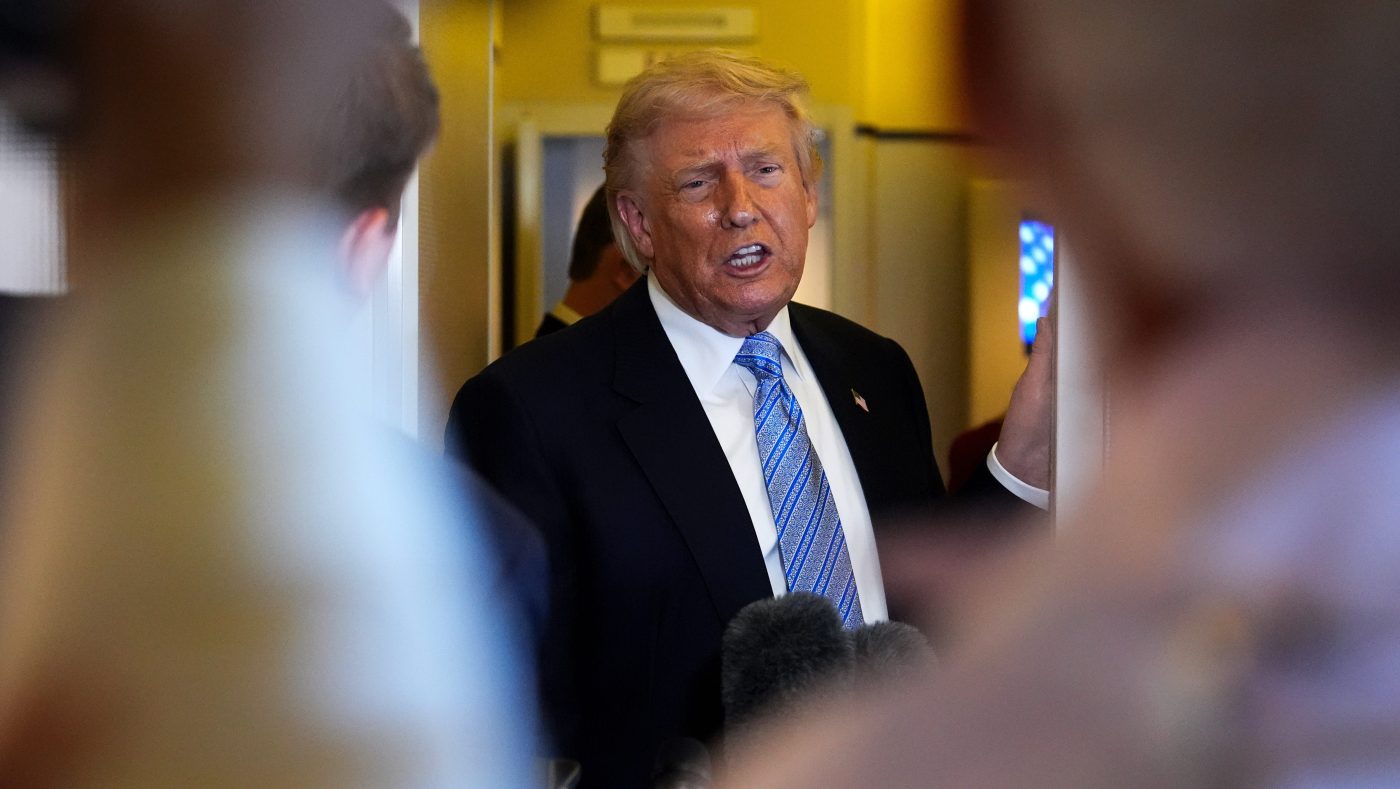
President Donald Trump launched a blistering attack on New York Times correspondent David Sanger on Friday, accusing him of writing “treasonous” coverage of the American military campaign against Iran. Speaking to Sanger aboard Air Force One en route from Beijing, Trump dismissed the veteran journalist as a “fake guy” and claimed the U.S. had achieved a “total military victory.”
Trump Doubles Down on Media Criticism
“I had a total military victory, but the fake news, guys like you, write incorrectly,” Trump told Sanger, adding, “I actually think it’s sort of treasonous what you write.” The president labeled the Times and CNN as “the worst” outlets covering the conflict, which is now in its 12th week.
The exchange occurred as Sanger pressed Trump on whether the U.S. military’s intensive strikes had achieved political change in Iran—a stated goal at the war’s outset. The reporter noted that Iran still retains its enriched nuclear material and has tightened its grip on the Strait of Hormuz, disrupting a key global shipping lane.
Conflicting Messages on War Progress
Trump has offered mixed signals on the conflict’s success, even as the Pentagon insists joint U.S.-Israeli operations have crippled Tehran’s military. On Friday, he claimed the U.S. had “knocked out” Iran’s navy, air force, anti-aircraft systems, radar, and “all of their leaders,” while eliminating 85 percent of missile manufacturing capabilities.
But Sanger’s recent reporting, citing U.S. intelligence assessments, contradicted that rosy picture. It revealed that more than half of Iran’s missiles and launchers survived the attacks, and the country’s nuclear stockpile remained untouched. Trump accused the Times of making Iran appear “doing well” and told Sanger he should be “ashamed.”
Broader Administration Media Feud
Trump’s outburst is part of a broader pattern. Defense Secretary Pete Hegseth and other senior officials have repeatedly complained about media coverage. In March, FCC Chairman Brendan Carr threatened to revoke broadcast licenses for networks he alleged were “running hoaxes and news distortions,” drawing sharp criticism from Sen. Elizabeth Warren (D-Mass.), who called it “straight out of the authoritarian playbook.”
The president’s Beijing trip yielded no breakthrough on Iran, as China urged an end to the war without committing to pressure Tehran. Trump denied seeking favors from Chinese President Xi Jinping on the issue, but reports indicate the two leaders discussed the Strait of Hormuz situation. Meanwhile, a $15 billion nuclear battleship plan has revived debate over naval priorities amid the conflict.
As the war grinds on, Trump’s combative relationship with the press shows no signs of easing, with the president using the Air Force One platform to escalate his attacks on journalists he deems disloyal.