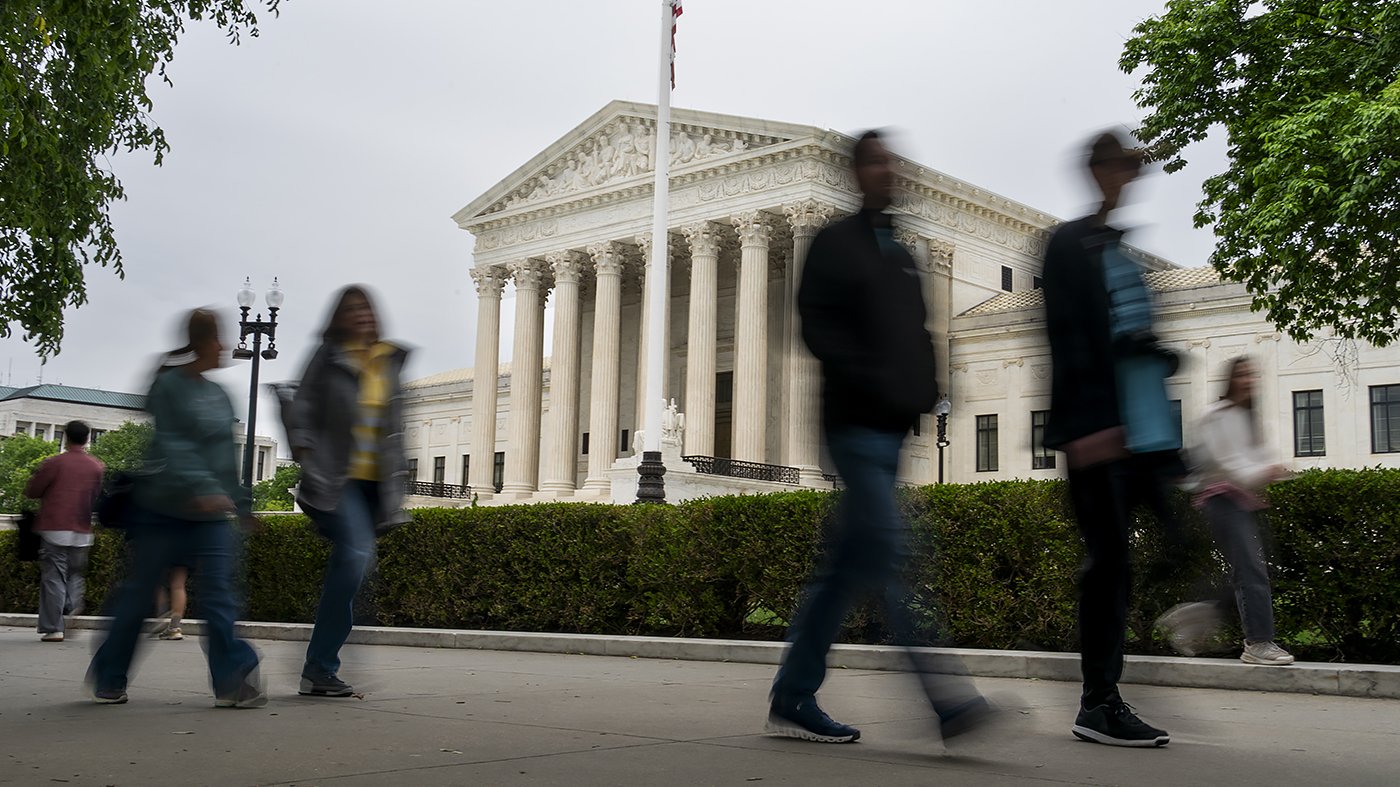
The U.S. Supreme Court on Friday rejected an emergency appeal from Virginia Democratic leaders seeking to reinstate their congressional redistricting plan, closing one of the party's most promising avenues to gain ground in the mid-decade redistricting fight. The justices declined to intervene without any noted dissents, leaving in place a Virginia Supreme Court ruling that the Democrats had failed to follow proper procedures.
The decision appears to be the final word on the months-long legal battle for the 2026 election cycle, though Democrats could revisit the issue in future years. The party had hoped to enact a map that would create a 10-1 Democratic advantage, offering four pickup opportunities in the battle for control of the House this November.
Virginia had emerged as a top target for Democrats seeking to counter the redistricting push by Texas Republicans, who added up to five pickup opportunities at President Trump's urging last year. The high court had previously intervened to lift a lower court ruling blocking the Texas map and also allowed California's new map—which adds up to five pickup opportunities for Democrats—to take effect.
Unlike those cases, the Virginia dispute hinged on state constitutional timing rules. To send their map to voters for a referendum, state lawmakers needed to pass the proposal twice, with an election in between. The Virginia Supreme Court ruled 4-3 that Democrats acted too late when they first passed it in October, as early voting had already begun.
The U.S. Supreme Court can only review state court judgments if they raise a federal issue. Virginia's top Republican lawmakers argued that no federal question existed. “There's a simple reason Applicants did not preserve any federal issues in this case: not one exists,” their attorneys wrote. “From the outset, this case has concerned only state-law claims and state-law defenses. It is, after all, about the procedure for amending the Virginia Constitution.”
Democrats countered that the state court's decision misapplied the federal definition of an election and conflicted with the authority the U.S. Constitution gives to state legislatures to regulate elections. Notably, some Democrats had previously warned that a maximalist interpretation of that theory could hand unchecked power to state lawmakers. In their emergency appeal, they wrote: “The Virginia Supreme Court's decision amounts to judicial defiance of the Commonwealth's Constitution and the statutes enacted by the General Assembly lawfully establishing congressional districts to be used in the upcoming 2026 election.”
Governor Abigail Spanberger (D) said a day earlier that the state would move ahead with its old map, as the deadline had passed, according to WTOP. The outcome leaves Virginia's current congressional districts in place for the November elections, a blow to Democratic hopes of flipping seats.
The ruling adds to a series of redistricting decisions this cycle. In a related development, the NAACP has sued Tennessee over its congressional map, alleging it splits a Black-majority district. Meanwhile, the Congressional Black Caucus chair has warned that 19 members face redistricting risk following recent Supreme Court rulings.