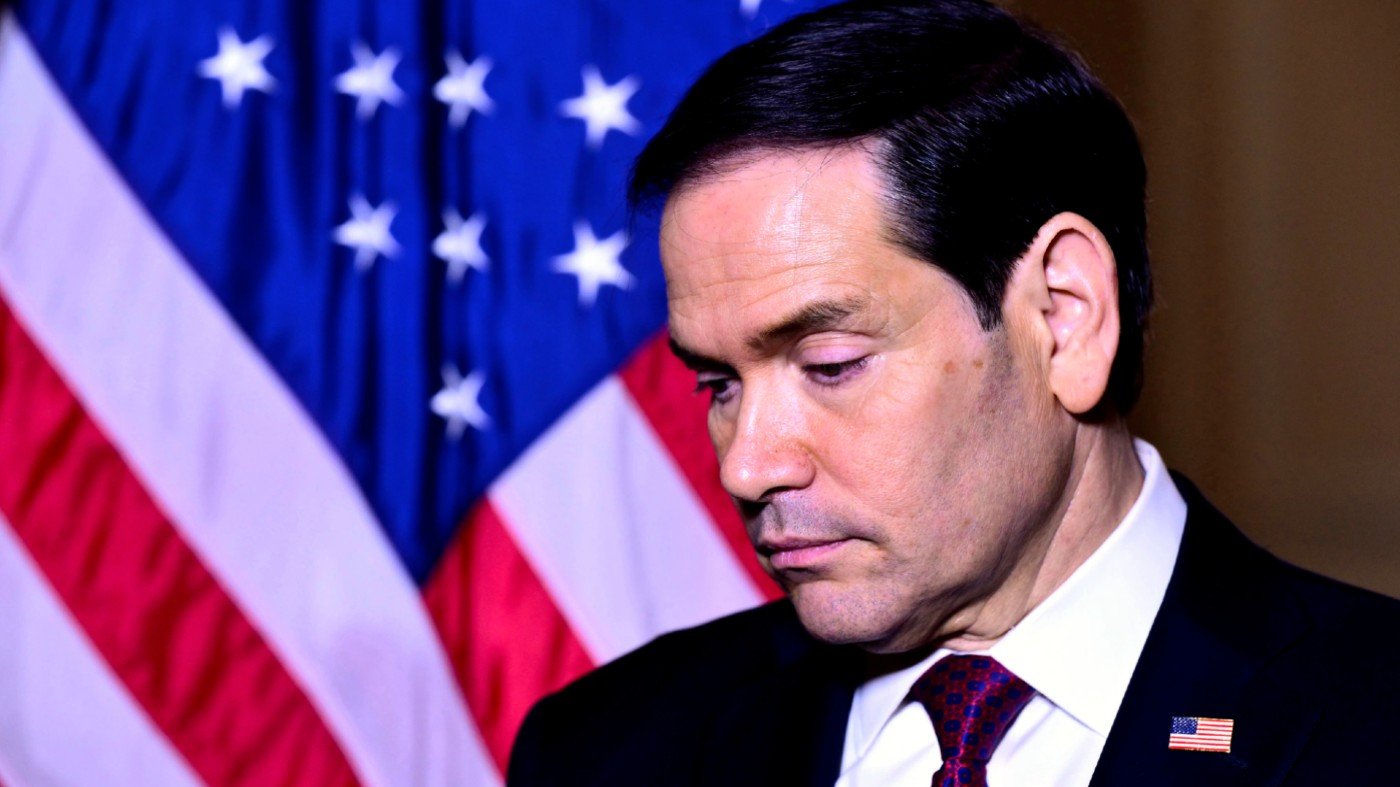
Secretary of State Marco Rubio said Thursday that Iran cannot exploit U.S. domestic politics, particularly rising energy prices, to pressure President Trump into accepting a weak nuclear agreement.
In an interview with NBC News, Rubio dismissed suggestions that Trump's comments in China—where he said he doesn't think about Americans' financial situations during Iran negotiations—were out of touch. Instead, Rubio framed the remark as a warning to Tehran.
“No, because I think what the president is making clear is that we're not going to let Iran use that as leverage,” Rubio said. “If the Iranians think they are going to use our domestic politics to pressure him into a bad deal, that's not going to happen.”
The secretary pointed to U.S. efforts to keep gas prices relatively low, adding that a “dramatic reduction” in energy costs is expected once the Strait of Hormuz is reopened. The waterway, through which about 20% of the world's oil supply passes, has been effectively closed due to tensions with Iran. Rubio argued that “pent-up oil being held hostage by Iran” would flood the market and lower prices.
But he warned of a steeper cost if Iran acquires a nuclear weapon. “If Iran ever acquires a nuclear weapon, they will immediately—what would stop them from controlling the straits then?” Rubio said. “And then forget about it being a three-month or a six-month problem. It could be a permanent one.”
Rubio also noted that China has agreed with the United States that the Strait of Hormuz should not be “militarized” and opposes any tolling system. Both countries, he said, are united in preventing Iran from developing or obtaining a nuclear bomb.
Negotiations between Washington and Tehran have stalled since a ceasefire collapsed in early April. Trump recently rejected Iran's 14-point peace proposal. Iranian Parliament Speaker Mohammad Bagher Qalibaf warned that if the U.S. does not accept the proposal, American taxpayers “will pay for it.”
Trump claimed he secured an agreement with Chinese President Xi Jinping to reopen the Strait of Hormuz, saying Xi was “very happy” with U.S. efforts. However, China's Foreign Ministry on Friday said it sees “no point” in the continued U.S.-Iran conflict. “There is no point in continuing this conflict which should not have happened in the first place,” the ministry said. “China always believes that dialogue and negotiation is the right way forward, and the use of force is a dead end.”
The administration's stance on Iran comes amid broader geopolitical maneuvering, including Trump's call for restraint on Taiwan and ongoing talks with Beijing on various fronts. Meanwhile, domestic political pressures persist, as seen in the legal challenge to the VA abortion ban and the administration's request for more National Guard troops in Washington.