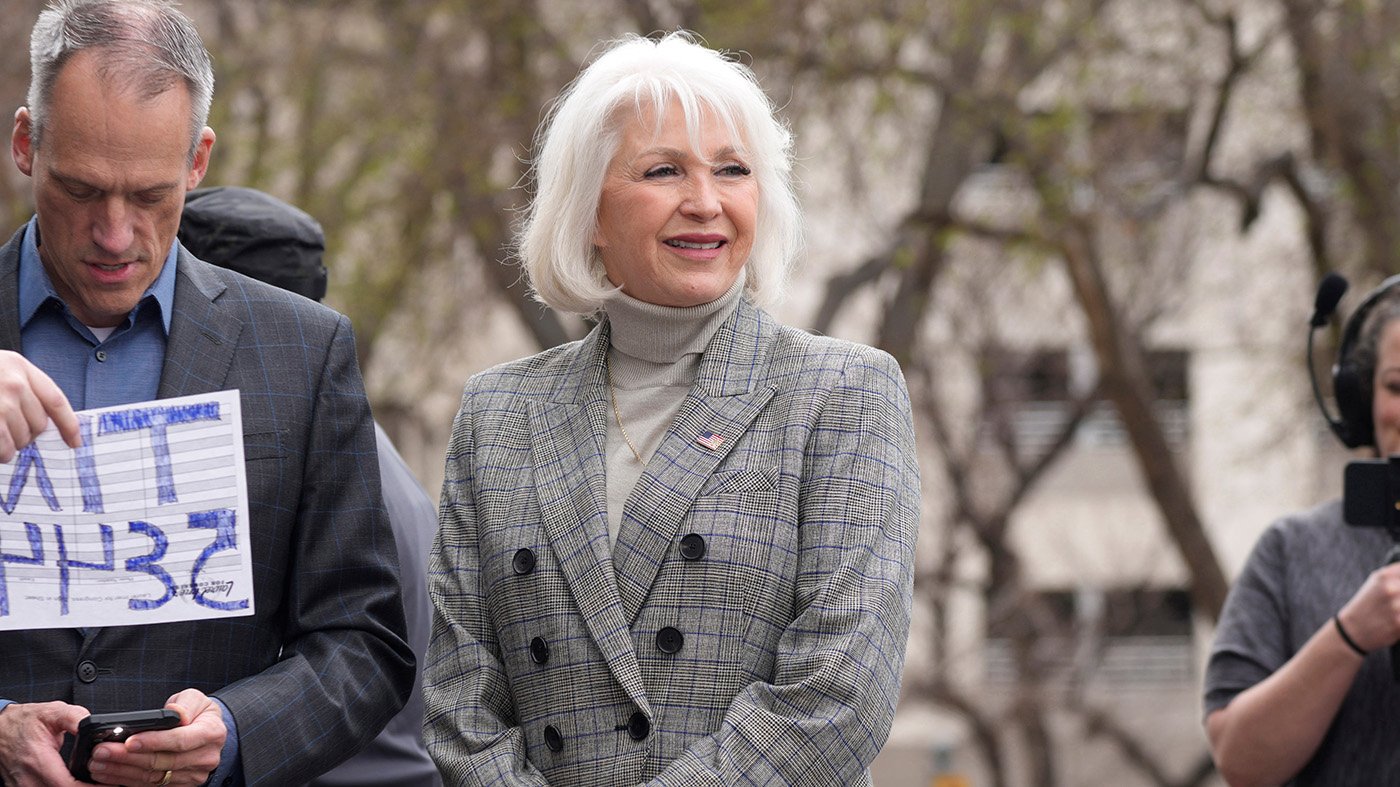
Colorado Governor Jared Polis (D) announced Friday that he has commuted the sentence of Tina Peters, the former Mesa County election clerk who became the first local official convicted for actions tied to attempts to undermine the 2020 presidential election. Peters will be released from prison after serving just over 600 days, with her original nine-year sentence reduced to four and a half years.
In an interview with Colorado Public Radio, Polis explained his decision, emphasizing that Peters' actions did not involve ballot tampering or interference with vote counting. 'She did not interfere with any election, did not have to do with ballot counting, but it was illegal access to the computer room,' Polis said. He described her motive as an attempt to back up election software before an update, but acknowledged the illegality of her conduct.

'She thought she was trying to back up the software before it was updated. She did it illegally. There's no question about it. And she deserves to go to prison. And I think this is a more appropriate, even harsh, frankly sentence for that crime,' Polis added, defending the commutation as a proportionate punishment.
The decision has ignited fresh controversy in a state already grappling with election security debates. Critics argue that reducing Peters' sentence sends a troubling message about accountability for those who seek to erode trust in democratic processes. Supporters, however, view the commutation as a recognition of excessive sentencing for a nonviolent offense.
Former President Donald Trump quickly weighed in, posting on Truth Social: 'FREE TINA!' The endorsement underscores how Peters has become a symbol for those who question the integrity of the 2020 election outcome, despite numerous court rulings and audits affirming its validity.
Peters' case has drawn national attention as part of a broader pattern of local officials facing legal consequences for actions related to election subversion. Her conviction in 2023 on charges including attempting to influence a public servant and criminal impersonation marked a rare instance of a local election official being held criminally liable for such conduct.
The commutation comes amid ongoing debates over election security and the role of state executives in criminal justice. Polis, a Democrat, has previously used his clemency power for nonviolent offenders, but this case carries unique political weight given its ties to the 2020 election narrative.
Legal experts note that while governors have broad authority to commute sentences, such actions in politically charged cases often face scrutiny. The decision could have implications for how similar cases are handled in other states, particularly as election-related prosecutions continue.
Peters is expected to be released by June 1, after which she will remain under supervised release. Her case remains a flashpoint in the ongoing national conversation about election integrity and the limits of executive clemency.